All the most important and interesting things about the Huaci company. Learn about the company's new products, developments and major achievements.
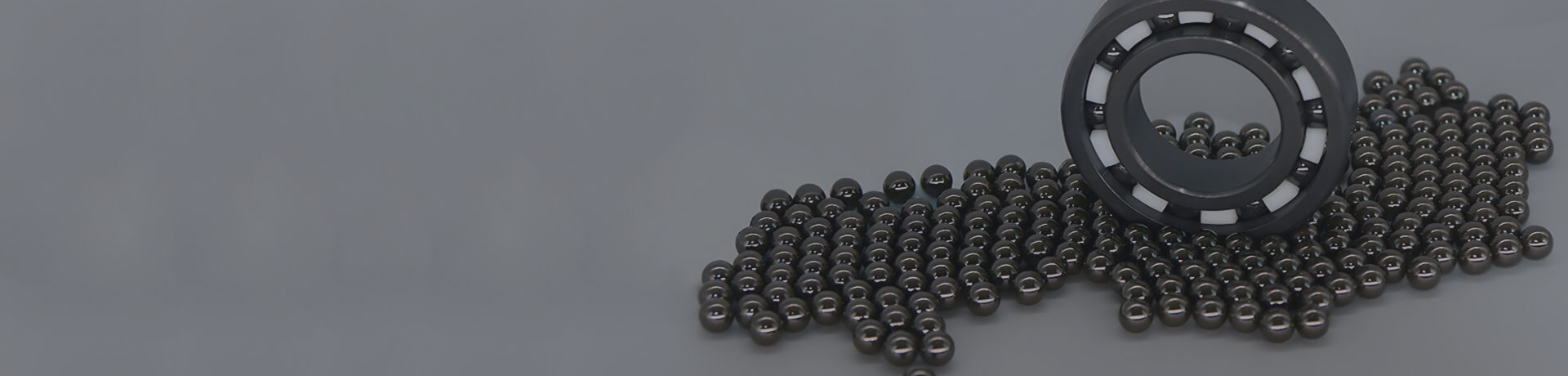
Huaci Juli manufactures and supplies precision silicon nitride balls for hybrid ceramic bearings, full ceramic bearings, aerospace systems, electric motors, and other advanced engineering applications. Standard diameters are available from 0.5 mm to over 30 mm, while custom sizes, grades, and specifications can be produced to meet specific customer requirements.
If you are seeking a solution to significantly extend maintenance intervals for vacuum pumps, hybrid ceramic bearings represent the current industry best practice.What is a hybrid ceramic bearing? It consists of inner and outer rings made of bearing steel (or stainless steel) combined with silicon nitride (Si3N4) ceramic balls. This "hybrid" design merges the toughness of steel with the hardness of ceramics, creating a high-performance
Both Zirconia (ZrO2) and Silicon Nitride (Si3N4) are high-performance ceramic bearing materials. Neither is inherently "better" than the other; rather, each possesses unique physical and chemical properties. The choice of material depends primarily on your specific application scenario and operating requirements.
Intelligent factory AGV automated guided vehicles operate with frequent start-stop, variable load and long-time continuous shuttle operation inside workshop, warehouse and logistics distribution center. Silicon nitride balls are gradually applied in AGV wheel bearings and guide rail rolling bearings to solve rapid wear, rust and frequent maintenance problems of traditional steel bearing schemes, improving intelligent logistics equipment operating stability.
Strict surface defect inspection is the last quality control barrier before silicon nitride balls leave factory, eliminating defective products with hidden cracks, scratches, pits and contamination, ensuring assembled bearings run stably and avoid premature failure. Complete surface inspection system covers visual inspection, optical screening, microscopic detection and sampling destructive testing, matching quality requirements of different application grades from general industry to aerospace and medical fields.
Laboratory analytical centrifuges, industrial large-scale separation centrifuges and pharmaceutical extraction centrifuges run at ultra-high rotational speed to realize solid-liquid separation, cell separation and chemical stratification. Rotor support bearings bear huge dynamic centrifugal force, and silicon nitride balls replace steel balls to solve overheating, short life and contamination risks of traditional centrifuge bearing assemblies.
ISO 3290 is the internationally unified classification standard defining dimensional tolerance, sphericity, surface roughness and geometric precision grades of bearing balls, which is the core basis for manufacturers to produce and customers to select qualified silicon nitride balls. Fully understanding grade division rules under ISO 3290 helps engineers select proper precision specification and avoid over-specification waste or insufficient precision causing equipment operation failure.
Offshore wind platforms, seawater desalination devices and ocean engineering machinery operate in severe marine environment filled with salt spray, tidal immersion, alternating wet-dry cycle and seawater chemical erosion. Traditional steel bearing balls suffer rapid rust, pitting corrosion and premature failure, while silicon nitride balls become core anti-corrosion rolling components for offshore mechanical equipment with outstanding chemical stability and seawater tolerance.
Aviation auxiliary power units (APU) supply independent electric power and compressed air for aircraft before main engine startup, operating under ultra-high rotating speed, sharp temperature fluctuation and high vibration load. Silicon nitride balls are adopted as core rolling elements inside APU high-speed bearings to improve reliability, weight reduction and service interval level of aviation auxiliary power systems, conforming to strict aerospace component qualification standards.
Matching lubrication state is one decisive external factor influencing total service cycle and operating stability of bearings assembled with silicon nitride balls. Many premature failure cases of silicon nitride hybrid bearings are not caused by material defect itself, but unreasonable lubricant selection, insufficient oil supply or deteriorated lubrication management. Understanding interaction rule between lubrication and silicon nitride balls helps enterprises formulate scientific maintenance strategy to maximize component value.