




If you are seeking a solution to significantly extend maintenance intervals for vacuum pumps, hybrid ceramic bearings represent the current industry best practice.
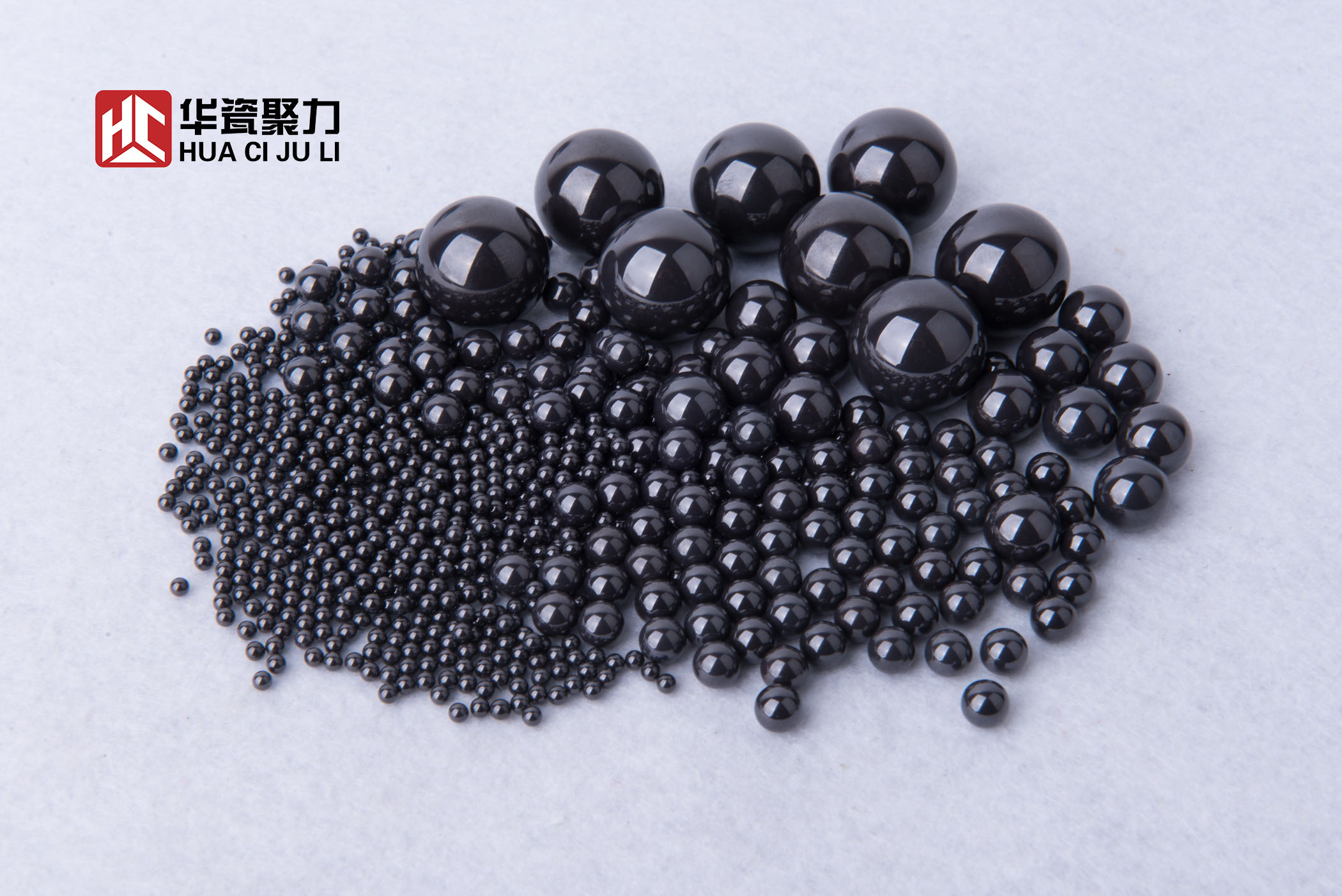
What is a hybrid ceramic bearing? It consists of inner and outer rings made of bearing steel (or stainless steel) combined with silicon nitride (Si3N4) ceramic balls. This "hybrid" design merges the toughness of steel with the hardness of ceramics, creating a high-performance powerhouse for vacuum pump applications.
Advantage 1: Lightweight Design—Built for High Speeds
Silicon nitride ceramic balls have a density of approximately 3.2 g/cm³, which is only 40% that of steel balls (7.8 g/cm³). This means that during the high-speed operation of molecular pumps, the centrifugal force generated by the ceramic balls is drastically reduced. Experimental data shows that at the same rotational speed, hybrid ceramic bearings experience an internal temperature rise 10–15°C lower than all-steel bearings, and their limiting speed can be increased by 30%–50%.
Advantage 2: High-Temperature Resistance and Anti-Seizure (Self-Lubrication)
In extreme scenarios where a vacuum pump lacks oil or the grease has dried out, steel-on-steel contact can lead to cold welding. However, because ceramic and steel are dissimilar materials with a very low coefficient of friction and inherent self-lubricating properties, metal adhesion does not occur. This significantly reduces the risk of sudden seizure.
Furthermore, Si3N4 ceramic balls offer excellent high-temperature resistance; their strength remains undiminished even at 800°C (though the limiting factor is usually the bearing rings and cage).
Advantage 3: Prevention of Electrical Corrosion (Electrical Insulation)
Some vacuum pumps are driven by variable-frequency motors, which are prone to generating shaft currents. When current passes through the bearing, it creates electrical sparks, resulting in "washboard-like" electrical erosion grooves. Silicon nitride is a natural insulator; it effectively breaks the shaft current circuit, thereby protecting the bearing.
Advantage 4: High Rigidity and Wear Resistance
Ceramic balls are more than twice as hard as bearing steel and possess a high modulus of elasticity, resulting in minimal deformation under load. This translates to superior rotational precision and smoother operation for the vacuum pump rotor. Although the unit price of hybrid ceramic bearings is higher than that of standard bearings, they represent a highly cost-effective investment when considering their 3–5 times longer service life and the reduction in downtime-related losses.
| Performance indicators | Unit | si3n4 |
| Density | g/cm³ | 3.23 |
| Hardness (HV196N) | / | 1480 |
| Three-point bending strength | MPa | 950 |
| Modulus of elasticity | GPa | 310 |
| Poisson's ratio | / | 0.28 |
| Indentation fracture resistance (KI, IFR) | MPa · m1/2 | 6-8 |
| Coefficient of thermal expansion | ×10-⁶/K | 2.7 |
| Thermal conductivity | W/(m·K) | 20-25 |
Frequently Asked Questions
Do ceramic bearing balls need lubrication?
Whereas steel bearing balls require consistent lubrication to prevent wear or failure, ceramic bearing balls can operate with minimal lubrication. In some cases, they can even run dry. Generally, we recommend lubrication to extend the bearing’s lifespan.
Do ceramic balls last longer than steel under extreme temperatures?
Yes. While steel bearing balls perform well in cold conditions, they do not tolerate heat well. On the other hand, our ceramic bearing balls have a temperature tolerance as high as 3180°F, depending on the material.
How much lighter than steel balls are ceramic bearing balls?
Significantly lighter. Ceramic bearing balls are 50-60% lighter than steel balls, which contributes to their low friction.