




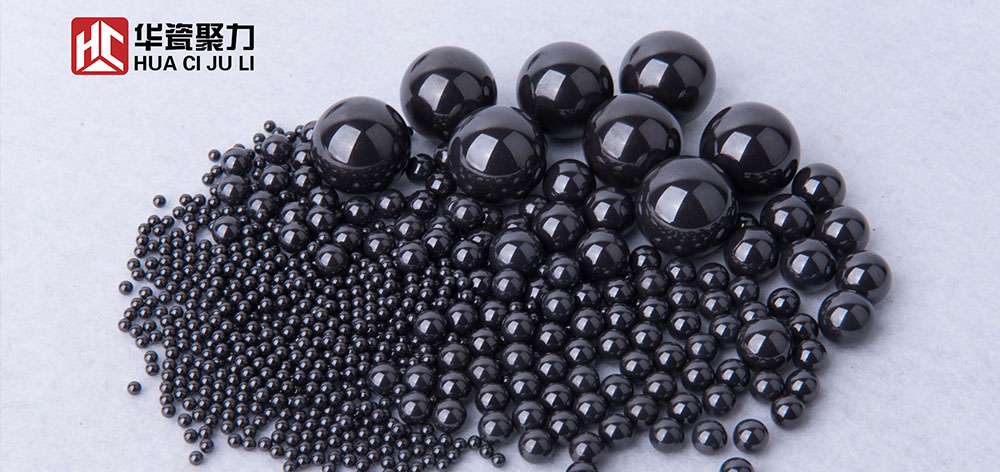
Matching lubrication state is one decisive external factor influencing total service cycle and operating stability of bearings assembled with silicon nitride balls. Many premature failure cases of silicon nitride hybrid bearings are not caused by material defect itself, but unreasonable lubricant selection, insufficient oil supply or deteriorated lubrication management. Understanding interaction rule between lubrication and silicon nitride balls helps enterprises formulate scientific maintenance strategy to maximize component value.
Under adequate hydrodynamic lubrication condition, complete oil film forms between silicon nitride ball surface and bearing steel raceway, separating two contact surfaces thoroughly to eliminate direct metal-ceramic friction wear. This ideal state minimizes surface fatigue risk, controls running temperature rise and enables silicon nitride balls to exert full advantages of wear resistance and long lifespan. High-speed spindle bearings and motor bearings rely on continuous circulating oil lubrication to maintain stable oil film thickness all the time.
Grease lubrication is widely adopted for medium-speed, medium-load sealed bearings. Users must select special grease formulated for ceramic-steel friction pairs instead of general-purpose grease. Ordinary grease containing excessive sulfur and chlorine extreme pressure additives may induce chemical corrosion on silicon nitride contact surface under high contact pressure, generating surface pitting and micro-spalling. Ceramic-adapted synthetic base grease maintains stable chemical compatibility with silicon nitride balls and prolongs bearing service cycle significantly.
Insufficient lubrication leads to boundary lubrication or dry friction mode, triggering rapid local temperature spike at contact point. Though silicon nitride owns high-temperature resistance, excessive instantaneous heat will decompose residual lubricant, form carbon deposition on spherical surface and produce micro thermal crack source, gradually expanding into visible peeling damage under cyclic load. Equipment with intermittent operation mode needs scheduled grease replenishment to avoid oil depletion risk.
Contaminated lubricant mixed with metal abrasive dust, sand particles and moisture brings abrasive wear and corrosion hazard. Hard impurity particles suspended inside lubricating oil are squeezed between silicon nitride balls and raceway, scratching polished surface and destroying sphericity precision. Regular oil sampling inspection, filter element replacement and oil change cycle arrangement effectively protect silicon nitride balls from abrasive damage caused by dirty lubrication medium.
Low-temperature environment requires low-viscosity anti-freezing lubricant to prevent grease thickening and oil film rupture. Reasonable classified lubrication configuration matching working speed, temperature, load and medium environment can double or triple the actual service life of silicon nitride balls bearings, cutting overall equipment operation cost fundamentally.