




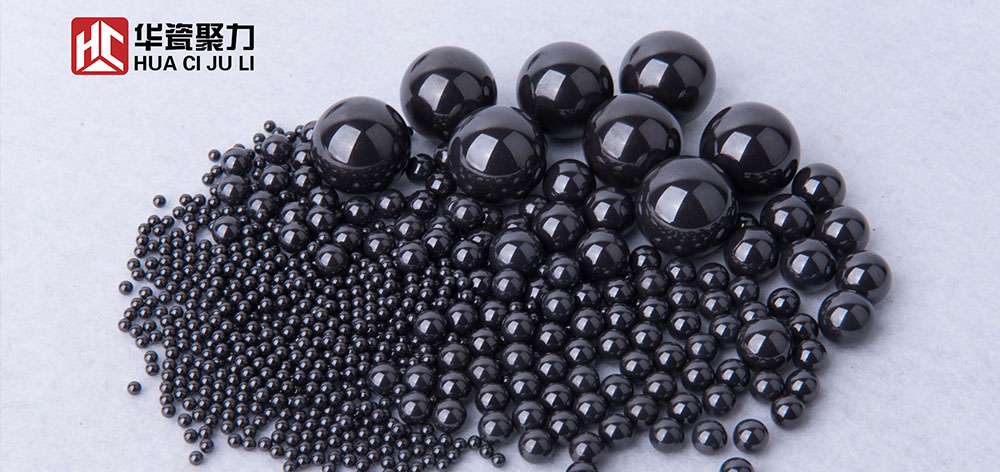
Aviation auxiliary power units (APU) supply independent electric power and compressed air for aircraft before main engine startup, operating under ultra-high rotating speed, sharp temperature fluctuation and high vibration load. Silicon nitride balls are adopted as core rolling elements inside APU high-speed bearings to improve reliability, weight reduction and service interval level of aviation auxiliary power systems, conforming to strict aerospace component qualification standards.
APU internal rotor assembly rotates at extremely high speed during startup and steady operation, putting severe centrifugal load on bearing rolling bodies. Low density silicon nitride balls reduce centrifugal stress greatly compared with steel balls, lowering contact pressure on inner and outer rings, restraining heat accumulation and avoiding thermal seizure failure that easily occurs in all-steel bearings under long-duration high-speed running. Lower operating temperature also stabilizes dimensional clearance of bearing assembly under variable working state.
Wide-range temperature fluctuation is typical for APU working conditions: startup phase stays at ambient ground temperature, while continuous operation generates high temperature exceeding 350°C around bearing cavity. Silicon nitride balls maintain stable mechanical hardness and structural integrity across wide temperature span, resisting softening, creep deformation and fatigue failure suffered by steel balls at elevated temperature, ensuring stable APU operation during long-distance flight cruising state.
Weight reduction brought by silicon nitride balls contributes to overall aircraft fuel economy optimization. Multiple bearing sets distributed inside APU realize cumulative weight reduction effect after replacing steel rolling elements, cutting whole unit dead load and helping airlines decrease total fuel consumption year by year. For civil aviation fleet with huge flight volume, long-term energy-saving benefit is considerable.
Aviation equipment must withstand strong vibration and impact load during aircraft takeoff, landing and turbulence flight. Optimized fracture toughness of gas-pressure sintered aerospace-grade silicon nitride balls suppresses crack propagation under alternating vibration stress, avoiding sudden bearing fragmentation risk that threatens flight safety. Every batch of aviation-used silicon nitride balls undergoes strict ultrasonic internal flaw detection, dimensional screening and fatigue life certification before delivery.
With global civil aviation pursuing longer overhaul cycle and higher operational safety margin, silicon nitride balls become standardized upgraded material for new-generation APU design, consolidating application foundation of advanced ceramic rolling components in aviation auxiliary power system field.