





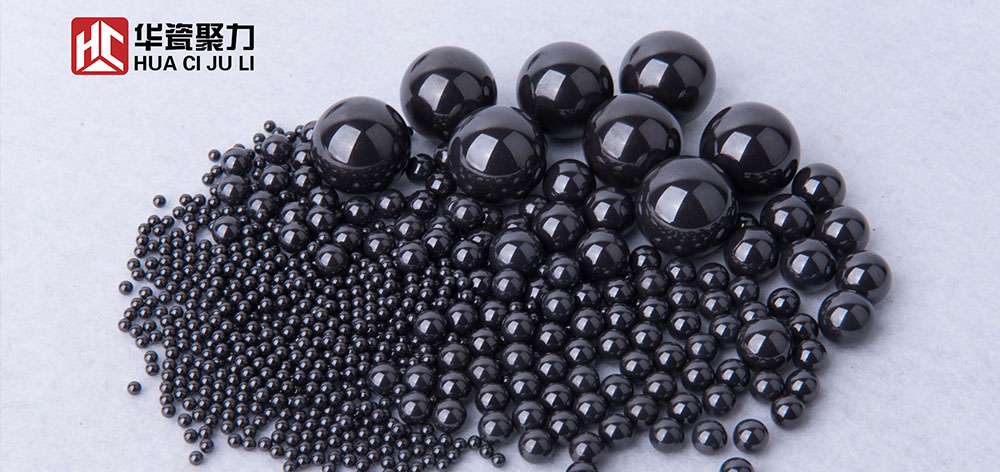
ISO 3290 is the internationally unified classification standard defining dimensional tolerance, sphericity, surface roughness and geometric precision grades of bearing balls, which is the core basis for manufacturers to produce and customers to select qualified silicon nitride balls. Fully understanding grade division rules under ISO 3290 helps engineers select proper precision specification and avoid over-specification waste or insufficient precision causing equipment operation failure.
ISO 3290 divides bearing balls into multiple precision grades including G3, G5, G10, G16, G20 and lower commercial grades, among which G5 and G10 are the most widely adopted high-precision grades for industrial silicon nitride balls. The grade number is inversely correlated with precision level: smaller figure means stricter dimensional tolerance and higher geometric accuracy.
Diameter variation is the primary judgment index. For G5 grade silicon nitride balls, maximum single ball diameter deviation and batch diameter variation are controlled within extremely tiny micrometer range, applicable to machine tool spindles, semiconductor equipment and medical ultra-precision bearings requiring nanoscale running stability. G10 grade allows slightly larger tolerance, balancing precision and cost for general high-speed motor, aerospace auxiliary and new energy vehicle bearing matching. G16 grade suits conventional industrial machinery, high-temperature furnace supports and anti-corrosion chemical equipment with moderate precision demand.
Sphericity (roundness error) is another key ISO 3290 inspection item, measuring deviation between actual spherical shape and ideal geometric sphere. High-grade silicon nitride balls must undergo multi-pass lapping processing to minimize sphericity error; excessive out-of-roundness will generate periodic vibration, noise and local contact stress concentration during rotation, accelerating fatigue peeling of both balls and bearing raceways.
Surface roughness requirement also differs distinctly by grade. G5 mirror-polished silicon nitride balls achieve ultra-low Ra value below 0.01 μm, free of micro scratches, pits and surface defects, realizing ultra-low friction high-speed operation. Lower precision grades permit higher surface roughness to control production cost for general working scenarios.
In actual procurement practice, blind pursuit of highest G3/G5 grade will raise unnecessary component cost for ordinary equipment, while selecting too loose grade leads to precision deficiency. Designers should combine rotating speed, positioning requirement and load condition to match ISO 3290 corresponding silicon nitride ball grade reasonably, realizing optimal balance between technical performance and economic input.