




Both Zirconia (ZrO2) and Silicon Nitride (Si3N4) are high-performance ceramic bearing materials. Neither is inherently "better" than the other; rather, each possesses unique physical and chemical properties. The choice of material depends primarily on your specific application scenario and operating requirements.
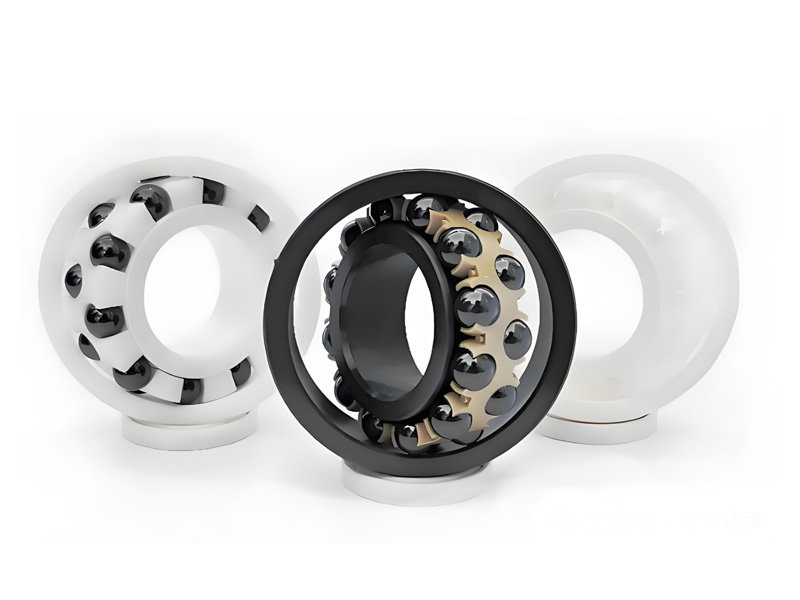
I. Zirconia Bearings
Zirconia ceramic bearings are the preferred choice for many demanding applications due to their excellent overall performance and relatively high cost-effectiveness.
1. Key Advantages:
High Toughness and Impact Resistance: Zirconia boasts extremely high fracture toughness, effectively resisting impact loads and reducing the risk of brittle fracture.
Thermal Insulation and Expansion: Its thermal expansion coefficient is close to that of metal, allowing for seamless integration with metal components; it also offers excellent thermal insulation and withstands rapid temperature fluctuations.
Corrosion Resistance and Electrical Insulation: It is immune to corrosion and oxidation, making it suitable for harsh environments involving seawater, acids, or alkalis; its superior electrical insulation prevents damage caused by electric arcing in motors.
Biocompatibility: It eliminates the risk of metal particle contamination in medical equipment and food processing applications.
2. Limitations:
Relatively high density (approx. 5.6–6.1 g/cm³), resulting in significant centrifugal force during ultra-high-speed operation.
Performance may be affected under extreme temperature conditions.
II. Silicon Nitride Bearings
Silicon Nitride is considered one of the best ceramic bearing materials in terms of overall performance, specifically engineered for extreme and rigorous environments.
1. Key Advantages:
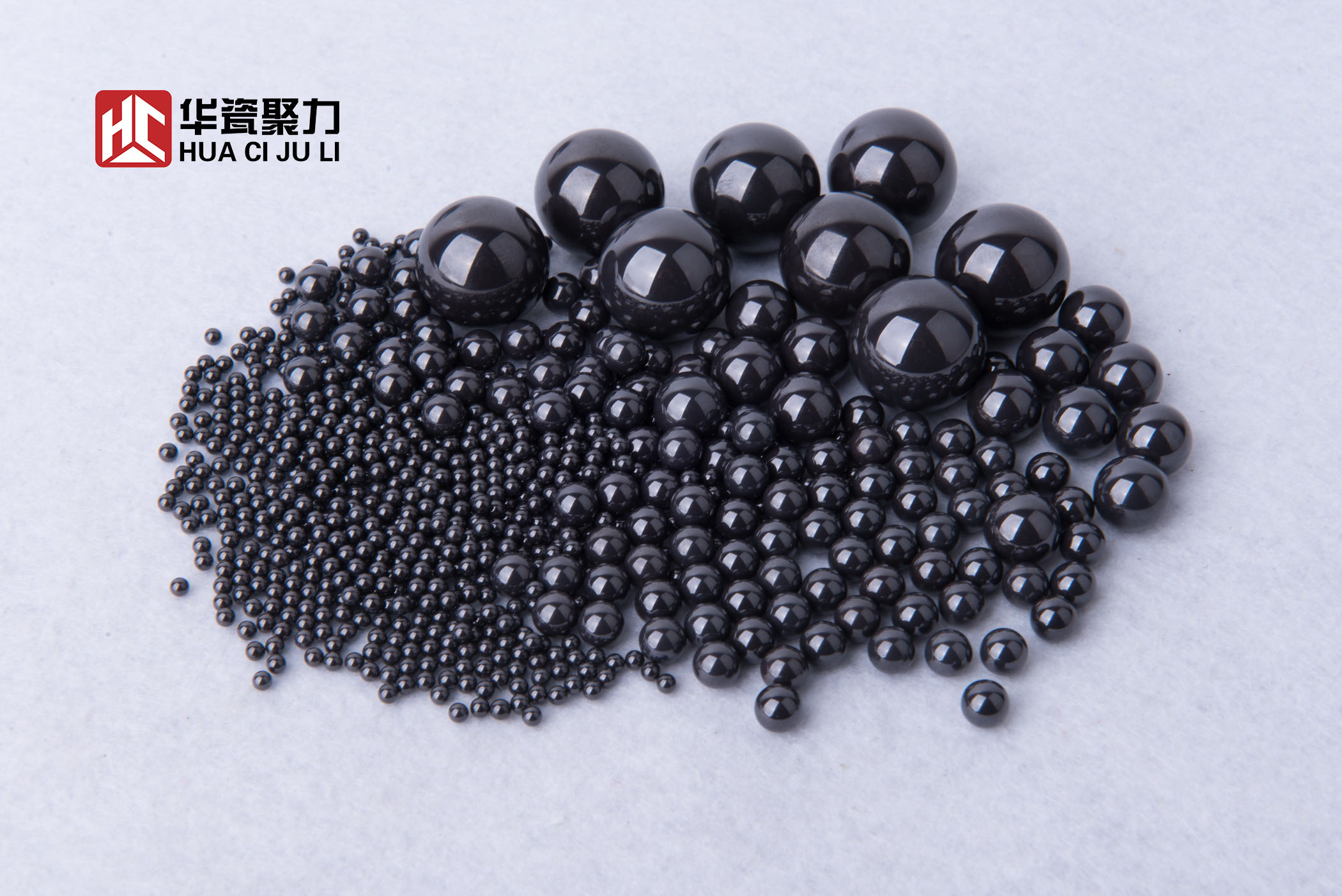
Ultra-high Hardness and Wear Resistance: With extreme hardness (≥1600 HV), it withstands intense friction and wear, offering an exceptionally long service life.
Extreme Lightweighting: Low density (approx. 3.2 g/cm³)—about 40% lighter than steel—significantly reduces centrifugal force during rotation, making it the ideal material for ultra-high-speed operation.
Superior Heat Resistance: Exceptional thermal stability allows it to maintain structural integrity and mechanical properties at temperatures as high as 1200°C–1300°C. Self-lubricating and corrosion-resistant: It features a low coefficient of friction, allowing for effective operation in unlubricated or vacuum environments, and exhibits exceptional resistance to chemicals such as acids, alkalis, and salts.
| Performance indicators | Unit | si3n4 |
| Density | g/cm³ | 3.23 |
| Hardness (HV196N) | / | 1480 |
| Three-point bending strength | MPa | 950 |
| Modulus of elasticity | GPa | 310 |
| Poisson's ratio | / | 0.28 |
| Indentation fracture resistance (KI, IFR) | MPa · m1/2 | 6-8 |
| Coefficient of thermal expansion | ×10-⁶/K | 2.7 |
| Thermal conductivity | W/(m·K) | 20-25 |
2. Application areas for silicon nitride bearings
These bearings are suitable for any application requiring high speed and efficiency, particularly in humid or corrosive environments. Common applications include:
Chemical processing equipment.
Pumps and valves.
Medical instruments and equipment.
Aerospace and electronics.
High-speed bearing assemblies.
Flow control systems, pressure gauges, flow meters, and precision instruments.
Components for the petroleum and energy industries.
3. Limitations:
The manufacturing process is complex, resulting in a relatively high cost.
Compared to zirconia, it has slightly lower toughness and is more sensitive to severe mechanical impact.
Selection recommendations from Huaci Juli
Choose zirconia: If your application requires high toughness to withstand certain impact loads, good thermal insulation properties, or cost-effectiveness (e.g., medical devices, chemical equipment, standard high-speed motors), zirconia is a highly cost-efficient choice.
Choose silicon nitride: If your equipment operates under extremely harsh conditions—such as requiring ultra-high speeds (e.g., aero-engines, racing cars, high-end machine tool spindles), withstanding extreme temperatures or highly corrosive environments, or operating in unlubricated vacuum conditions—silicon nitride bearings offer superior performance reliability.
Ⅲ. Frequently Asked Questions
Full ceramic vs. hybrid ceramic bearings — which one is better?
Full ceramic bearings use ceramic for every component, including the inner and outer races. Hybrid bearings, on the other hand, combine a ceramic bearing ball with steel races. Hybrid bearings still outperform full steel bearings in terms of friction and speed. The most significant difference is cost; hybrid bearings are generally less expensive than full ceramic bearings.
Can ceramic bearing balls run dry?
Ceramic balls require significantly less lubrication than steel balls, as they’re less prone to friction. In some cases, like food processing or clean-room environments, they can even run dry. Generally, we recommend using minimal lubrication in rolling contact applications.
When are steel bearing balls better than ceramic balls?
While ceramic balls are the optimal choice for more high-speed or corrosive industrial applications, steel does outperform ceramic when high loads are required. Steel balls are also generally more cost-effective, although long-term maintenance and replacement costs should be considered in applications where steel balls are more likely to fail.