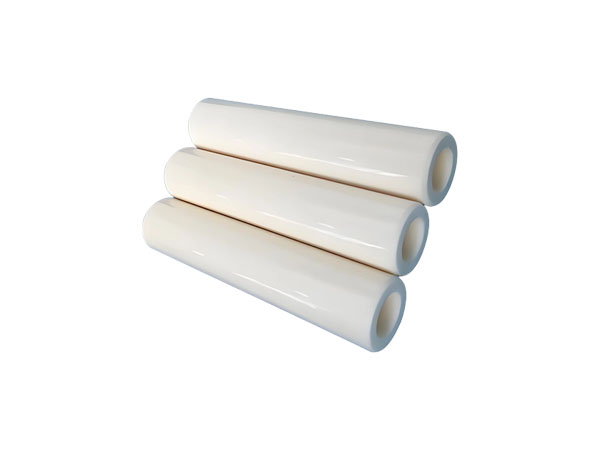
Product Introduction of Zirconia-Toughened Alumina Ceramic Tubes
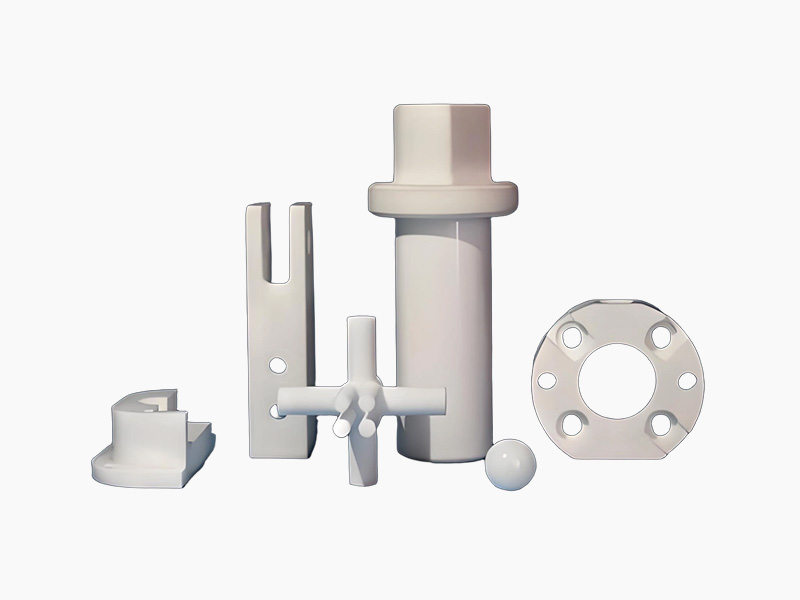
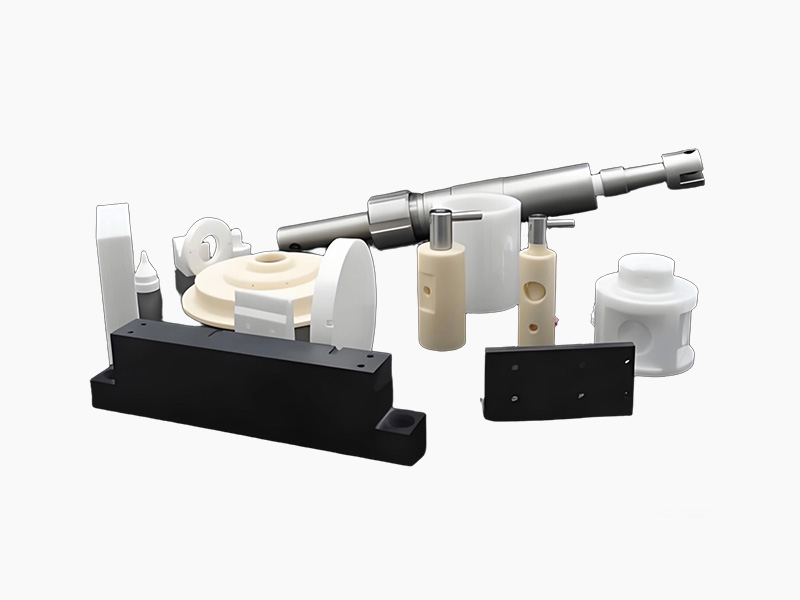
Zirconia-toughened alumina (ZTA) ceramic is a composite ceramic material with alumina as the matrix, toughened by zirconia phase transformation. The zirconia content in this material is typically 10%-40%. The composite powder is prepared through methods such as mechanical mixing, sol-gel, and co-precipitation. After molding, a dense structure is achieved through processes such as pressureless sintering or hot isostatic pressing.
Main Advantages
• Excellent wear resistance: Zirconia ceramic tubes have 10 times the wear resistance of alumina ceramics, and their friction coefficient is only 1/3 of that of alumina ceramics.
• Excellent mechanical properties: Compressive strength can reach 1200-1400 MPa, which is more than 3 times that of ordinary metals, and fracture toughness is 4 times that of alumina ceramics.
• Outstanding corrosion resistance: It can withstand long-term corrosion from concentrated hydrochloric acid and caustic soda, and its service life in chemical environments far exceeds that of metal pipes.
• Good biocompatibility: The biocompatibility index is as high as 98.7%, and it highly matches the elastic modulus of human bones, making it suitable for medical implants.
Application Fields
• Medical field: Artificial joints, dental implants, surgical instruments, etc.
• Electronics industry: Semiconductor wafer diffusion furnace components, circuit board cooling pipes.
• Chemical equipment: Corrosion-resistant pipes, oil drilling components.
• Wear-resistant machinery: Bearings, cutting tools, and other high-performance mechanical components.
• New energy field: Lithium battery sintering furnace components, sodium battery separators.
Technical Parameters
parameter | Numerical range | illustrate |
Flexural strength | This material shows a 47-72% improvement compared to pure alumina. | The toughening effect is significantly improved through the use of zirconia. |
fracture toughness | 2.5~4.5MPa·m¹/² | Superior to pure alumina ceramics |
density | 5.6-6.1 g/cm³ | Significantly higher than pure alumina ceramics. |
Mohs hardness | 8-8.5 | Slightly lower than pure alumina but with better toughness. |
Coefficient of thermal expansion | 9.5*10-6(/℃) | Good thermal stability |
Supports custom specifications.