

Ultra-high hardness and bending strength
High thermal shock resistance
Electrical insulation
High temperature resistance
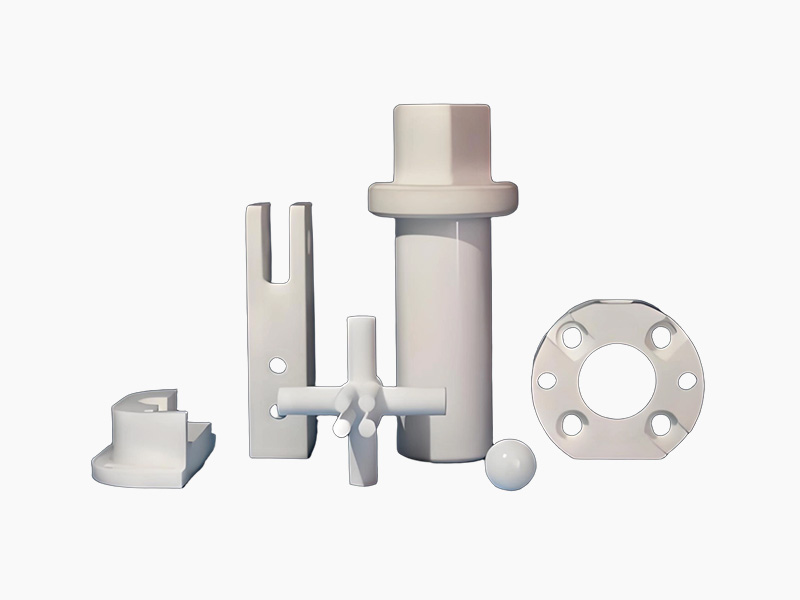
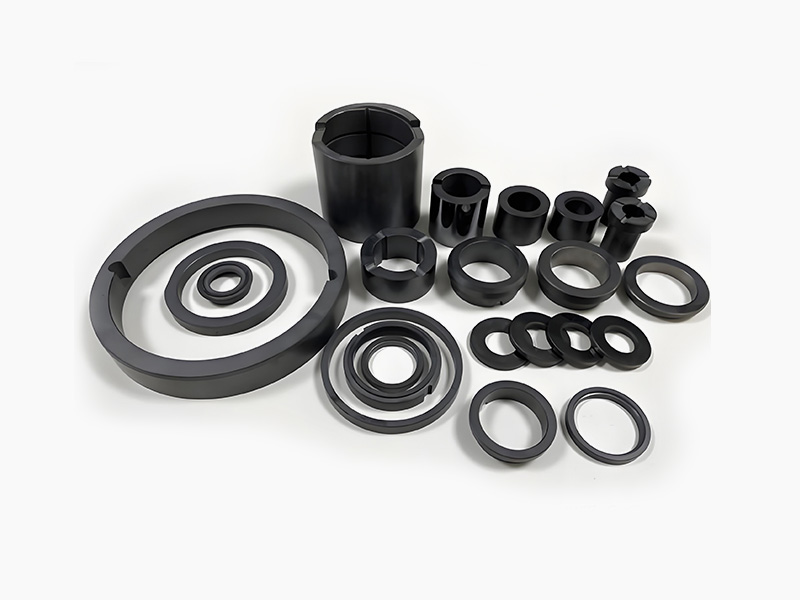
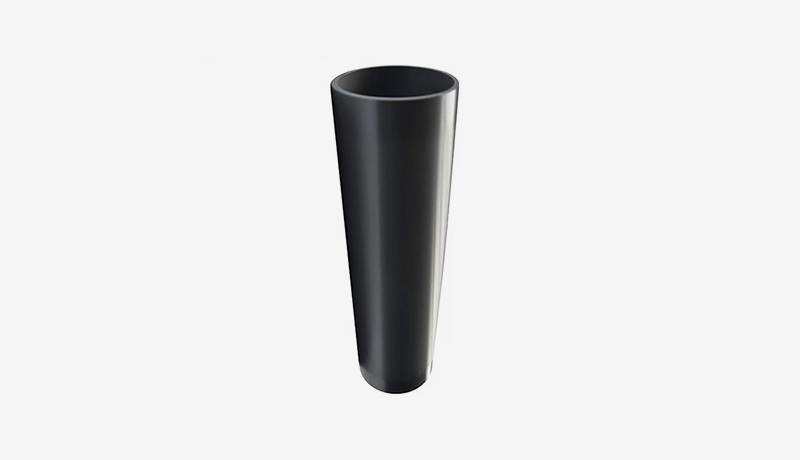
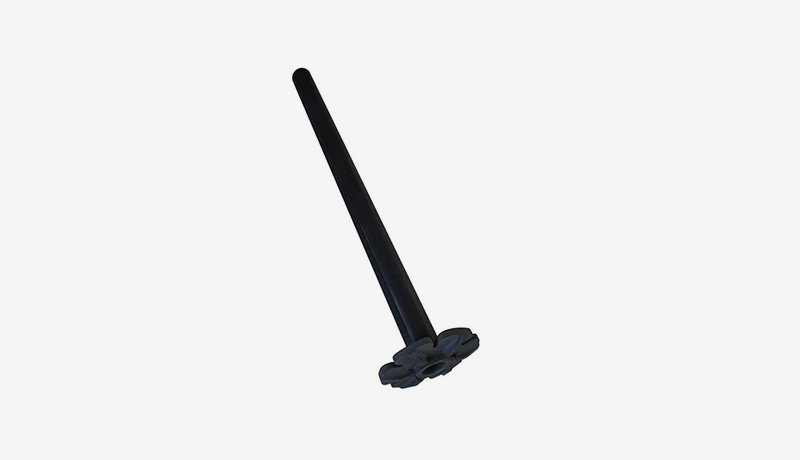
Silicon nitride ceramic dowel pins are precision-engineered locating and positioning components manufactured from silicon nitride (Si3N4), an advanced engineering ceramic designed for demanding mechanical, thermal, chemical and electrical environments.
Unlike conventional metal dowel pins, silicon nitride ceramic pins combine low density, high hardness, excellent wear resistance, high-temperature stability, corrosion resistance, electrical insulation and excellent thermal shock resistance. This combination makes them suitable for applications where ordinary steel or stainless steel locating pins may not provide the required combination of temperature resistance, dimensional stability, wear resistance or electrical isolation.
Silicon nitride is particularly valuable in high-temperature and precision applications. Its mechanical performance can be maintained at temperatures above 1200°C under appropriate application conditions, while its low thermal expansion helps maintain dimensional stability during temperature changes.
Silicon nitride is a non-oxide advanced engineering ceramic. Its strong covalent bonding and carefully controlled ceramic microstructure give it an unusual combination of mechanical, thermal, chemical and electrical properties.
For ceramic dowel pins, the material is selected because it can provide high hardness and wear resistance while remaining considerably lighter than many metal alternatives. Silicon nitride is also electrically insulating and non-magnetic, which is important in precision equipment and electrically sensitive systems.
Silicon nitride combines high hardness, good flexural strength and useful fracture toughness for demanding positioning and wear applications.
The material maintains useful mechanical performance at elevated temperatures and provides excellent resistance to thermal shock.
Silicon nitride offers strong resistance to wear, oxidation and many corrosive environments when the chemical medium is compatible with the selected grade.
Si3N4 is an electrically insulating ceramic, making it useful in applications where electrical conduction through a locating component is undesirable.
The relatively low density of silicon nitride reduces component weight compared with many metallic alternatives.
Low thermal expansion and good resistance to aging help ceramic pins maintain their geometry in demanding temperature environments.
The performance of a silicon nitride dowel pin depends on the ceramic grade, density, manufacturing process, geometry, surface finish and dimensional tolerance. The following characteristics explain why Si3N4 is selected for demanding locating and positioning systems.
Silicon nitride ceramic dowel pins can be manufactured in different diameters, lengths, end configurations, tolerances and surface finishes. Because ceramic components are often application-specific, final specifications should be confirmed according to the customer's engineering drawing and operating conditions.
| Specification | Typical / Available Options | Customization |
|---|---|---|
| Material | Silicon Nitride / Si3N4 | Material grade can be selected according to application |
| Pin Diameter | Small precision diameters to larger industrial sizes | Custom diameter according to drawing |
| Pin Length | Short locating pins to extended dowel-pin geometries | Custom length |
| Geometry | Plain cylindrical, chamfered, tapered or application-specific | Custom geometry available according to design |
| End Configuration | Flat, chamfered, radiused or specially designed ends | Available according to application requirements |
| Surface Finish | Ground, fine-ground or polished | Specified according to friction, positioning and wear requirements |
| Dimensional Tolerance | Precision tolerance according to component size and application | Drawing-based tolerance control |
| Color | Commonly gray, dark gray or black depending on material grade and process | Depends on material formulation and manufacturing route |
| Operating Temperature | Suitable for high-temperature applications; reference capability can reach about 1200°C | Actual working limit depends on environment and design |
| Electrical Property | Excellent electrical insulation | Grade and application verification available |
Outside diameter
Overall pin length
Diameter tolerance
Length tolerance
Roundness and cylindricity requirements
Chamfer size and angle
Tip geometry
Surface roughness
Material grade
Density and mechanical-property requirements
Packaging and cleanliness requirements
Inspection and documentation requirements
Silicon nitride ceramic dowel pins are particularly suitable for applications requiring a combination of precision positioning, wear resistance, high-temperature stability, corrosion resistance, electrical insulation and dimensional stability.
Turbine blade fixturing and alignment pins
Turbocharger rotor assembly locating pins
High-temperature engine valve train fixtures
Rocket nozzle assembly alignment
Satellite mechanism precision locating
Jet engine component fixturing
Diesel engine glow plug fixturing pins
Transmission assembly alignment dowels
Engine block and cylinder head locating pins
Brake system component assembly fixtures
Electric vehicle battery module alignment
Turbocharger balancing fixtures
Wafer handling equipment alignment pins
CVD/PVD chamber fixture locating pins
Lithography equipment precision dowels
IC packaging die-bond fixtures
PCB assembly tooling alignment
Electrical insulating fixture pins
Surgical instrument assembly alignment
Diagnostic equipment precision fixturing
Implantable device manufacturing tooling
Pharmaceutical processing fixtures
Laboratory automation equipment dowels
Sterilization-compatible locating pins
CNC machining fixture locating pins
Welding fixtures, tooling, and nozzle guides
Die casting and forging die alignment
Cutting tool assembly fixturing
Bearing assembly and preload fixtures
Jig and fixture construction
Gas turbine blade root alignment
Thermocouple sheath locating pins
Nuclear reactor internal fixtures
Solar cell production equipment
Fuel cell stack assembly alignment
Heat exchanger tube sheet dowels
Molten metal handling fixture pins
Continuous casting equipment alignment
Furnace lining and refractory anchoring
Powder metallurgy die assembly
Thermal spray fixture locating
Hot isostatic pressing (HIP) tooling
Food processing equipment alignment
Beverage filling machine fixturing
Sanitary valve assembly dowels
Clean-in-place (CIP) system fixtures
Biocompatible locating components
FDA-compliant equipment tooling
Manufacturing high-quality Silicon Nitride ceramic dowel pins requires a sophisticated multi-stage process that ensures optimal density, microstructure, dimensional accuracy, and surface integrity. Below is HUACIJULI's comprehensive production workflow:
High-purity Silicon Nitride (Si₃N₄) powder is selected with controlled particle size distribution (typically D50 = 0.5-1.0 μm). Sintering additives such as yttrium oxide (Y₂O₃), aluminum oxide (Al₂O₃), and magnesium oxide (MgO) are precisely blended to promote liquid-phase sintering and achieve full densification. The powder mixture undergoes high-energy ball milling to ensure homogeneous distribution and optimal particle morphology.
The blended powder is formed into cylindrical green bodies using one of several methods depending on the pin diameter and production volume:
Cold Isostatic Pressing (CIP): Powder is loaded into flexible rubber molds and compressed uniformly from all directions at pressures of 200–400 MPa, producing near-net-shape cylindrical blanks with excellent density uniformity.
Dry Pressing (Uniaxial): For high-volume production of smaller diameters, powder is compacted in precision steel dies at 100-200 MPa.
Extrusion: For continuous rod production, ceramic paste is extruded through precision dies and cut to length.
Injection Molding (CIM): For complex or small-geometry pins, ceramic feedstock is injection molded for near-net-shape forming with minimal machining allowance.
If organic binders or plasticizers were used during forming, the green bodies undergo a carefully controlled thermal debinding cycle. Temperature ramps are precisely managed (typically 0.5-2°C/min) in a controlled atmosphere to avoid cracking or distortion as the organic materials are slowly volatilized and removed.
The debound green bodies are sintered to achieve near-theoretical density using one of the following methods:
Hot Isostatic Pressing (HIP): Sintering at 1700-1850°C under 100-200 MPa of argon gas pressure, achieving >99.5% theoretical density with fine, uniform grain structure. This is the preferred method for highest-performance dowel pins.
Gas Pressure Sintering (GPS): Sintering at 1800-2000°C under 1-10 MPa nitrogen pressure, enabling full densification without external mechanical pressure while suppressing Si₃N₄ decomposition.
Pressureless Sintering: Atmospheric sintering at 1700-1850°C in a nitrogen atmosphere, suitable for less critical applications where cost optimization is prioritized.
The sintering atmosphere is carefully controlled (typically nitrogen or argon-nitrogen mixtures) to prevent decomposition of the Si₃N₄ phase and to promote the formation of elongated β-Si₃N₄ grains that enhance fracture toughness.
The sintered ceramic blanks are ground to final dimensions using multi-axis CNC cylindrical grinding machines equipped with diamond grinding wheels. The process includes:
Rough Grinding: Coarse diamond wheels (80-120 grit) remove sintering skin and bring the blank to near-final diameter.
Semi-Finish Grinding: Medium-fine wheels (200-400 grit) refine the diameter and straightness.
Finish Grinding: Fine diamond wheels (600-1500 grit) achieve final diameter tolerance (as tight as ±0.002 mm).
End Face Grinding: Precision flat grinding of pin ends to achieve length tolerance and perpendicularity.
Chamfer / Radius Grinding: End profiles (chamfer, crown, taper) are machined per specification.
For applications requiring ultra-smooth surfaces, the ground pins undergo additional superfinishing processes:
Lapping: Precision lapping with diamond slurry achieves surface roughness down to Ra 0.1 μm.
Polishing: Final polishing with colloidal silica or nano-diamond suspension produces mirror-finish surfaces (Ra < 0.05 μm) for semiconductor and optical applications.
Vibratory Finishing: Bulk tumbling with ceramic media deburrs edges and provides consistent surface finish across production batches.
Every production batch undergoes rigorous quality control:
Dimensional Inspection: CMM (Coordinate Measuring Machine) and laser micrometer verification of diameter, length, roundness, straightness, and perpendicularity.
Surface Roughness: Profilometer measurement to confirm Ra specification compliance.
Density Verification: Archimedes method testing to confirm >99% theoretical density.
Microstructure Analysis: SEM (Scanning Electron Microscopy) examination of grain structure and porosity.
Hardness Testing: Vickers hardness verification per ASTM C1327.
Flexural Strength: 4-point bend testing per ASTM C1161 for batch qualification.
Visual Inspection: 100% inspection for surface defects, chips, and cracks under magnification.
Finished pins are ultrasonically cleaned in deionized water and isopropyl alcohol to remove all grinding residues. Each pin is individually wrapped in anti-static, lint-free packaging or arranged in precision foam-lined trays to prevent transit damage. Vacuum-sealed bags with desiccant are used for moisture-sensitive shipments. All orders include a full inspection report and material certificate of conformance (CoC).
HUACIJULI is a leading manufacturer of advanced ceramic components with deep expertise in Silicon Nitride processing. Our commitment to quality, precision, and customer satisfaction sets us apart:
From raw powder formulation to final precision grinding - every step is performed in-house under strict quality control, ensuring full traceability and consistent quality.
Advanced CNC grinding and lapping capabilities achieve diameter tolerances as tight as ±0.002 mm and surface finishes down to Ra 0.05 μm, meeting the most demanding specifications.
Custom diameters, lengths, tolerances, end profiles, and surface finishes. Our engineering team works directly with customers to develop optimal solutions for unique applications.
ISO-certified quality management system. Every shipment includes full dimensional reports, material certificates, and test data. 100% inspection on critical dimensions.
Dedicated prototyping line for fast turnaround on samples and small batches. Standard products ship within 5–10 business days; custom orders within 2–4 weeks.
Efficient manufacturing processes, optimized sintering cycles, and high-yield production enable us to offer premium-quality Si₃N₄ ceramic dowel pins at highly competitive prices.
Serving customers across 30+ countries with reliable logistics, responsive technical support, and dedicated account management for long-term partnerships.
Our in-house ceramic materials laboratory continuously optimizes powder formulations, sintering parameters, and microstructure for maximum pin performance in specific applications.
HUACIJULI is a China-based supplier providing customized ceramic and refractory metal product solutions for high-temperature applications, together with laboratory equipment, laboratory consumables and battery equipment-related products.
We support customized ceramic component requirements based on customer drawings, dimensions, material specifications and application conditions.
Different applications require different combinations of strength, wear resistance, temperature resistance, electrical insulation and chemical stability.
Silicon nitride ceramic dowel pins can be developed for precision positioning, locating, tooling and high-temperature equipment applications.
HUACIJULI focuses on ceramic and refractory solutions for demanding high-temperature environments.
Customers can provide drawings, specifications, operating conditions and performance requirements for project-specific discussion.
We support sample development, customized specifications and project-oriented product solutions for industrial customers.
For customized silicon nitride ceramic dowel pins, customers are encouraged to provide the required diameter, length, tolerance, geometry, surface finish, quantity and operating environment. Additional information such as temperature, load, chemical exposure and electrical requirements can help determine the appropriate ceramic specification.
To obtain an accurate quotation and engineering recommendation, provide as much of the following information as possible:
Silicon nitride material grade or required material performance
Pin diameter
Pin length
Dimensional tolerances
Pin geometry and end configuration
Surface roughness or finish requirement
Operating temperature
Mechanical load and contact condition
Frequency of assembly or movement
Chemical medium or corrosive environment
Electrical insulation requirement
Quantity and annual demand
Packaging and cleanliness requirements
Inspection documents or test reports required
A: Silicon Nitride ceramic dowel pins are precision alignment and locating components used across aerospace, automotive, semiconductor, medical, and industrial manufacturing. They excel in applications requiring high-temperature stability (up to 1200°C+), electrical insulation, chemical resistance, non-magnetic properties, or biocompatibility - environments where conventional steel or carbide dowel pins would fail.
A: Silicon Nitride ceramic dowel pins maintain their mechanical strength at continuous operating temperatures exceeding 1200°C (2192°F). In inert or nitrogen atmospheres, they can withstand temperatures up to 1400°C (2552°F). The hardness and wear resistance of Si₃N₄ rank among the highest of all engineering ceramics, even at elevated temperatures.
A: Si₃N₄ pins are approximately 40% lighter than steel (density ~3.2 g/cm³ vs 7.8 g/cm³), significantly harder (HV 14-17 vs HV 7-9 for hardened steel), electrically insulating, non-magnetic, chemically inert, and capable of operating at temperatures far beyond the limits of any metal alloy. While the initial cost is higher, the dramatically extended service life and elimination of contamination/maintenance issues often result in lower total cost of ownership.
A: Absolutely. HUACIJULI offers fully customized Si₃N₄ ceramic dowel pins manufactured to your exact requirements, including custom diameters (from 0.5 mm to 50+ mm), lengths, tolerance grades, end configurations (chamfered, rounded, tapered, stepped), and surface finish specifications. Simply provide your engineering drawing or dimensional requirements, and our team will deliver a tailored solution.
A: HUACIJULI's precision CNC grinding and lapping capabilities achieve diameter tolerances as tight as ±0.002 mm and length tolerances of ±0.01 mm for standard sizes. Tighter tolerances are available for specific applications upon engineering review. Surface finishes as smooth as Ra 0.05 μm can be achieved through superfinishing processes.
A: Yes. Silicon Nitride has extremely high electrical resistivity (>10¹⁴ Ω·cm), high dielectric constant, and low dielectric loss. This makes Si₃N₄ dowel pins excellent electrical insulators, particularly valuable in semiconductor wafer processing equipment, electronic assembly fixtures, and any application where electrical isolation between components is critical.
A: Yes. Silicon Nitride is inherently biocompatible and non-toxic. Si₃N₄ ceramic dowel pins are suitable for use in sanitary processing equipment, food and beverage production lines, medical device assembly, and pharmaceutical manufacturing. The material does not leach harmful substances and can withstand repeated sterilization cycles (autoclave, gamma radiation, chemical sterilants) without degradation.
A: Standard catalog sizes typically ship within 5-10 business days from stock or production. Custom-engineered pins generally require 2-4 weeks depending on complexity, quantity, and current production schedule. Expedited manufacturing is available for urgent requirements - please contact our sales team for specific lead time quotes.
A: While Si₃N₄ has excellent fracture toughness for a ceramic, it should be handled with care during installation. Avoid impact loading or hammering. Use a press-fit arbor or hydraulic press for interference fits. Ensure bore holes are clean and properly sized. The low friction coefficient of Si₃N₄ facilitates smooth insertion. For specific installation guidance, consult HUACIJULI's technical support team.
A: Yes, HUACIJULI provides sample quantities for testing and evaluation purposes. We encourage customers to request samples to verify dimensional accuracy, fit, and performance in their specific application before placing full production orders. Contact our sales team with your requirements to arrange sample delivery.
M4-M5-M6-M8-M12--M14 (round head \ pointed head)
Silicon nitride ceramic dowel pins specifications and models | ||||
Serial number | model | Bottom diameter | high | Remark |
1 | M4 round head | Ø12mm | 28mm | No punch hole |
2 | M5 round head | 26.5mm | ||
3 | M6 round head | 25.9mm | ||
4 | M8 round head | 25.75mm | ||
5 | M10 round head | Ø16mm | 28.8mm | |
6 | M12 round head | 31.1mm | ||
7 | 7/16 round head | 30.65mm | ||
8 | M4 pointed | Ø12mm | 29mm | |
9 | M5 pointed | 30mm | ||
10 | M6 pointed | 31.5mm | ||
11 | M8 pointed | 31.5mm | ||
12 | M10 pointed | Ø16mm | 34.5mm | |
13 | M12 pointed | 35.8mm | ||
14 | M6 internal thread hole | Ø7mm | 19.991mm | Punching with thread and positioning groove |
15 | M8 internal thread hole | Ø8.9mm | 22.95mm | |
16 | M10 internal thread hole | Ø10.9mm | 26.6mm | |
Support personalized customization.
| Part No. | Diameter (mm) | Length (mm) | Diameter Tolerance | Length Tolerance | Surface Finish |
|---|---|---|---|---|---|
| SN-DP-0100 | 1.0 | 5 – 20 | ±0.002 mm | ±0.01 mm | Ra 0.2 μm |
| SN-DP-0150 | 1.5 | 6 – 25 | ±0.002 mm | ±0.01 mm | Ra 0.2 μm |
| SN-DP-0200 | 2.0 | 8 – 30 | ±0.002 mm | ±0.01 mm | Ra 0.2 μm |
| SN-DP-0300 | 3.0 | 10 – 40 | ±0.003 mm | ±0.01 mm | Ra 0.2 μm |
| SN-DP-0400 | 4.0 | 12 – 50 | ±0.003 mm | ±0.02 mm | Ra 0.2 μm |
| SN-DP-0500 | 5.0 | 15 – 60 | ±0.003 mm | ±0.02 mm | Ra 0.2 μm |
| SN-DP-0600 | 6.0 | 15 – 80 | ±0.005 mm | ±0.02 mm | Ra 0.2 μm |
| SN-DP-0800 | 8.0 | 20 – 100 | ±0.005 mm | ±0.02 mm | Ra 0.2 μm |
| SN-DP-1000 | 10.0 | 25 – 120 | ±0.005 mm | ±0.03 mm | Ra 0.2 μm |
| SN-DP-1200 | 12.0 | 30 – 150 | ±0.005 mm | ±0.03 mm | Ra 0.2 μm |
| SN-DP-1500 | 15.0 | 35 – 150 | ±0.008 mm | ±0.05 mm | Ra 0.2 μm |
| SN-DP-2000 | 20.0 | 40 – 200 | ±0.01 mm | ±0.05 mm | Ra 0.4 μm |
| SN-DP-2500 | 25.0 | 50 – 200 | ±0.01 mm | ±0.05 mm | Ra 0.4 μm |