
Corrosion-resistant
High temperature resistance
Non-magnetic, electrically insulated
Low thermal conductivity
Low coefficient of thermal expansion
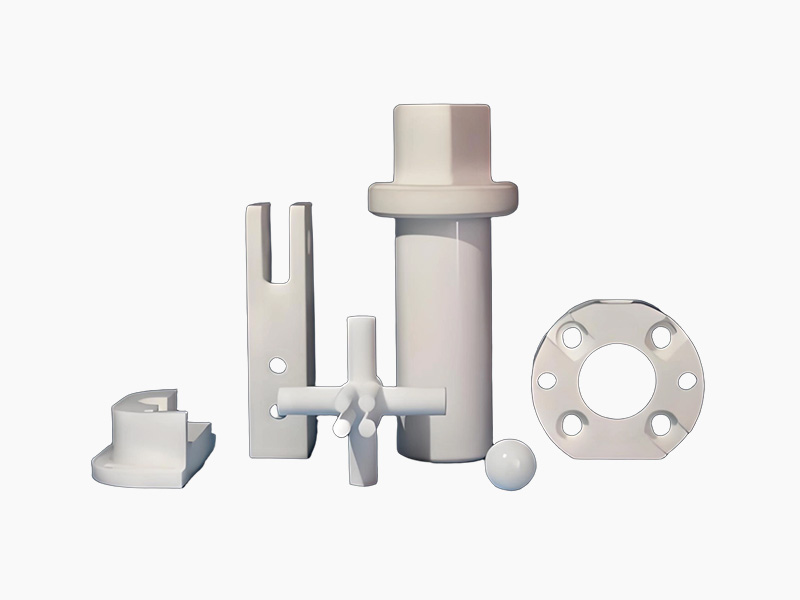
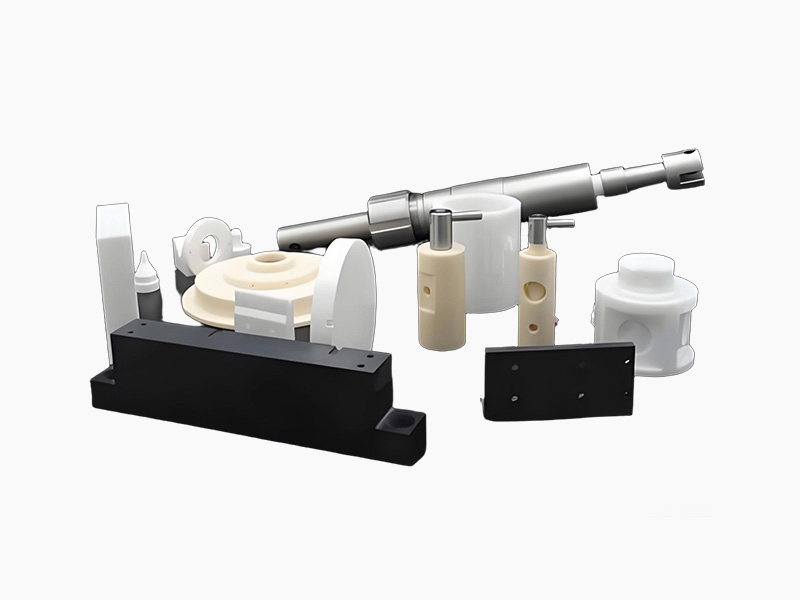
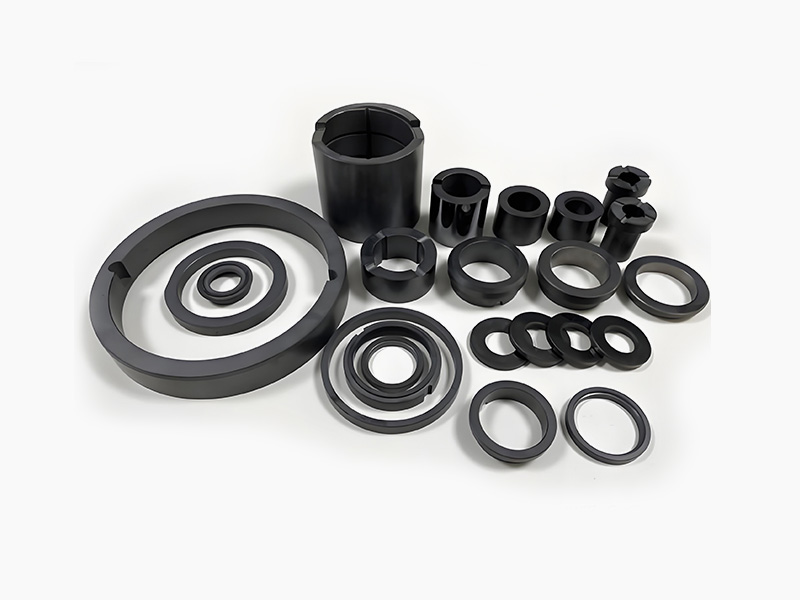
Silicon Nitride Parts are precision-engineered ceramic components manufactured from silicon nitride (Si₃N₄) for demanding applications requiring high strength, hardness, wear resistance, thermal-shock resistance, chemical stability, electrical insulation and reliable performance in elevated-temperature environments.
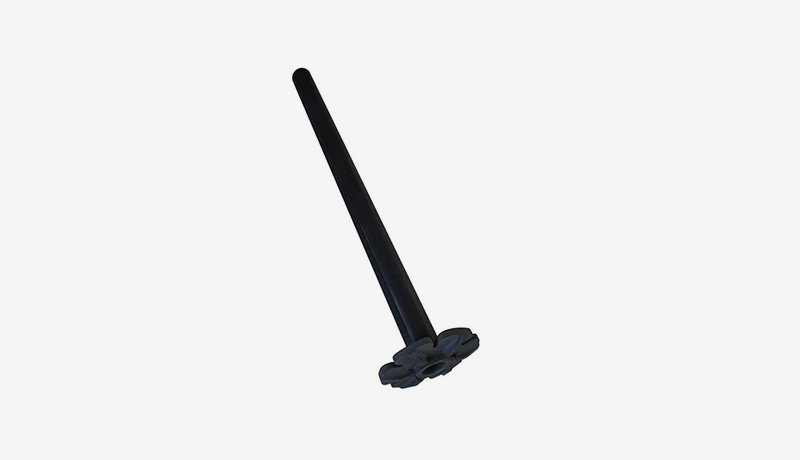
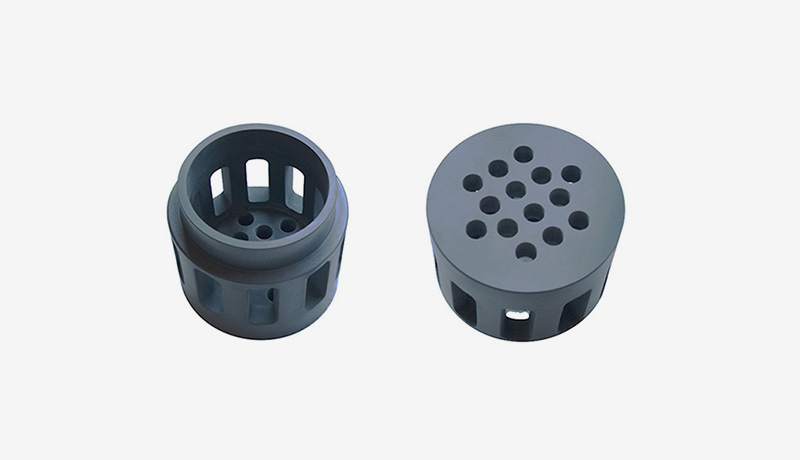
Silicon Nitride Parts are standard or customized engineering components made from silicon nitride (Si₃N₄) advanced ceramic.They can be manufactured as bearings, rollers, shafts, engine components, welding fixtures, heating-system components, semiconductor equipment parts, thermocouple protection components and other precision ceramic elements.
Silicon nitride is a high-performance non-oxide ceramic selected when conventional materials require additional mechanical strength, hardness, wear resistance, thermal stability, chemical stability or electrical insulation.
According to the supplied technical information, silicon nitride provides high strength over a wide temperature range, fracture toughness, flexural strength, mechanical fatigue and creep resistance, low density, high hardness, wear resistance, thermal-shock resistance, low thermal expansion, electrical insulation, oxidation resistance and chemical corrosion resistance.
The performance of a Silicon Nitride Part begins with the selected Si₃N₄ ceramic grade, microstructure and manufacturing route. Different silicon nitride processing methods can produce different combinations of density, strength, toughness, thermal behavior and electrical characteristics.
High strength over a wide temperature range supports mechanically loaded ceramic components.
High hardness and wear resistance support components exposed to friction, sliding, impact and repeated contact.
Low thermal expansion and favorable thermal properties support applications involving temperature changes.
The listed material grades have densities around 3.18-3.40 g/cm³, providing a relatively lightweight ceramic solution.
High volume resistivity and dielectric strength support selected electrically insulating components.
Good oxidation and chemical corrosion resistance support demanding industrial environments.
The following values are reference data from the supplied HCJL material-property table. They should be used for preliminary material selection and engineering evaluation rather than as universal guarantees for every finished component.
| Material Property | Unit | HCJL1000 | HCJL2000 | HCJL3000 | HCJL4000 |
|---|---|---|---|---|---|
| Density | g/cm³ | 3.18-3.40 | 3.18-3.40 | 3.18-3.26 | 3.23 |
| Compressive Strength | MPa | 3000 | 3000 | 3000 | 3000 |
| Flexural Strength at 25°C | MPa | 680 | 970 | 760-830 | 850 |
| Fracture Toughness KIC | MPa·m1/2 | 6.1 | 6.2 | 6.2-6.5 | 8.5 |
| Young's Modulus | GPa | 300 | 300 | 300-310 | 340 |
| Hardness | GPa | 15 | 15 | 15.3-15.6 | 16 |
| Thermal Conductivity at 20°C | W/mK | 25 | 22 | 22 | 28 |
| Maximum Temperature in Inert Atmosphere* | °C | 1400 | 1400 | 1400 | 1200 |
| Maximum Temperature in Air* | °C | 1200 | 1200 | 1200 | 1100 |
| Volume Resistivity at 25°C | ohm·cm | 1014 | 1014 | 1014 | 1012 |
| Dielectric Strength DC at 25°C | kV/mm | 19 | 19 | 19 | 19 |
When silicon nitride is converted into a finished engineering component, the material characteristics become functional component attributes. The final part can therefore be designed around mechanical load, friction, temperature, electrical isolation, chemical exposure and dimensional requirements.
High compressive and flexural strength supports load-bearing ceramic components.
High hardness supports applications involving sliding, rolling, abrasion and repeated mechanical contact.
Selected grades can be used in high-temperature environments subject to application-specific load and atmosphere.
Low CTE helps control dimensional changes during temperature variation.
High electrical resistivity and dielectric strength support insulating structures.
Finished components can be precision machined and diamond ground according to application requirements.
Silicon Nitride Parts can be engineered for different equipment according to the required combination of strength, wear resistance, thermal stability, chemical resistance and electrical insulation.
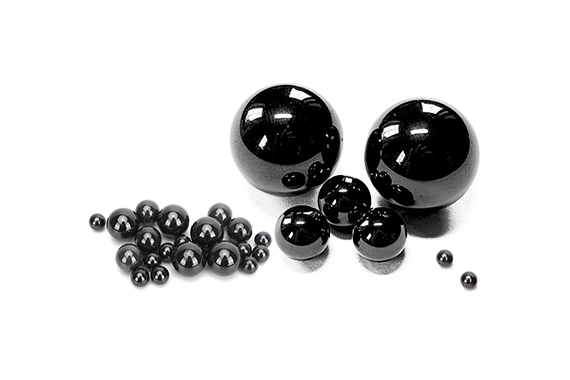
Bearing balls, rollers, rings and related rotating components can utilize silicon nitride's hardness, wear resistance and low density.
Engine valves, rocker-arm pads and sealing surfaces are identified as silicon nitride applications.
Si₃N₄ components can be used in semiconductor process equipment requiring electrical insulation and stable ceramic performance.
Welding fixtures, brazing fixtures, positioning components and TIG/plasma welding nozzles are identified applications.
Silicon nitride can be used as a support material for induction heating coil assemblies and related high-temperature structures.
Turbine blades, guide vanes and high-temperature structural components are listed applications.
Metal tube forming rollers, dies and other high-wear ceramic components can be manufactured from Si₃N₄.
Heating-element assemblies, crucible-related components and high-temperature fixtures can use silicon nitride ceramics.
Silicon Nitride Parts are generally engineered according to component drawings and application conditions rather than one universal dimensional standard.
| Specification | Reference | Application Significance |
|---|---|---|
| 1. Material Grade | HCJL1000 / HCJL2000 / HCJL3000 / HCJL4000 | Determines the relevant mechanical, thermal and electrical characteristics. |
| 2. Component Dimensions | OD, ID, length, width, thickness, profile or drawing-defined geometry | Controls equipment fit, assembly interface and load distribution. |
| 3. Surface Finish | Precision machining or diamond grinding | Important for bearing, sliding, sealing and precision-contact applications. |
| 4. Mechanical Requirement | Strength, hardness, fracture toughness and modulus | Used to match the component to mechanical load, impact and wear conditions. |
| 5. Thermal & Electrical Requirement | Temperature, thermal shock, resistivity and dielectric requirements | Helps determine suitability for high-temperature and electrically insulating applications. |
Applications where low density, high stiffness, temperature capability, wear resistance and dimensional stability are required.
Balls, rollers, rings and precision bearing components requiring hardness, wear resistance and relatively low density.
Engine valves, rocker-arm pads, sealing surfaces and other wear or temperature-exposed components.
Custom Si₃N₄ components manufactured around customer drawings, equipment interfaces and engineering requirements.
Rollers, shafts, forming dies, welding fixtures, positioning components and high-wear mechanical parts.
Silicon nitride is identified in the supplied source as a material for medical components. Specific application and regulatory requirements must be evaluated individually.
Depending on the equipment and functional requirement, Silicon Nitride Parts can include:
● Silicon nitride bearing balls and rolling elements
● Silicon nitride roller bearings and rings
● Precision ceramic shafts and axles
● Engine valves and wear components
● Induction heating coil supports
● Turbine blades and guide vanes
● Welding and brazing fixtures
● Heating-element support components
● Crucible-related ceramic components
● Metal forming rollers and dies
● TIG and plasma welding nozzles
● Thermocouple protection tubes and sheaths
● Semiconductor processing components
The manufacturing route is selected according to the desired material properties, component geometry, production volume and machining requirements.
Select the suitable Si₃N₄ grade.
Prepare Si₃N₄ powder with suitable additives.
Create the required green ceramic geometry.
Machine suitable complex features before final densification.
Densify the ceramic under controlled conditions.
Achieve precision dimensions and functional surfaces.
Verify finished parts against agreed requirements.
| Process | Process Description | Application Consideration |
|---|---|---|
| HCJL1000 - Gas Pressure Sintering | Silicon nitride powder is combined with sintering aids and binders, formed into the required geometry and sintered in a nitrogen atmosphere to promote densification. | The supplied document identifies this route for high-strength and complex-geometry silicon nitride components. |
| HCJL2000 - Hot Pressing | Silicon nitride powder and sintering aids are uniaxially pressed while heated using dedicated equipment and tooling. | The source describes this process as producing excellent mechanical properties and generally being suited to simpler shapes. |
| HCJL3000 - Hot Isostatic Pressing | High temperature and high pressure are applied uniformly using inert gas to consolidate the ceramic and reduce porosity. | The supplied information indicates that HIP can improve density, mechanical properties and reliability, with higher processing cost. |
| HCJL4000 - Extrusion Gas Pressure Sintering | Silicon nitride powder is combined with sintering aids and binders and processed into suitable ceramic forms before gas-pressure sintering. | Suitable for selected ceramic forms and subsequent precision machining. |
HCJL1000, HCJL2000, HCJL3000 and HCJL4000 provide different material-property combinations for engineering selection.
Gas-pressure sintering, hot pressing, hot isostatic pressing and extrusion gas-pressure sintering are available process routes within the supplied material system.
Components can be developed around customer drawings, equipment interfaces, dimensions and functional requirements.
Precision machining and diamond grinding can be incorporated for dimensional control and functional ceramic surfaces.
Mechanical, thermal and electrical characteristics can be considered together when selecting the appropriate ceramic grade.
Customer drawings and operating conditions can be used as the basis for customized silicon nitride component development.
Silicon nitride should be selected as an engineered ceramic material rather than simply as a direct replacement for a metal component. The correct Silicon Nitride Part depends on the relationship between material grade, geometry, load, temperature, atmosphere, friction, electrical requirements and manufacturing process.
For example, a bearing component may prioritize hardness, wear resistance, density, dimensional accuracy and surface finish. A semiconductor component may place greater emphasis on electrical insulation, chemical stability and temperature resistance. A welding fixture may require thermal-shock resistance and dimensional stability, while an aerospace component may require a different balance of density, stiffness and temperature capability.
XIAMEN HUACIJULI provides silicon nitride ceramic material and customized component solutions for bearings, aerospace equipment, engines, mechanical systems, welding equipment, semiconductor processing and other demanding industrial applications. Send your drawing, dimensions and operating conditions for an application-specific Silicon Nitride Parts evaluation.
| Property | Unit | HCJL1000 | HCJL2000 | HCJL3000 | HCJL4000 |
|---|---|---|---|---|---|
| Density | g/cm3 | 3.18-3.40 | 3.18-3.40 | 3.18-3.26 | 3.23 |
| Compressive Strength | MPa | 3000 | 3000 | 3000 | 3000 |
| Flexural Strength @ 25°C | MPa | 680 | 970 | 760-830 | 850 |
| Weibull-Modulus m | – | 18 | 20 | 12 | 18 |
| Fracture Toughness KIc | MPa m1/2 | 6.1 | 6.2 | 6.2-6.5 | 8.5 |
| Young‘s Modulus | GPa | 300 | 300 | 300-310 | 340 |
| Poisson’s Ratio | – | 0.26 | 0.26 | 0.26 | 0.28 |
| Hardness | GPa | 15 | 15 | 15.3-15.6 | 16 |
| Property | Unit | HCJL1000 | HCJL2000 | HCJL3000 | HCJL4000 |
|---|---|---|---|---|---|
| Thermal Conductivity @ 20°C | W/mK | 25 | 22 | 22 | 28 |
| Thermal Shock Parameter R1 | K | 558 | 748 | 590-620 | 700 |
| Thermal Shock Parameter R2 | W/m | 14 | 18 | 15 | 19 |
| CTE1 25°C ➞ 250°C | 10-6/K | 1.4 | 1.4 | 1.4 | 1.9 |
| CTE1 25°C ➞ 1000°C | 10-6/K | 3.2 | 3.2 | 3.2 | 3.2 |
| Maximum Temperature (Inert) 2 | °C | 1400 | 1400 | 1400 | 1200 |
| Maximum Temperature (Air) 2 | °C | 1200 | 1200 | 1200 | 1100 |
1 Coefficient of Thermal Expansion (CTE) describes how the size of an object changes with a change in temperature.
2 No load.
| Property | Unit | HCJL1000 | HCJL2000 | HCJL3000 | HCJL4000 |
|---|---|---|---|---|---|
| Volume Resistivity @ 25°C | ohm-cm | 1014 | 1014 | 1014 | 1012 |
| Dielectric Strength DC @ 25°C | kV/mm | 19 | 19 | 19 | 19 |
| Dielectric Constant | 1 MHz | 8 | 8 | 8 | 7 |
Disclaimer: The values presented are mean and typical of those resulted from test samples. They are provided as an indication only to serve as guidance in the design of ceramic components and are not guaranteed in any way. The actual values can vary according to the shape and size of the envisioned component.