



1. Extremely High-Temperature Stability
The supplied technical data specifies a maximum temperature in air of 1400°C. The material is also described as suitable for long-term operation at approximately 1200°C, subject to application conditions.



Density (g/cm3) 〉3.2g/cm3
Porosity (%)〈 0.3%
Hardness (HRA) 〉93
Max using temperature at air (℃) 1400℃
Bending strength (MPa) 986 (20℃), 485 (1400℃)
Special heat (J/g ·K) 0.71
Heat conductivity[W/(m·K)]28.8
Thermal diffusion coefficient (300℃)/(cm2/s) 0.690
Volume resistance (Ω·m)1.4x10⁵ (20℃), 4x10⁸ (1050℃)
High-performance silicon nitride riser tubes for aluminum alloy casting, magnesium alloy casting, precision metal melting and other demanding high-temperature applications.
Designed for environments requiring high-temperature stability, thermal shock resistance, corrosion resistance, high mechanical strength, low contamination and long-term dimensional stability.
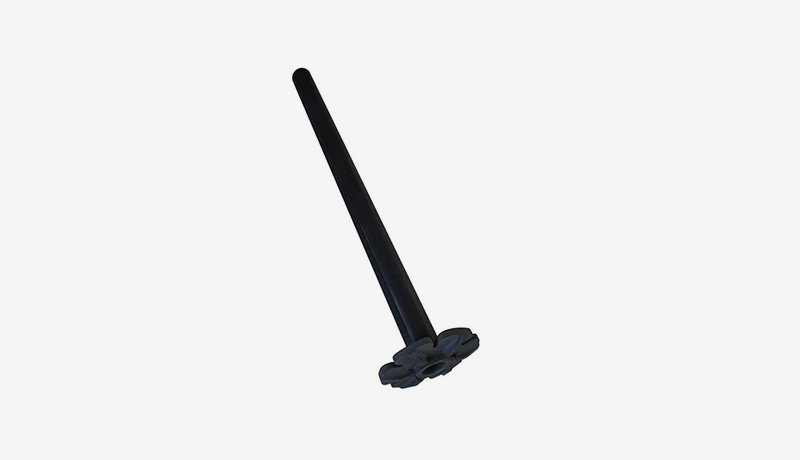
A Silicon Nitride Riser is a high-performance Si3N4 ceramic tube used to transfer or raise molten metal in casting and melting systems. It is designed for demanding thermal, mechanical and chemically corrosive conditions where conventional metal or quartz components may have limitations.
Silicon nitride riser tubes are particularly relevant to aluminum and magnesium alloy low-pressure casting, precision metal melting, vacuum induction melting systems and continuous casting equipment because the material combines high-temperature stability, thermal shock resistance, corrosion resistance, mechanical strength and low contamination characteristics.
A riser tube is a critical component in many molten-metal transfer and casting systems. It provides a controlled passage through which molten metal can move from a furnace, crucible or pressure chamber toward the casting system.
During operation, the riser may be exposed to molten aluminum, magnesium, zinc and other metal alloys, together with repeated heating and cooling cycles. The material therefore needs to resist thermal shock, chemical attack, mechanical wear and dimensional degradation.
Silicon nitride provides a combination of properties that makes it suitable for this environment. Its low thermal expansion helps reduce thermal stress, while its high mechanical strength and thermal shock resistance support repeated operation. Its corrosion resistance can also help limit interaction between the ceramic tube and molten metal.
For aluminum and magnesium alloy casting, a properly designed silicon nitride riser can help maintain stable molten-metal flow and reduce the risk of contamination associated with unsuitable tube materials.
Silicon nitride (Si3N4) is a non-oxide advanced structural ceramic known for its combination of high-temperature performance, mechanical strength, hardness, thermal shock resistance, electrical insulation and chemical stability.
The following values are the technical data supplied for this Silicon Nitride Riser product. Actual properties may vary with ceramic grade, additives, forming method, sintering conditions, density, microstructure and finished geometry.
| Property | Supplied Technical Data | Relevance to Riser Tubes |
|---|---|---|
| Material | Silicon Nitride (Si3N4) | Advanced non-oxide structural ceramic |
| Density | > 3.2 g/cm³ | Relatively low density for a high-performance structural ceramic |
| Porosity | < 0.3% | Low porosity supports dense ceramic structure |
| Hardness | HRA > 93 | High resistance to wear and mechanical surface damage |
| Vickers Hardness Reference | Hv > 1500 | Supports wear resistance in demanding service |
| Maximum Temperature in Air | 1400°C | High-temperature material capability |
| Long-Term Working Temperature | Up to approximately 1200°C according to supplied information | Relevant to continuous high-temperature operation |
| Flexural Strength at 20°C | 986 MPa | High mechanical strength |
| Flexural Strength at 1400°C | 485 MPa | Retained mechanical strength at elevated temperature |
| Specific Heat Capacity | 0.71 J/g·K | Relevant to thermal response |
| Poisson's Ratio at 20°C | 0.290 | Mechanical design parameter |
| Thermal Conductivity | 28.8 W/(m·K) | Supports heat transfer through the ceramic wall |
| Thermal Diffusivity at 300°C | 0.690 cm²/s | Relevant to transient thermal response |
| Volume Resistivity at 20°C | 1.4 × 10⁵ Ω·m | Electrical insulation characteristic |
| Volume Resistivity at 1050°C | 4 × 10⁸ Ω·m | Electrical behavior at elevated temperature |
The supplied technical data specifies a maximum temperature in air of 1400°C. The material is also described as suitable for long-term operation at approximately 1200°C, subject to application conditions.
Low thermal expansion and strong thermal shock resistance allow the riser to withstand repeated temperature changes during metal filling, casting and cooling cycles.
Silicon nitride is described as highly resistant to molten aluminum, magnesium, zinc and other metals and alloys, helping reduce material interaction and contamination.
The supplied data reports a flexural strength of 986 MPa at 20°C and 485 MPa at 1400°C, providing a strong mechanical basis for high-temperature ceramic tube applications.
With supplied hardness values above HRA 93 and Hv 1500, silicon nitride provides strong resistance to mechanical wear and surface degradation.
The supplied application information describes the material as resistant to melting, corrosion and interaction with molten metal, helping maintain metal purity in suitable casting conditions.
The supplied product description states that the surface does not readily retain furnace slag, which can simplify cleaning and routine maintenance.
With a supplied density above 3.2 g/cm³, silicon nitride can provide a relatively lightweight solution compared with many metallic high-temperature components, potentially reducing equipment load.
Riser tubes are typically designed around the casting machine, furnace, crucible, molten-metal volume, operating temperature and required flow rate. Therefore, dimensional specifications should be confirmed according to the customer's equipment and technical drawing.
| Material | Silicon Nitride (Si3N4) |
|---|---|
| Product Type | Silicon Nitride Riser / Riser Tube / Ceramic Melt Transfer Tube |
| Density | > 3.2 g/cm³ |
| Porosity | < 0.3% |
| Hardness | HRA > 93; supplied reference Hv > 1500 |
| Maximum Temperature in Air | 1400°C according to supplied technical data |
| Long-Term Working Temperature | Approximately 1200°C according to supplied information |
| Flexural Strength | 986 MPa at 20°C; 485 MPa at 1400°C |
| Thermal Conductivity | 28.8 W/(m·K) |
| Specific Heat | 0.71 J/g·K |
| Thermal Diffusivity | 0.690 cm²/s at 300°C |
| Volume Resistivity | 1.4 × 10⁵ Ω·m at 20°C; 4 × 10⁸ Ω·m at 1050°C |
| Outer Diameter | Custom according to equipment and drawing |
| Inner Diameter | Custom according to molten-metal flow requirements |
| Wall Thickness | Application dependent; thin-wall designs can be considered according to structural requirements |
| Connection | Custom connection and mounting configuration |
| Surface Finish | Application-specific ceramic finishing |
Silicon Nitride Riser tubes are suited to industrial systems where molten metal must be transported through a high-temperature, chemically aggressive environment while maintaining stable flow and limiting contamination.
Used for controlled transfer of molten aluminum alloy during low-pressure casting, including precision cast components such as automotive wheels and engine-related components.
Suitable for magnesium alloy casting systems where low density, high-temperature resistance and resistance to molten-metal interaction are important.
Can serve as a ceramic transfer or guiding tube in vacuum induction melting systems where high temperature and molten-metal resistance are required.
Used as a ceramic guide or transfer component in continuous casting equipment exposed to molten metal and thermal cycling.
Applicable to precision melting systems where dimensional stability, low contamination and resistance to molten-metal corrosion are important.
Suitable for selected alloy-handling systems where the ceramic tube must withstand elevated temperature and contact with molten metal.
Silicon nitride ceramic components can be considered for specialized high-temperature manufacturing environments where material stability and low contamination are required. Final material compatibility should be evaluated for the specific process chemistry.
Used as a riser, guide tube or transfer tube in specialized molten-metal equipment where resistance to metal attack, thermal shock and high temperature is required.
In low-pressure casting, the riser tube plays a direct role in transporting molten alloy from the holding furnace toward the mold. The tube therefore needs to maintain an open and stable passage while exposed to molten metal and repeated temperature changes.
Silicon nitride is suitable for this role because its thermal shock resistance helps it tolerate rapid temperature changes, while its corrosion resistance helps reduce interaction with molten aluminum and magnesium alloys.
The supplied application description specifically identifies automotive wheel production and engine-cylinder-related precision castings as examples where stable molten-metal lifting and transfer can help reduce casting defects such as porosity and flow-related problems.
Silicon nitride risers are described for molten aluminum and aluminum-alloy casting because of their high-temperature stability and resistance to molten-metal corrosion.
The supplied information identifies magnesium alloy casting as an application, including environments where corrosion resistance and stable high-temperature performance are required.
The supplied description also refers to resistance against molten zinc and other metals and alloys. Specific compatibility should be verified for each alloy chemistry and operating temperature.
The supplied product information states that the riser can be used for alloys containing sodium and strontium. Process compatibility should be evaluated according to the specific alloy composition.
A silicon nitride riser normally operates as part of a larger molten-metal handling system. The following components may be associated with the riser assembly or the surrounding ceramic processing system.
The primary Si3N4 tube responsible for guiding molten metal between the furnace or pressure chamber and the casting system.
A related ceramic tube configuration used for controlled transfer of molten metal in high-temperature equipment.
Used as a high-temperature guiding component in melting and casting equipment where molten metal and furnace slag may be present.
Silicon nitride can also be processed into protective ceramic tubes for selected high-temperature industrial systems.
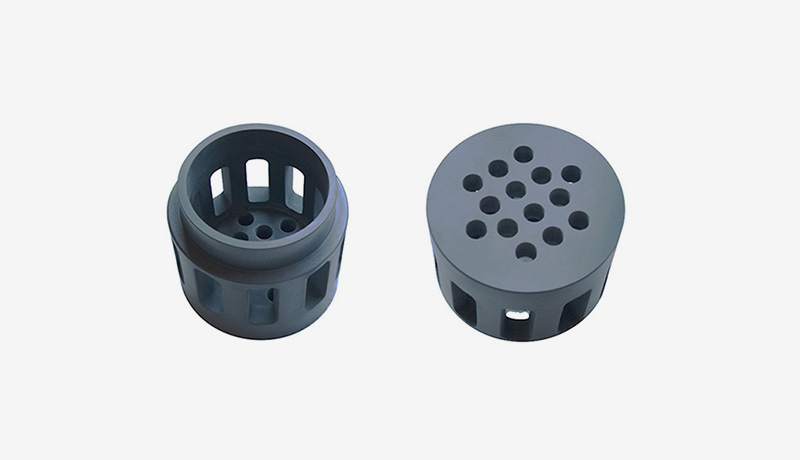
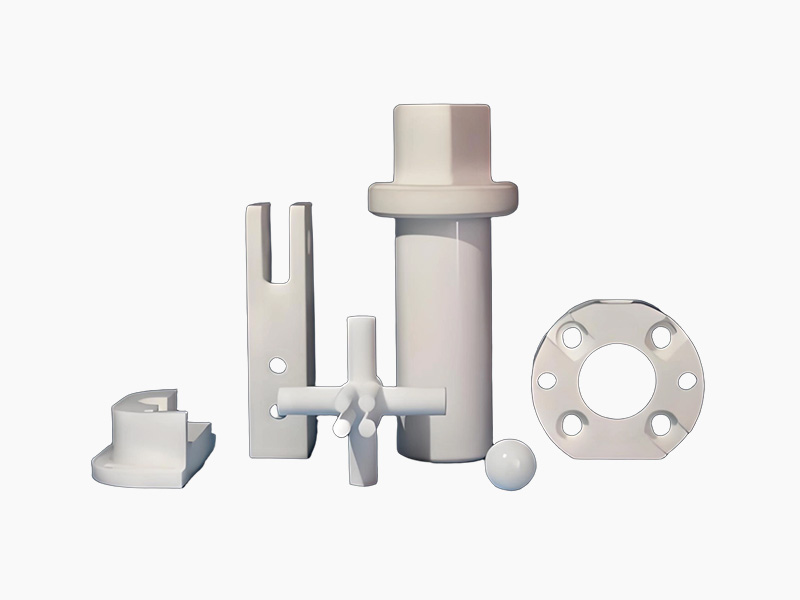
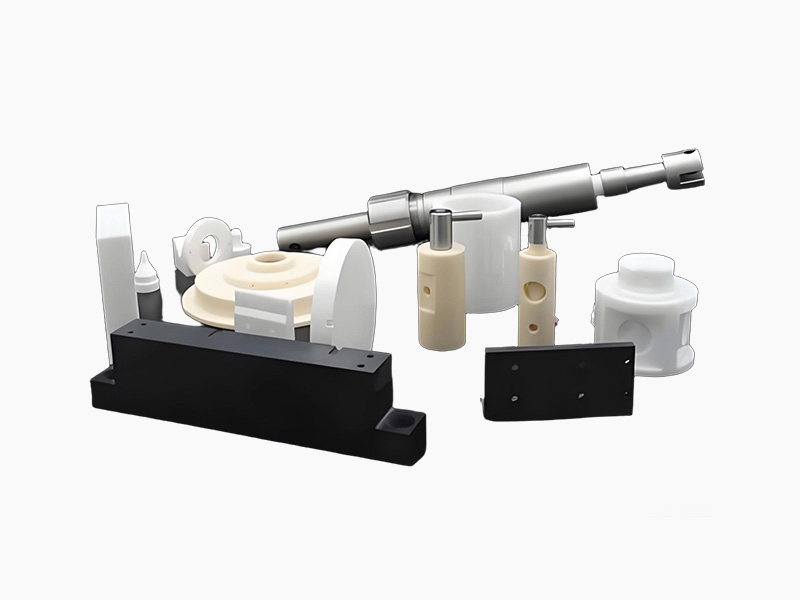
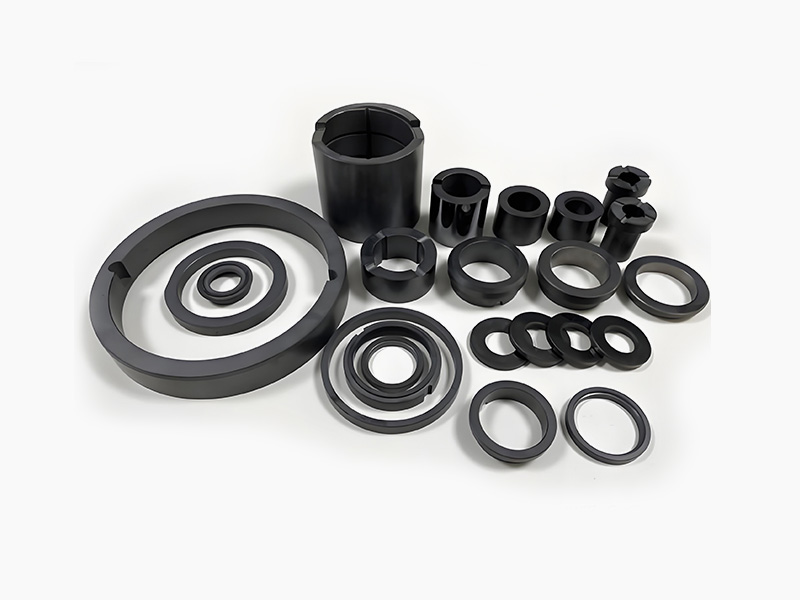
Related Si3N4 components can include rings, sleeves, rollers, pins and other custom ceramic parts for high-temperature industrial equipment.
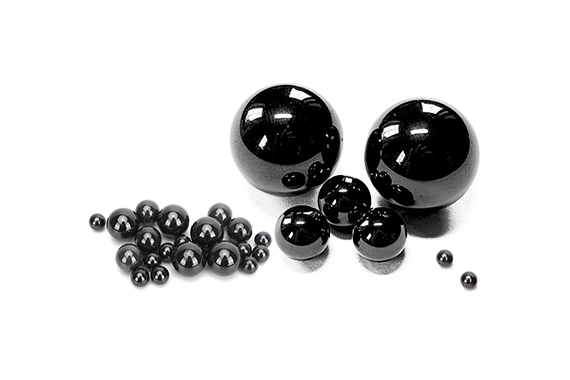
Silicon nitride spheres are a separate Si3N4 component category rather than the primary function of a riser tube. Their use should be evaluated independently according to the specific ceramic or mechanical application.
The manufacturing of a silicon nitride riser requires controlled ceramic forming, high-temperature sintering and precision finishing. Tube geometry, density and wall thickness must be controlled because the finished component operates under simultaneous thermal, mechanical and chemical stresses.
High-purity silicon nitride powder is selected and prepared according to the required material performance.
Suitable binders, additives and sintering aids are mixed with the ceramic powder to obtain controlled forming and densification characteristics.
The riser blank is formed into the required tube geometry. The forming method depends on the dimensions, wall thickness and production requirements.
Controlled drying and binder removal prepare the formed ceramic body for the high-temperature sintering stage.
The supplied product information specifies a gas-pressure sintering process for achieving a dense and mechanically stable silicon nitride ceramic structure.
Sintered components are machined to establish the required basic dimensions and interfaces.
Precision ceramic grinding can be applied to the inner diameter, outer diameter, end faces and other critical surfaces according to the drawing.
Dimensional, visual and material-related inspections are performed according to the applicable product specifications and customer requirements.
Finished riser tubes are cleaned and carefully packaged to protect ceramic surfaces and tube geometry during transportation.
Consistent riser performance depends on ceramic density, porosity, dimensions, wall thickness, surface condition and material properties. Quality control should therefore cover both the ceramic material and the finished tube geometry.
The supplied company information states that XIAMEN HUACIJULI uses gas-pressure sintering and operates with ISO 9001 quality management certification. These are presented here as company-supplied manufacturing and quality-system information.
Casting equipment varies significantly in furnace configuration, pressure system, molten-metal capacity and connection design. For this reason, Silicon Nitride Riser tubes are generally manufactured according to equipment dimensions or customer drawings.
XIAMEN HUACIJULI provides customized advanced ceramic components for demanding industrial applications. For Silicon Nitride Riser products, the manufacturing approach focuses on material selection, dense ceramic processing, precision geometry and application-specific customization.
Dimensions, geometry and connection configurations can be customized for different casting machines and molten-metal transfer systems.
The supplied manufacturing information identifies gas-pressure sintering as the ceramic processing method used for the product.
The supplied company information states ISO 9001 certification and emphasizes batch consistency and quality control.
The company focuses on technical ceramic components for high-temperature, wear-resistant and chemically demanding industrial environments.
Customers can provide furnace type, alloy, temperature, dimensions, connection method and operating conditions for application-specific evaluation.
The supplied company information describes technical consultation, installation guidance and after-sales response for customers using customized ceramic components.
The supplied product information describes a service life exceeding six months under its stated operating conditions. Actual service life depends on molten-metal composition, operating temperature, thermal cycling, mechanical loading, installation method, wall thickness and maintenance practices.
Because silicon nitride resists corrosion, wear and thermal shock, it can reduce the frequency of replacement compared with less suitable materials in appropriate applications. Regular inspection remains important for identifying mechanical damage, cracking, abnormal wear or other signs of deterioration.
A Silicon Nitride Riser is a high-temperature Si3N4 ceramic tube used to guide or transfer molten metal in casting, melting and other high-temperature industrial systems.
Silicon nitride combines high-temperature stability, thermal shock resistance, high hardness, mechanical strength, corrosion resistance and low contamination characteristics, making it suitable for demanding molten-metal environments.
The supplied technical data specifies a maximum temperature in air of 1400°C and describes long-term working temperatures up to approximately 1200°C. The supplied product advantages also mention temperatures up to 1600°C. These values should be interpreted according to the specific material grade, atmosphere, thermal cycle, geometry and application rather than as one universal service rating.
Yes. Aluminum alloy low-pressure casting is one of the principal applications described for the product. Silicon nitride provides resistance to molten aluminum, thermal shock and high temperature, supporting stable molten-metal transfer.
Yes. The supplied application information specifically identifies magnesium alloy casting as an application for silicon nitride riser tubes.
The supplied product information describes silicon nitride as highly resistant to corrosion from molten aluminum and other metals. Actual chemical compatibility depends on alloy composition, temperature, exposure time and atmosphere, so application-specific validation is recommended.
The supplied information describes the material as resistant to melting and corrosion in the stated applications and as having low contamination characteristics. Actual metal purity depends on the entire casting system, alloy, atmosphere and process conditions.
The supplied product information states that furnace slag does not readily adhere to the product surface, which can make maintenance and cleaning easier.
The supplied product information states that service life can exceed six months under the described conditions. Actual service life depends on temperature, alloy chemistry, thermal cycling, mechanical loading, installation and operating practices.
Yes. The supplied company information states that dimensions, shape and connection methods can be customized for different casting equipment. Customers can provide drawings, samples or equipment dimensions for evaluation.
Useful information includes outer diameter, inner diameter, overall length, wall thickness, connection dimensions, alloy type, operating temperature, furnace type, casting process, thermal cycling frequency and an existing drawing or sample if available.
The supplied product information identifies gas-pressure sintering as the manufacturing process. A complete production route can include powder preparation, mixing, forming, drying, debinding, gas-pressure sintering, machining, precision grinding, inspection and packaging.
Continuous casting is included among the described application areas. Suitability should be confirmed according to the molten-metal composition, operating temperature, flow conditions, thermal cycling and tube geometry.
Send your riser drawing, dimensions, existing sample or casting-equipment requirements to XIAMEN HUACIJULI for an application-specific Silicon Nitride Riser solution.
| Property | Supplied Technical Data | Relevance to Riser Tubes |
|---|---|---|
| Material | Silicon Nitride (Si3N4) | Advanced non-oxide structural ceramic |
| Density | > 3.2 g/cm³ | Relatively low density for a high-performance structural ceramic |
| Porosity | < 0.3% | Low porosity supports dense ceramic structure |
| Hardness | HRA > 93 | High resistance to wear and mechanical surface damage |
| Vickers Hardness Reference | Hv > 1500 | Supports wear resistance in demanding service |
| Maximum Temperature in Air | 1400°C | High-temperature material capability |
| Long-Term Working Temperature | Up to approximately 1200°C according to supplied information | Relevant to continuous high-temperature operation |
| Flexural Strength at 20°C | 986 MPa | High mechanical strength |
| Flexural Strength at 1400°C | 485 MPa | Retained mechanical strength at elevated temperature |
| Specific Heat Capacity | 0.71 J/g·K | Relevant to thermal response |
| Poisson's Ratio at 20°C | 0.290 | Mechanical design parameter |
| Thermal Conductivity | 28.8 W/(m·K) | Supports heat transfer through the ceramic wall |
| Thermal Diffusivity at 300°C | 0.690 cm²/s | Relevant to transient thermal response |
| Volume Resistivity at 20°C | 1.4 × 10⁵ Ω·m | Electrical insulation characteristic |
| Volume Resistivity at 1050°C | 4 × 10⁸ Ω·m | Electrical behavior at elevated temperature |