



01
High Mechanical Strength
Flexural strength above 600 MPa and compressive strength above 1500 MPa support the rotor under mechanical and thermal service conditions.



Density:>3.2g/cm3
Si3N4 content:>92%
Bending strength:>600Mpa
Compressive strength:>1500Mpa
Thermal conductivity (W/mk):16-22
Thermal expansion coefficient (RT-1000℃):3.2
Maximun service temperature (20℃):1400℃
Hardness (HRA):>92
High-performance Si₃N₄ ceramic rotors for inert-gas degassing, hydrogen removal and melt purification in aluminum and non-ferrous metal processing.
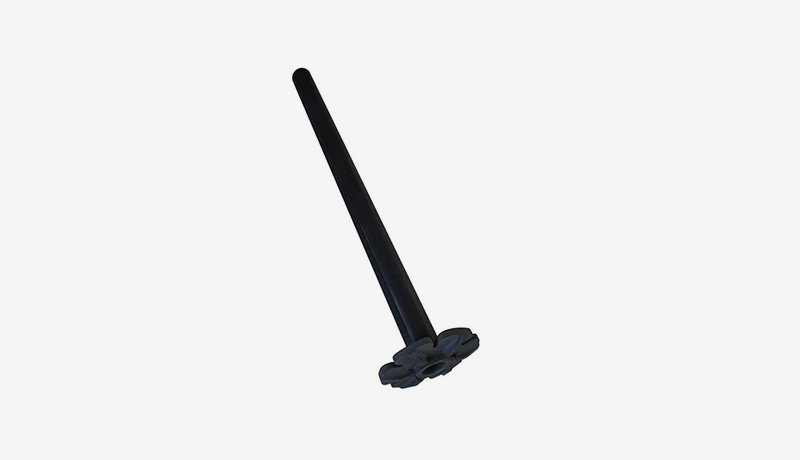
A Silicon Nitride Degassing Rotor is a high-temperature engineering ceramic component used in molten-metal treatment systems. Its primary function is to disperse nitrogen or argon into molten aluminum and other non-ferrous metal melts as fine, distributed gas bubbles.
During rotation, the rotor breaks the injected inert gas into many small bubbles and distributes them throughout the moving melt. The bubbles provide a large gas-liquid contact area and can absorb dissolved hydrogen. As the bubbles rise, they help transport hydrogen and suspended impurities toward the surface, supporting melt purification before casting.
The working principle of a silicon nitride degassing rotor is based on the controlled dispersion of an inert gas into molten metal. Nitrogen or argon is introduced through the rotor while the rotor rotates inside the melt.
A well-designed rotor does not simply create a single upward gas stream. Rotational movement promotes dispersion and mixing, increasing the contact between gas bubbles and molten metal. The resulting bubble path can be distributed through the melt rather than behaving as a single straight rising gas column.
Silicon nitride (Si₃N₄) is an advanced non-oxide engineering ceramic. For degassing rotors, the material is selected for its combination of mechanical strength, thermal stability, low thermal expansion, thermal shock resistance, corrosion resistance and non-wetting behavior toward molten aluminum and other non-ferrous metal melts.
| Property | Reference Value | Relevance to Degassing Rotor |
|---|---|---|
| Material | Silicon Nitride / Si₃N₄ | Advanced engineering ceramic for high-temperature melt treatment. |
| Si₃N₄ Content | >92% | High ceramic content for demanding thermal and mechanical service. |
| Density | >3.2 g/cm³ | Dense ceramic structure supports strength and resistance to melt penetration. |
| Flexural Strength | >600 MPa | Supports mechanical integrity during rotation and thermal cycling. |
| Compressive Strength | >1500 MPa | Helps resist compressive and mechanical loads in molten-metal treatment. |
| Thermal Conductivity | 16-22 W/m·K | Supports heat transfer through the ceramic during high-temperature operation. |
| Porosity | 0 | Dense structure is beneficial for melt-contact applications. |
| Thermal Expansion Coefficient | 3.2 × 10⁻⁶/K, room temperature-1000°C | Low expansion helps reduce thermal dimensional change. |
| Maximum Use Temperature | Reference value: 1400°C | Provides a high-temperature material margin; actual service depends on system design. |
| Hardness | >92 HRA | High hardness supports wear resistance in molten-metal environments. |
| Color | Typically light gray | Typical appearance of the supplied ceramic material. |
Technical values above are reference specifications supplied for this product. Final values should be confirmed against the agreed material grade, drawing and inspection requirements.
Flexural strength above 600 MPa and compressive strength above 1500 MPa support the rotor under mechanical and thermal service conditions.
The low thermal expansion coefficient helps reduce dimensional changes when the rotor is exposed to repeated high-temperature cycles.
Silicon nitride's low thermal expansion and strong ceramic structure make it suitable for demanding temperature-change environments.
The material is designed to resist wetting and adhesion by aluminum and other non-ferrous molten metals, helping maintain rotor surface performance.
Silicon nitride provides strong resistance to many aggressive high-temperature environments encountered in non-ferrous metal processing.
The supplied specification identifies zero porosity, supporting a dense structure for direct contact with molten metal.
Hardness above 92 HRA contributes to resistance against mechanical wear during repeated rotor operation.
The reference maximum use temperature is 1400°C, providing a material platform for demanding thermal-processing equipment.
The following dimensions represent common configurations. Rotor geometry, shaft length, gas passages, connection details and other dimensions can be customized according to customer drawings and equipment requirements.
Used in aluminum melt treatment systems to disperse nitrogen or argon and support the removal of dissolved hydrogen before casting.
Suitable for melt treatment of aluminum alloys where gas removal and reduction of entrained inclusions are important to final casting quality.
The rotor can be considered for zinc and other non-ferrous metal treatment environments where ceramic corrosion resistance and non-wetting behavior are required.
Integrated into foundry melt-treatment equipment to help condition molten metal before downstream casting operations.
Used in furnace-based treatment systems where molten metal requires controlled inert-gas bubbling before transfer or casting.
Applicable to batch or integrated melt purification systems where fine bubble dispersion and stable ceramic performance are required.
The rotor is normally one functional component within a larger molten-metal treatment system. Depending on the equipment design, it can be integrated with the following components or systems:
The primary equipment in which the ceramic rotor rotates and disperses inert gas into the melt.
Used as the gas-dispersion element in dedicated aluminum melt purification equipment.
The rotating rotor combines mechanical movement with gas dispersion to improve melt mixing.
The rotor works with the gas supply and injection path delivering nitrogen or argon into the melt.
Can be integrated into furnace-side equipment for treatment of molten aluminum and alloys.
Supports inert-gas treatment while molten metal is held before transfer or casting.
Used as the rotating ceramic element in foundry melt-cleaning and conditioning systems.
Custom shaft lengths and rotor geometries can be configured for specific industrial machines.
The manufacturing route focuses on producing a dense, mechanically strong and dimensionally controlled silicon nitride ceramic component capable of operating in rotating molten-metal treatment equipment. The supplied production advantages specifically include cold isostatic pressing and gas-pressure sintering.
High-quality silicon nitride powder is selected and prepared according to the required ceramic material formulation.
Powder and appropriate processing additives are conditioned to achieve the required forming behavior and final ceramic properties.
Cold isostatic pressing applies pressure uniformly to form a dense green body and establish the basic rotor geometry.
The formed ceramic body is shaped and prepared for the final sintering stage according to the required rotor geometry.
Controlled gas-pressure sintering densifies the silicon nitride ceramic and develops the required mechanical and thermal performance.
After sintering, required surfaces and dimensions are precision-machined according to the component drawing.
Dimensions, appearance and relevant material characteristics are checked against the agreed technical requirements.
The finished rotor is cleaned, protected and packaged to reduce damage risks during storage and transportation.
The supplied strength values provide a high-strength ceramic platform for rotating service.
Low thermal expansion helps the component accommodate repeated temperature changes.
Non-wetting behavior helps reduce adhesion of aluminum and other non-ferrous molten metals to the ceramic surface.
The ceramic material is designed for demanding high-temperature chemical environments encountered during metal processing.
XIAMEN HUACIJULI focuses on advanced silicon nitride ceramic components for demanding industrial applications. For degassing rotor projects, the manufacturing approach can be matched to the customer's material, dimensional and equipment requirements.
Cold isostatic pressing is used as a key forming route for producing dense ceramic preforms with controlled geometry.
Gas-pressure sintering supports densification and development of high-performance silicon nitride ceramic properties.
Reference flexural strength above 600 MPa and compressive strength above 1500 MPa support demanding rotor applications.
A low expansion coefficient contributes to dimensional stability during high-temperature operation and thermal cycling.
Common configurations include a Ø200 mm rotor and 500–1000 mm shaft length, with custom dimensions available.
Rotor geometry and material requirements can be discussed around the customer's furnace, melt, gas system and installation conditions.
It is a silicon nitride ceramic rotor used to disperse nitrogen or argon into molten aluminum and other non-ferrous metal melts. The dispersed gas bubbles help remove dissolved hydrogen and transport impurities toward the melt surface.
The rotating rotor breaks the injected inert gas into many small bubbles. The bubbles increase gas-metal contact and can absorb dissolved hydrogen. As they rise through the melt, the hydrogen-containing bubbles move toward the surface.
Nitrogen or argon can be used as the inert gas. The appropriate gas and operating parameters depend on the metal, furnace, melt-treatment system and process requirements.
Silicon nitride provides a combination of high hardness, mechanical strength, low thermal expansion, thermal shock resistance, corrosion resistance and non-wetting behavior toward molten aluminum and other non-ferrous metals.
The supplied product information identifies non-wetting behavior toward aluminum and other non-ferrous molten metals as a key advantage. Actual adhesion behavior depends on alloy composition and operating conditions.
A common rotor diameter is Ø200 mm. A typical shaft length range is 500-1000 mm. Other dimensions can be manufactured according to customer requirements.
Yes. Rotor diameter, shaft length and other geometry can be discussed according to the customer's equipment and technical drawing.
The supplied reference specifications include Si₃N₄ content above 92%, density above 3.2 g/cm³, flexural strength above 600 MPa, compressive strength above 1500 MPa, thermal conductivity of 16-22 W/m·K, hardness above 92 HRA and a thermal expansion coefficient of 3.2 × 10⁻⁶/K from room temperature to 1000°C.
The supplied manufacturing advantages include cold isostatic pressing and gas-pressure sintering. These are combined with ceramic shaping, machining and quality inspection to produce the finished rotor.
Typical application fields include molten aluminum degassing, aluminum alloy processing, non-ferrous metal processing, foundry melt treatment, holding and melting furnace treatment, and continuous or batch melt purification.
The supplied reference specification lists a maximum use temperature of 1400°C. Actual allowable operating temperature depends on the rotor design, thermal cycle, atmosphere, molten metal and equipment conditions.
Useful information includes rotor diameter, shaft length, overall dimensions, connection geometry, gas-inlet requirements, furnace configuration, molten-metal type, operating temperature and technical drawings when available.
XIAMEN HUACIJULI can support custom silicon nitride rotor requirements based on rotor diameter, shaft length, equipment configuration, material requirements and technical drawings.
| Property | Reference Value | Relevance to Degassing Rotor |
|---|---|---|
| Material | Silicon Nitride / Si₃N₄ | Advanced engineering ceramic for high-temperature melt treatment. |
| Si₃N₄ Content | >92% | High ceramic content for demanding thermal and mechanical service. |
| Density | >3.2 g/cm³ | Dense ceramic structure supports strength and resistance to melt penetration. |
| Flexural Strength | >600 MPa | Supports mechanical integrity during rotation and thermal cycling. |
| Compressive Strength | >1500 MPa | Helps resist compressive and mechanical loads in molten-metal treatment. |
| Thermal Conductivity | 16–22 W/m·K | Supports heat transfer through the ceramic during high-temperature operation. |
| Porosity | 0 | Dense structure is beneficial for melt-contact applications. |
| Thermal Expansion Coefficient | 3.2 × 10⁻⁶/K, room temperature–1000°C | Low expansion helps reduce thermal dimensional change. |
| Maximum Use Temperature | Reference value: 1400°C | Provides a high-temperature material margin; actual service depends on system design. |
| Hardness | >92 HRA | High hardness supports wear resistance in molten-metal environments. |
| Color | Typically light gray | Typical appearance of the supplied ceramic material. |
Technical values above are reference specifications supplied for this product. Final values should be confirmed against the agreed material grade, drawing and inspection requirements.