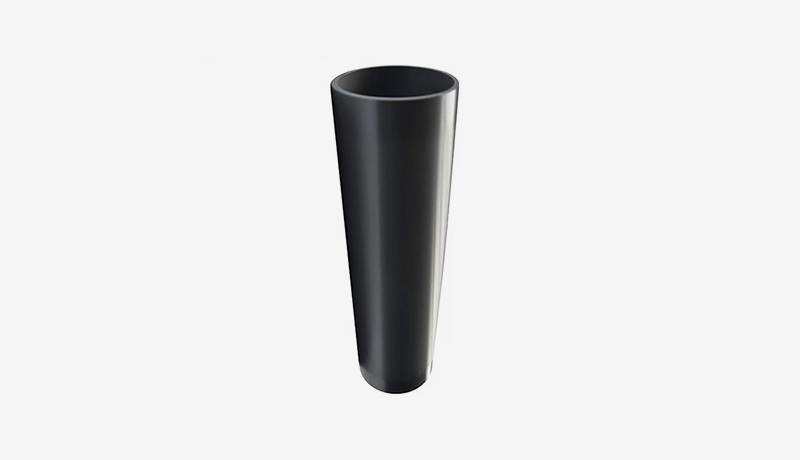
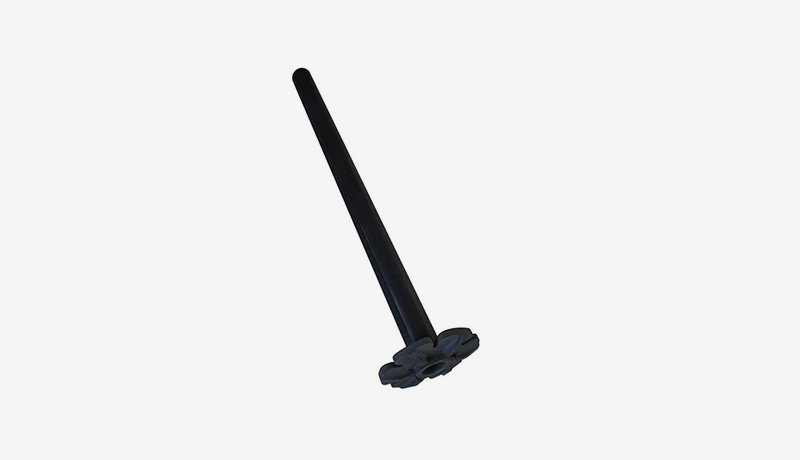
What Is a Silicon Nitride Thermocouple Protection Tube?
A Silicon Nitride Thermocouple Protection Tube is an advanced ceramic sheath manufactured from high-purity silicon nitride (Si₃N₄). It is designed to contain and isolate a thermocouple or temperature sensor from direct exposure to molten metals, corrosive gases, chemical media and severe temperature changes.
The tube acts as a protective barrier while allowing heat to reach the sensing element rapidly. This combination of protection and thermal response is particularly valuable in non-ferrous metal processing, where conventional ceramic or metallic protection materials may experience cracking, erosion, wetting, chemical attack or material buildup.
The supplied product information identifies silicon nitride thermocouple tubes as an advanced ceramic solution for temperature measurement involving molten aluminum and zinc, with particular emphasis on thermal shock resistance, corrosion resistance, erosion resistance and non-wetting behavior.
Quick Answer: Why Use Silicon Nitride for Thermocouple Protection?
Silicon Nitride Thermocouple Protection Tubes are designed for temperature measurement where the sensor must survive rapid temperature changes, molten-metal exposure, corrosion, erosion and material adhesion.
● Excellent thermal shock resistance
● High resistance to molten-metal erosion
● Strong non-wetting behavior against molten aluminum and zinc
● High mechanical strength and hardness
● Low thermal expansion
● Good thermal conductivity for rapid temperature equalization
● High electrical resistivity
● Suitable for demanding non-ferrous metal processing environments
Silicon Nitride Material Properties for Thermocouple Protection Tubes
Silicon nitride (Si₃N₄) is a non-oxide engineering ceramic known for its combination of high strength, low thermal expansion, thermal shock resistance, chemical stability, hardness and electrical insulation. For thermocouple protection applications, these properties work together to protect the sensor while maintaining effective heat transfer from the surrounding process.
| Property | Reference Data | Importance for Thermocouple Protection |
|---|
| Material | Silicon Nitride (Si₃N₄), non-oxide engineering ceramic | Provides a dense and durable protective sheath |
| Color | Light Grey | Typical appearance of the supplied material |
| Density | 3.18-3.22 g/cm³ | Relatively low density for an advanced structural ceramic |
| Compressive Strength | ≥ 2900 MPa | Supports resistance to mechanical loading and handling |
| Flexural Strength | 750-850 MPa | High structural strength for thin-wall ceramic protection tubes |
| Weibull Modulus | 14-16 | Indicates statistical strength consistency of the ceramic material |
| Fracture Toughness (K₁c) | 6.0-6.8 MPa·m1/2 | Helps resist crack propagation under thermal and mechanical stress |
| Young's Modulus | 300-320 GPa | High stiffness and dimensional stability |
| Poisson's Ratio | 0.27-0.29 | Important material parameter for mechanical design |
| Vickers Hardness HV1 | 15-17 GPa | High hardness supports resistance to erosion and wear |
| Maximum Operating Temperature in Inert Atmosphere | Up to 1250°C | Suitable for selected high-temperature inert-atmosphere applications |
| Maximum Operating Temperature in Air | 1050-1100°C | Reference limit for oxidizing conditions |
| Thermal Conductivity @ 25°C | 25-30 W/m·K | Supports relatively rapid heat transfer to the thermocouple |
| Thermal Conductivity @ 1000°C | 15-18 W/m·K | Maintains useful thermal transfer at elevated temperature |
| Thermal Expansion, 20-100°C | (2.0-2.5) × 10-6/K | Very low expansion helps reduce thermal stress |
| Thermal Expansion, 20-1000°C | (3.2-3.6) × 10-6/K | Supports dimensional stability during large temperature changes |
| Thermal Shock Resistance ΔT | 550-650 K | Important for immersion into hot molten metal |
| Thermal Shock Parameter R2 | 13-16 W/mm | Reference indicator of thermal shock performance |
| Electrical Resistivity @ 20°C | ≥ 1012 Ω·cm | High electrical insulation |
| Electrical Resistivity @ 800°C | 106-107 Ω·cm | Useful electrical property for sensor isolation |
| Dielectric Constant | 5.5-6.5 at MHz frequency | Supports electrical isolation of the sensor assembly |
Technical data note: The values shown above are the reference data provided in the supplied product document. Actual performance depends on material grade, manufacturing route, tube geometry, atmosphere, heating rate, immersion depth, molten-metal chemistry and operating conditions.
Silicon Nitride Thermocouple Protection Tube Product Characteristics
Exceptional Thermal Shock Resistance
The low thermal expansion coefficient and high mechanical strength of Si₃N₄ allow the protection tube to tolerate rapid temperature changes. This is particularly important when a thermocouple is inserted into hot molten metal.
Non-Wetting Surface
Silicon nitride has strong resistance to molten aluminum and zinc adhesion. Reduced wetting helps limit metal, oxide film and slag buildup on the protection tube surface.
Corrosion Resistance
The supplied document describes strong chemical stability in demanding molten and atmospheric environments, including aggressive molten-salt and cryolite environments.
High Mechanical Strength
With flexural strength of 750-850 MPa and compressive strength of at least 2900 MPa in the supplied data, Si₃N₄ provides a strong ceramic structure for industrial sensor protection.
High Erosion Resistance
The hard and dense ceramic structure helps resist mechanical erosion caused by molten-metal flow and slag movement.
Fast Thermal Response Potential
Thermal conductivity of 25-30 W/m·K at 25°C and 15-18 W/m·K at 1000°C supports heat transfer through the ceramic wall and helps reduce measurement delay.
Electrical Insulation
High electrical resistivity makes Si₃N₄ suitable for thermocouple assemblies where electrical isolation between the sensor and surrounding equipment is required.
Suitable for Continuous Immersion
The combination of chemical stability, non-wetting behavior and molten-metal resistance makes Si₃N₄ suitable for evaluating continuous or repeated immersion temperature measurement systems.
Silicon Nitride Thermocouple Protection Tube Specifications
Thermocouple protection tubes are normally specified according to the sensor type, immersion depth, furnace or molten-metal system and installation geometry. The supplied document provides detailed material-property data but does not define one universal OD, ID or length. These dimensional parameters should therefore be confirmed from the customer's drawing.
| Specification | Reference / Custom Option |
|---|
| Material | High-purity Silicon Nitride (Si₃N₄) |
| Material Type | Non-oxide engineering ceramic |
| Color | Light Grey |
| Outer Diameter | Custom according to thermocouple assembly and installation requirements |
| Inner Diameter | Custom according to thermocouple diameter and assembly clearance |
| Wall Thickness | Custom; optimized according to thermal response and mechanical requirements |
| Tube Length | Custom according to immersion depth and equipment configuration |
| End Configuration | Custom end geometry, mounting and connection design |
| Density | 3.18-3.22 g/cm³ |
| Flexural Strength | 750-850 MPa |
| Compressive Strength | ≥ 2900 MPa |
| Fracture Toughness | 6.0-6.8 MPa·m1/2 |
| Thermal Shock Resistance | ΔT 550-650 K |
| Maximum Operating Temperature | Up to 1250°C in inert atmosphere; 1050-1100°C in air |
| Surface | Dense ceramic surface; finishing requirements can be specified according to application |
| Customization | Available according to drawing and thermocouple system requirements |
6 Application Fields of Silicon Nitride Thermocouple Protection Tubes
01
Molten Aluminum Processing
A key application is temperature measurement in molten aluminum and aluminum-alloy processing. The non-wetting behavior of Si₃N₄ helps reduce adhesion of aluminum, oxide films and slag to the tube surface.
02
Molten Zinc Processing
Silicon nitride's resistance to molten-metal adhesion and erosion makes it suitable for selected zinc melting and temperature-monitoring processes.
03
Non-Ferrous Metal Processing
The tube can be evaluated for temperature sensing systems used in non-ferrous metal melting, holding and transfer operations where corrosion and thermal cycling are important.
04
Foundry & Metal Casting
Thermocouple protection tubes can be used to monitor molten-metal temperatures during casting operations where rapid temperature changes and metal contact place severe demands on sensor protection.
05
Holding Furnaces & Melting Furnaces
Si₃N₄ tubes can protect thermocouples installed in holding and melting furnaces, supporting continuous monitoring of molten-metal temperature.
06
Molten Salt & Corrosive High-Temperature Processes
The supplied data identifies strong stability in aggressive molten-salt and cryolite environments, making Si₃N₄ relevant to selected corrosive high-temperature temperature-monitoring systems.
8 Components and Systems Using Silicon Nitride Thermocouple Protection Tubes
A thermocouple protection tube normally forms one part of a complete temperature-measurement assembly. The following eight components and systems represent common integration points for a silicon nitride protection tube.
1. Immersion Thermocouple Assembly:The Si₃N₄ tube surrounds and protects the sensing element during direct immersion into molten metal.
2. Molten Aluminum Temperature Probe:Used as the ceramic protective sheath for sensors measuring molten aluminum and aluminum alloys.
3. Holding Furnace Temperature Sensor:Protects thermocouples installed in molten-metal holding furnaces where continuous temperature monitoring is required.
4. Melting Furnace Thermocouple:Provides a protective ceramic barrier around the sensor in high-temperature melting equipment.
5. Ladle Temperature Measurement System:Can be integrated into temperature-monitoring equipment used around molten-metal ladles and transfer operations.
6. Continuous Metal Processing Equipment:Suitable for selected continuous temperature-monitoring systems where repeated thermal cycling occurs.
7. Non-Ferrous Alloy Temperature Probe:Used to isolate thermocouples from molten non-ferrous alloys and reduce direct chemical or mechanical attack.
8. Industrial Temperature Control System:Integrated with sensor, wiring and control equipment to provide temperature feedback for process monitoring and control.
Silicon Nitride Thermocouple Protection Tube Manufacturing Process
The supplied product information states that the tube is manufactured from high-purity silicon nitride powder using precision forming and high-temperature ceramic processing. It identifies reaction bonding and hot pressing as manufacturing routes. The production sequence below expands these principles into a practical ceramic-component manufacturing workflow.
01. High-Purity Si₃N₄ Powder
High-purity silicon nitride powder is selected according to the required mechanical, thermal and chemical performance.
02. Powder Conditioning
Powder preparation and mixing are controlled to achieve suitable forming behavior and consistent ceramic microstructure.
03. Tube Forming
The tube blank is formed using a suitable ceramic forming route. Reaction bonding or hot pressing may be selected according to product design and performance requirements.
04. Controlled Thermal Processing
Controlled high-temperature processing develops the required Si₃N₄ structure, density and mechanical properties.
05. Precision Machining
Where required, ceramic machining is used to achieve the specified outer diameter, inner diameter, length, end geometry and mounting dimensions.
06. Surface Finishing
Surface condition is controlled according to the immersion environment and thermocouple assembly requirements.
07. Dimensional & Material Inspection
Finished tubes are inspected for dimensions, surface integrity and relevant material-property requirements.
08. Cleaning & Protective Packaging
Finished ceramic tubes are cleaned and protected against impact, contamination and handling damage before shipment.
Why Silicon Nitride Is Suitable for Molten Aluminum Temperature Measurement
Non-Wetting Behavior
Aluminum metal, slag and oxide films are less likely to adhere strongly to the Si₃N₄ surface. This helps reduce material buildup that could interfere with sensor response or contaminate the process during tube removal.
Thermal Shock Resistance
The supplied document highlights the combination of very low thermal expansion and high strength as a major reason for resistance to rapid temperature transitions during immersion into molten aluminum.
Reduced Sensor Contamination Risk
Reduced adhesion of molten metal and oxide layers can help maintain a cleaner protection surface and more stable sensor exposure conditions.
Resistance to Molten-Metal Erosion
The dense, hard ceramic structure helps resist mechanical erosion caused by metal movement and slag contact.
Silicon Nitride vs. Conventional Ceramic Protection Tubes
| Performance Factor | Silicon Nitride | Importance in Thermocouple Systems |
|---|
| Thermal Shock | Excellent | Reduces risk during rapid immersion and thermal cycling |
| Molten Aluminum Wetting | Strong non-wetting behavior | Helps reduce buildup on the sensor sheath |
| Mechanical Strength | High | Supports thin ceramic tube structures |
| Thermal Expansion | Very low | Helps limit thermal stress |
| Chemical Stability | Excellent in selected aggressive environments | Important for molten metal and corrosive atmospheres |
| Erosion Resistance | High | Helps withstand metal flow and slag movement |
Material selection should always be based on the actual metal chemistry, temperature, immersion frequency, atmosphere, mechanical loading and required sensor life. The comparison above describes the supplied Si₃N₄ characteristics rather than a universal ranking of all ceramic materials.
Why Choose XIAMEN HUACIJULI?
XIAMEN HUACIJULI focuses on advanced ceramic components and customized Si₃N₄ solutions for demanding industrial applications. For thermocouple protection tubes, product design should be matched to the sensor, immersion environment and equipment installation rather than treated as a one-size-fits-all ceramic tube.
Si₃N₄ Material Expertise
Technical focus on silicon nitride's thermal, mechanical, electrical and chemical properties.
Custom Tube Dimensions
Tube diameter, length, wall thickness and end geometry can be evaluated according to customer drawings.
High-Temperature Ceramic Processing
Manufacturing routes can include reaction bonding or hot pressing according to product requirements.
Application-Oriented Design
Tube design can be considered around immersion depth, thermocouple dimensions, temperature and molten-metal conditions.
Precision Inspection
Dimensional and visual inspection can be incorporated into the production and quality-control process.
OEM Ceramic Solutions
Suitable for customized thermocouple protection tube projects and other Si₃N₄ ceramic components.
Silicon Nitride Thermocouple Protection Tube FAQ
1. What is a Silicon Nitride Thermocouple Protection Tube?
It is an advanced Si₃N₄ ceramic sheath used to protect a thermocouple or temperature sensor from molten metal, corrosive atmospheres, mechanical erosion and rapid temperature changes while allowing heat to reach the sensor.
2. Why is silicon nitride suitable for molten aluminum?
The supplied document emphasizes its strong non-wetting behavior against molten aluminum. Aluminum, slag and oxide films are less likely to adhere to the Si₃N₄ surface, helping reduce buildup around the thermocouple protection tube.
3. What is the maximum operating temperature?
The supplied technical table specifies up to 1250°C in an inert atmosphere and 1050-1100°C in air. These are material/product reference values; the actual allowable temperature of a complete thermocouple assembly depends on atmosphere, tube geometry, immersion conditions, thermal cycling and sensor design.
4. Can the tube withstand rapid temperature changes?
Yes. Thermal shock resistance is one of the principal advantages of the supplied Si₃N₄ material. The document specifies a thermal shock resistance ΔT of 550-650 K and a thermal shock parameter R2 of 13-16 W/mm.
5. Does molten aluminum stick to silicon nitride?
Silicon nitride has strong non-wetting characteristics against molten aluminum and zinc. This reduces the tendency of molten metal, slag and oxide films to adhere to the protection tube surface. The degree of adhesion can still depend on alloy composition, temperature, surface condition and process conditions.
6. Is silicon nitride resistant to molten-metal erosion?
The supplied document describes the material as having high erosion resistance. Its hard and dense structure helps resist mechanical wear caused by molten-metal movement and slag.
7. What are the main applications?
Main applications include molten aluminum temperature measurement, molten zinc processing, non-ferrous metal processing, foundry and casting systems, melting and holding furnaces, and selected molten-salt or corrosive high-temperature processes.
8. Can the silicon nitride tube be customized?
Yes. The tube can be designed around the customer's thermocouple assembly. Typical customizable parameters include outer diameter, inner diameter, length, wall thickness and end configuration.
9. How does silicon nitride compare with SiC thermocouple tubes?
The supplied document notes that Si₃N₄ can provide advantages in certain corrosive environments, particularly regarding resistance to fluorine, chlorine and metal-processing fluxes, as well as resistance to molten-aluminum attack. The appropriate material should still be selected according to the actual atmosphere, alloy chemistry and temperature.
10. What information should be supplied for a quotation?
Recommended information includes tube OD and ID, total length, immersion length, wall thickness if defined, thermocouple type and diameter, mounting method, working temperature, atmosphere, molten-metal or chemical medium, immersion frequency and annual quantity.
11. Is the tube suitable for continuous immersion?
Silicon nitride is well suited to evaluating continuous or repeated immersion applications because of its non-wetting behavior, thermal shock resistance, chemical stability and resistance to molten-metal erosion. Actual service life should be validated against the specific alloy, temperature and immersion conditions.
Custom Silicon Nitride Thermocouple Protection Tubes
XIAMEN HUACIJULI can evaluate customized Silicon Nitride Thermocouple Protection Tubes according to thermocouple dimensions, immersion depth, operating temperature, molten-metal chemistry and installation requirements. Provide your drawing or technical parameters for product evaluation.