



High Hardness & Wear Resistance
Silicon nitride provides high hardness and strong wear resistance, making it suitable for components exposed to mechanical loads, friction and repeated movement.



Low thermal expansion coefficient
Strong corrosion resistance
Anti-oxidation at high temperature
High strength and excellent thermal shock resistance
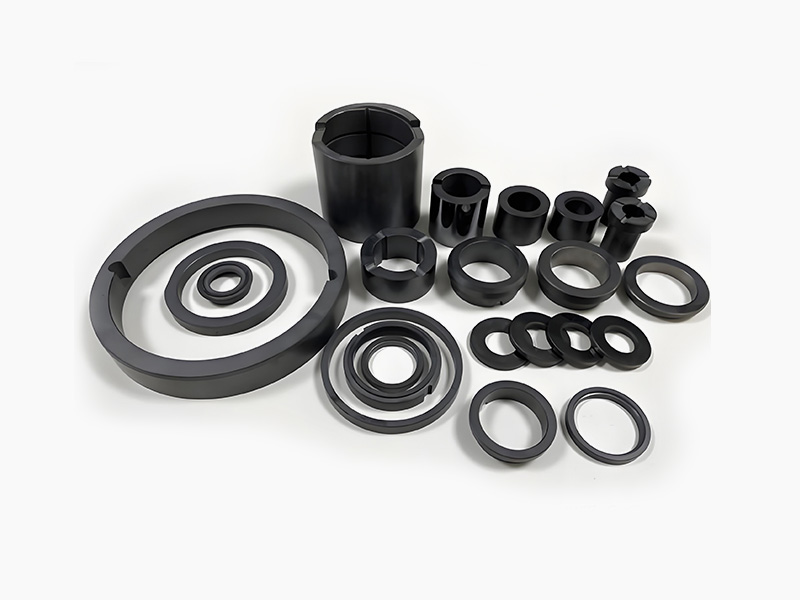
Silicon Nitride Insulation Rings are precision-engineered ceramic components manufactured from silicon nitride (Si₃N₄). They are designed for demanding applications that require a combination of electrical insulation, high mechanical strength, wear resistance, thermal stability, low thermal expansion and chemical resistance.
A Silicon Nitride Insulation Ring is a ring-shaped engineering ceramic component made from silicon nitride (Si₃N₄). Unlike conventional metal rings, silicon nitride combines mechanical durability with electrical insulation and strong resistance to heat, oxidation, chemical attack and wear.
The ring geometry allows the component to be used as an insulating spacer, structural support, sealing-related component, bearing-related component, or precision interface component, depending on the design and operating environment.
According to the supplied product information, silicon nitride rings are particularly suitable for demanding environments where durability, low friction, extreme-temperature resistance and resistance to corrosive substances are required.
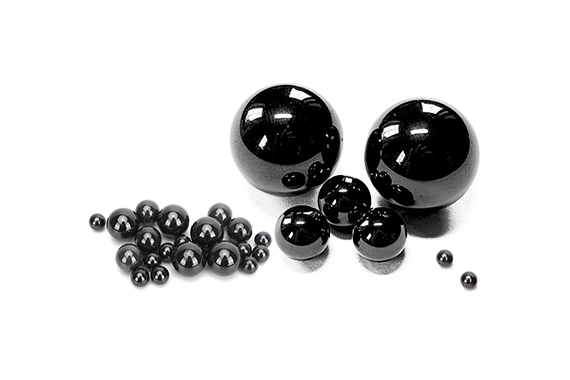
Silicon nitride, commonly written as Si₃N₄, is a high-performance technical ceramic used in applications where conventional metals or engineering plastics may not provide the required combination of temperature resistance, mechanical strength, chemical resistance and electrical insulation.
Silicon nitride has a relatively low density compared with steel while maintaining high mechanical strength and hardness. This makes it attractive for components where reducing component mass is important without sacrificing durability.
Its low thermal expansion also helps maintain dimensional stability when components experience repeated temperature changes. This characteristic can be important for precision equipment and high-temperature assemblies.
| Material Attribute | Description | Application Value |
|---|---|---|
| High Hardness | Strong resistance to mechanical wear | Useful for long-service components |
| Low Density | Approximately 3.2–3.3 g/cm³ | Helps reduce component weight |
| Thermal Stability | Operating temperature stated up to 1200°C | Suitable for high-temperature equipment |
| Low Thermal Expansion | Helps maintain dimensional stability | Useful for precision assemblies |
| Electrical Insulation | Non-conductive ceramic material | Suitable for insulating components |
Silicon nitride provides high hardness and strong wear resistance, making it suitable for components exposed to mechanical loads, friction and repeated movement.
The supplied specification states an operating temperature of up to 1200°C (2192°F), supporting use in demanding thermal environments.
Silicon nitride offers resistance to oxidation and chemical attack from acids and alkalis, making it suitable for selected chemical-processing environments.
With a stated density of approximately 3.2–3.3 g/cm³, Si₃N₄ can provide a weight advantage over many steel components.
Low thermal expansion helps the ring retain dimensional stability during temperature fluctuations.
Silicon nitride is a non-conductive ceramic and can therefore serve as an insulating structural component in suitable electrical and electronic assemblies.
The following specifications are based on the supplied HUACIJULI product information. Dimensions can be customized according to the customer's drawing, equipment design and application requirements.
| Specification | Available / Typical Range | Notes |
|---|---|---|
| Material | Si₃N₄ | Silicon nitride ceramic |
| Material Type | Hot-pressed / Reaction-bonded / Sintered | Selection depends on application |
| Outer Diameter (OD) | 5–300 mm | Custom sizes available |
| Inner Diameter (ID) | 2–250 mm | Customized according to design |
| Thickness | 0.5–50 mm | Application-dependent |
| Surface Finish | Polished, 0.01–0.1 µm Ra | For low-friction applications |
| Flexural Strength | 600–1000 MPa | Stated typical range |
| Operating Temperature | Up to 1200°C | Actual service limit depends on design and environment |
| Density | 3.2–3.3 g/cm³ | Typical supplied specification |
Important: The specification ranges above are reference values from the supplied product information. Final dimensions, tolerances, surface finish, material grade and performance requirements should be confirmed against the customer's technical drawing and operating conditions.
The following examples demonstrate how different OD, ID and thickness combinations can be specified for engineering projects. They are examples for product planning rather than fixed standard sizes.
| Example | OD | ID | Thickness | Potential Application |
|---|---|---|---|---|
| Small Ring | 10 mm | 5 mm | 1 mm | Precision insulation |
| Medium Ring | 50 mm | 30 mm | 5 mm | Industrial equipment |
| Large Ring | 100 mm | 70 mm | 10 mm | High-temperature machinery |
| Heavy-Duty Ring | 200 mm | 150 mm | 20 mm | Heavy industrial equipment |
Silicon nitride rings can be selected for applications where a component must simultaneously tolerate mechanical loads, heat, wear, chemical exposure or electrical insulation requirements. The final suitability depends on the actual operating conditions and engineering design.
Silicon nitride is used in high-speed and precision bearing-related applications because of its low friction characteristics, hardness, wear resistance and thermal performance.
Si₃N₄ rings can be used in wafer-processing, wafer-handling and related semiconductor equipment where precision, chemical resistance and electrical insulation are important.
Potential applications include turbocharger-related components, engine systems, wear-resistant components and selected electric vehicle equipment.
The combination of low density, mechanical strength and heat resistance makes silicon nitride relevant to selected aerospace and turbine-related components.
Silicon nitride components are used in selected medical applications where wear resistance, precision and material performance are required. Application-specific biocompatibility and regulatory requirements should be verified separately.
Silicon nitride rings can be considered for pumps, seals and other equipment exposed to aggressive chemical environments.
High-pressure and corrosive operating environments can create demand for ceramic components with strong chemical and wear resistance.
Precision ceramic rings can be integrated into laboratory and analytical equipment where dimensional stability, insulation and resistance to demanding environments are needed.
Silicon nitride ceramic components can be evaluated for selected battery manufacturing and testing equipment where insulation, temperature resistance and dimensional stability are required.
Automotive: high-efficiency engines, turbocharger systems and selected EV components.
Semiconductor: wafer handling, processing and etching-related systems.
Energy: oil and gas equipment and other high-pressure or corrosive environments.
Medical: advanced surgical, diagnostic and selected implant-related applications.
Aerospace: turbine and high-temperature engineering systems.
Chemical Processing: pumps, seals and corrosion-resistant equipment.
Laboratory: analytical testing and sample-preparation equipment.
Battery Manufacturing: selected high-temperature and electrically insulating equipment.
Manufacturing a precision silicon nitride ring generally involves several controlled stages. The exact process route depends on the selected Si₃N₄ grade, ring geometry, dimensional tolerances, density requirements and surface-finish requirements.
Silicon nitride powder is prepared and combined with appropriate binders and additives to support forming and subsequent processing.
The ceramic material can be formed into the required ring geometry. Depending on the design, forming technologies can include pressure-based or mold-based processes.
Controlled thermal processing is used to develop the required ceramic structure and mechanical properties.
After forming and densification, precision machining and grinding can be used to achieve the specified OD, ID, thickness and dimensional tolerances.
Polishing or other finishing operations can be applied when a smooth surface is required, including low-friction applications.
Finished rings should be inspected against the agreed dimensional, material, surface and application requirements before shipment.
For industrial and OEM applications, the ring geometry often needs to match an existing mechanical or electrical assembly. HUACIJULI can discuss customized ceramic product requirements based on customer specifications.
Specify the required outer diameter.
Match shafts, housings or other mating components.
Select thickness according to mechanical and insulation requirements.
Polished surfaces can be specified for suitable applications.
Hot-pressed, reaction-bonded or sintered Si₃N₄ options can be discussed.
Customer drawings and application requirements can be reviewed for customization.
Define the ring dimensions. Provide the required outer diameter, inner diameter and thickness.
Identify the operating temperature. Confirm the continuous and peak temperatures experienced by the component.
Evaluate mechanical loading.Consider compression, friction, rotational speed, vibration and other mechanical loads.
Check chemical exposure.Identify acids, alkalis, solvents, gases or other chemicals that may contact the ceramic.
Define electrical requirements.Specify the insulation function and relevant electrical operating conditions.
Specify surface finish.For low-friction or precision interfaces, define the required surface roughness.
Provide the technical drawing. A detailed drawing can help the manufacturer evaluate dimensions, tolerances and production requirements accurately.
HUACIJULI is a China-based supplier serving customers with laboratory equipment, laboratory consumables, customized ceramic and refractory metal product solutions for high-temperature applications, and battery equipment and battery consumables.
Discuss custom ceramic requirements based on dimensions, material selection, operating environment and application needs.
The HUACIJULI team can review project requirements and provide product information for engineering and purchasing evaluation.
HUACIJULI's product capabilities include customized ceramic and refractory metal solutions for high-temperature applications.
Customers can provide drawings, specifications and application requirements for further technical discussion.
Contact HUACIJULI for Silicon Nitride Insulation Ring projects:
Email:sales@hc-sin.com
Phone:+86 180 5010 1292
If you are sourcing silicon nitride ceramic rings for laboratory equipment, semiconductor machinery, automotive systems, aerospace components, chemical processing equipment, energy applications or other industrial systems, prepare your technical requirements before contacting the supplier.
Recommended RFQ information:
Silicon nitride material grade
Outer diameter (OD)
Inner diameter (ID)
Ring thickness
Dimensional tolerances
Surface roughness / finish
Operating temperature
Mechanical load or rotational conditions
Chemical environment
Electrical insulation requirements
Required quantity
Technical drawing or CAD file, if available
Silicon Nitride Insulation Rings provide a combination of properties that can be valuable in demanding industrial environments: high hardness, wear resistance, thermal stability, chemical resistance, low density, low thermal expansion and electrical insulation.
With reference dimensions ranging from 5-300 mm OD, 2-250 mm ID and 0.5-50 mm thickness, together with custom sizing, silicon nitride rings can be engineered for a broad range of precision equipment and industrial applications.
The following specifications are based on the supplied HUACIJULI product information. Dimensions can be customized according to the customer's drawing, equipment design and application requirements.
| Specification | Available / Typical Range | Notes |
|---|---|---|
| Material | Si₃N₄ | Silicon nitride ceramic |
| Material Type | Hot-pressed / Reaction-bonded / Sintered | Selection depends on application |
| Outer Diameter (OD) | 5–300 mm | Custom sizes available |
| Inner Diameter (ID) | 2–250 mm | Customized according to design |
| Thickness | 0.5–50 mm | Application-dependent |
| Surface Finish | Polished, 0.01–0.1 µm Ra | For low-friction applications |
| Flexural Strength | 600–1000 MPa | Stated typical range |
| Operating Temperature | Up to 1200°C | Actual service limit depends on design and environment |
| Density | 3.2–3.3 g/cm³ | Typical supplied specification |
The following examples demonstrate how different OD, ID and thickness combinations can be specified for engineering projects. They are examples for product planning rather than fixed standard sizes.
| Example | OD | ID | Thickness | Potential Application |
|---|---|---|---|---|
| Small Ring | 10 mm | 5 mm | 1 mm | Precision insulation |
| Medium Ring | 50 mm | 30 mm | 5 mm | Industrial equipment |
| Large Ring | 100 mm | 70 mm | 10 mm | High-temperature machinery |
| Heavy-Duty Ring | 200 mm | 150 mm | 20 mm | Heavy industrial equipment |