Low density of approximately 3.2-3.3 g/cm³
High Vickers hardness of approximately 1400-1700 HV
High elastic modulus of approximately 300 GPa
Low coefficient of friction, reported below 0.5 after break-in
High-temperature stability in demanding environments
Excellent resistance to wear and many chemical media
Low thermal expansion and good dimensional stability
Custom gear geometry for precision mechanical systems
High-Performance Si3N4 Engineering Ceramic Components
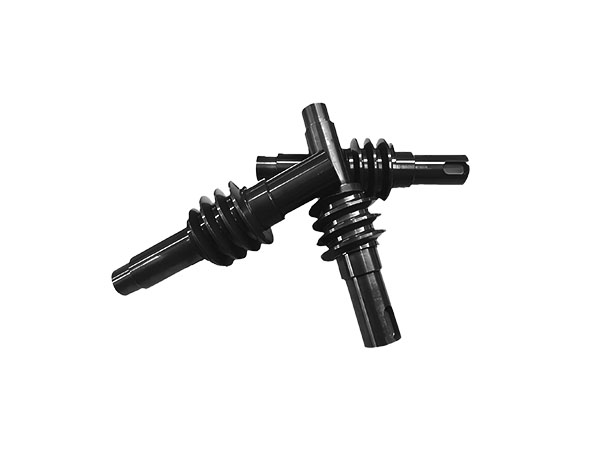
Silicon Nitride Ceramic Gears are precision transmission components manufactured from high-performance silicon nitride (Si₃N₄). Their combination of high hardness, low density, wear resistance, low friction, thermal stability and chemical resistance makes them suitable for demanding high-speed, high-temperature and precision mechanical systems.
Silicon Nitride Ceramic Gears are precision mechanical gears produced from silicon nitride (Si₃N₄), a high-performance non-oxide engineering ceramic. Unlike conventional metal gears, Si₃N₄ ceramic gears combine very low density with high hardness, high elastic modulus, excellent wear resistance, low friction and strong thermal and chemical stability.
These characteristics make silicon nitride gears particularly useful where conventional metallic gears may experience excessive wear, thermal expansion, corrosion, friction loss or weight limitations. Depending on the gear design and operating environment, Si₃N₄ gears can be considered for high-speed transmission, precision machinery, aerospace-related systems, semiconductor equipment, chemical equipment and other advanced mechanical assemblies.
Silicon Nitride Ceramic Gears are selected when a transmission system requires a combination of low weight, high hardness, wear resistance, low friction, dimensional stability and resistance to demanding temperatures or chemical environments.
● Low density of approximately 3.2-3.3 g/cm³
● High Vickers hardness of approximately 1400-1700 HV
● High elastic modulus of approximately 300 GPa
● Low coefficient of friction, reported below 0.5 after break-in
● High-temperature stability in demanding environments
● Excellent resistance to wear and many chemical media
● Low thermal expansion and good dimensional stability
● Custom gear geometry for precision mechanical systems
Silicon nitride (Si₃N₄) is a compound of silicon and nitrogen produced through high-temperature ceramic processing and sintering. The material is widely recognized as an advanced engineering ceramic because it combines mechanical strength, hardness, low density, thermal stability, chemical resistance, electrical insulation and favorable tribological behavior.
| Material Property | Reference Data | Relevance to Gears |
|---|---|---|
| Material | Silicon Nitride (Si₃N₄) | Advanced engineering ceramic for precision components |
| Density | 3.2-3.3 g/cm³ | Approximately 60% lighter than steel according to the supplied source |
| Vickers Hardness | 1400-1700 HV | High resistance to abrasive and sliding wear |
| Elastic Modulus | Approximately 300 GPa | High rigidity and dimensional stability |
| Flexural Strength | 600-700 MPa under hot pressing | Supports demanding mechanical loading |
| Fracture Toughness | 6-8 MPa·m1/2 | Helps resist crack propagation in optimized microstructures |
| Thermal Expansion Coefficient | Approximately 3.2 × 10⁻⁶/K | Supports dimensional stability during temperature changes |
| Melting Point | Up to approximately 1900°C | Indicates high-temperature material stability |
| Long-Term Temperature Reference | Up to approximately 1400°C in oxidizing atmosphere | Useful for selected high-temperature applications |
| Reducing Atmosphere Temperature Reference | Up to approximately 1850°C | Highly atmosphere-dependent; application testing is required |
| Coefficient of Friction | Can be below 0.5 after break-in | Supports reduced sliding friction and transmission losses |
| Electrical Resistivity | 1015-1016 Ω at room temperature | High electrical insulation capability |
| Dielectric Constant | Approximately 9.4-9.5 | Relevant to electrically insulating mechanical systems |
| Chemical Resistance | Strong resistance to many inorganic acids and selected alkaline solutions | Suitable for selected corrosive environments |
Data note: The values above are based on the supplied Silicon Nitride Ceramic Gear product information. Actual properties can vary with ceramic grade, powder formulation, forming method, sintering process, geometry and testing conditions.
With a reported Vickers hardness of 1400-1700 HV, Si₃N₄ provides strong resistance to abrasive and sliding wear. This is particularly valuable for gears exposed to repeated tooth contact and high rotational speeds.
The density of approximately 3.2-3.3 g/cm³ significantly reduces component mass compared with steel, while the elastic modulus of approximately 300 GPa provides high rigidity.
Silicon nitride has favorable tribological characteristics. The supplied product information reports a coefficient of friction that can be below 0.5 after break-in, supporting efficient high-speed mechanical operation.
Si₃N₄ maintains useful mechanical performance at elevated temperatures. The supplied material data indicates strength retention at temperatures around 1200-1350°C under specified conditions.
The low thermal expansion coefficient of approximately 3.2 × 10⁻⁶/K helps reduce dimensional changes during temperature variation, which is important for precision gear meshing.
The material has good resistance to many oils and chemical media and demonstrates strong resistance to several inorganic acids and selected alkaline solutions.
Optimized Si₃N₄ microstructures can achieve fracture toughness in the range of approximately 6-8 MPa·m1/2, helping improve resistance to crack propagation.
Reduced friction and wear can contribute to extended operating life. The supplied source describes more than five times the lifespan of traditional metal gears as a reference claim; actual service life depends strongly on load, lubrication, speed, alignment and operating conditions.
Silicon Nitride Ceramic Gears are normally engineered according to the transmission system rather than manufactured as one universal standard size. Tooth geometry, bore dimensions, face width, gear ratio, mounting configuration and required tolerances should therefore be confirmed from engineering drawings or application requirements.
| Specification | Silicon Nitride Ceramic Gear Options |
|---|---|
| Material | Silicon Nitride (Si₃N₄) |
| Gear Type | Custom precision ceramic gear; gear type according to drawing |
| Tooth Profile | Drawing-specific; spur, helical or other suitable geometry can be evaluated |
| Tooth Count | Custom according to transmission ratio and mechanical design |
| Outer Diameter | Custom |
| Bore Diameter | Custom |
| Face Width | Custom according to load and installation requirements |
| Keyway / Mounting Features | Available according to engineering drawing |
| Density | Approximately 3.2-3.3 g/cm³ |
| Hardness | Approximately 1400-1700 HV |
| Elastic Modulus | Approximately 300 GPa |
| Fracture Toughness | Approximately 6-8 MPa·m1/2 |
| Thermal Expansion | Approximately 3.2 × 10⁻⁶/K |
| Customization | Material, geometry and dimensions can be evaluated according to drawing and application |
01
Silicon nitride ceramic components can be considered for high-temperature aerospace mechanisms and advanced propulsion-related systems where low mass, thermal stability and wear resistance are important.
02
Gears, bearings and other precision transmission components can benefit from the combination of Si₃N₄ hardness, rigidity, low friction and low density.
03
In selected chemical machinery, ceramic gears can be used where resistance to oils, chemical media and certain corrosive environments is required.
04
Si₃N₄'s electrical insulation, chemical stability and temperature resistance make ceramic components suitable for selected semiconductor manufacturing and high-temperature process equipment.
05
Lightweight, electrically insulating and wear-resistant ceramic components can be considered for selected electric drive and high-speed mechanical systems.
06
Low density and favorable friction characteristics make Si₃N₄ gears attractive for selected high-speed transmission systems where rotational inertia and wear need to be controlled.
07
Precision ceramic gears can be considered for robotic reducers, positioning mechanisms and compact automation assemblies where low mass, precision and wear resistance are valuable.
08
Silicon nitride gears can be evaluated for selected pumps and fluid-handling mechanisms where low friction, chemical resistance and long wear performance are required.
Silicon nitride ceramic gears are generally integrated into complete mechanical assemblies rather than used as isolated components. The following are eight representative component or system categories where Si₃N₄ gears can be evaluated.
1. Precision Gearboxes: Ceramic gears can be integrated into compact transmission assemblies requiring controlled wear and dimensional stability.
2. High-Speed Spindle Assemblies: Their low density can help reduce rotating mass in selected high-speed mechanisms.
3. Robotic Reduction Mechanisms: Precision ceramic gears can be used in selected robotic transmission and positioning systems.
4. Electric Drive Systems: Si₃N₄ components can be considered for selected electrically sensitive and high-speed mechanical assemblies.
5. Pump Drive Assemblies: Ceramic gears may be integrated into specialized pump mechanisms exposed to oils or chemical media.
6. Semiconductor Process Mechanisms: Ceramic gears can be evaluated for selected positioning, transfer and motion-control assemblies inside process equipment.
7. Aerospace Actuation Mechanisms: Low weight, thermal stability and wear resistance are relevant to selected aerospace transmission systems.
8. Precision Automation Equipment: Ceramic gears can be incorporated into motion-control systems where repeatability, low friction and component life are important.
Manufacturing a precision Si₃N₄ gear requires control of ceramic powder processing, forming, sintering and precision machining. Gear tooth accuracy and surface quality are especially important because ceramic gears operate under concentrated tooth contact.
High-purity silicon nitride powder and suitable processing additives are selected according to the required ceramic grade and application.
Powder mixing, dispersion and granulation are controlled to obtain consistent forming characteristics and a uniform green body.
The ceramic blank is formed using a suitable ceramic forming method. Geometry is designed to minimize distortion during subsequent densification.
Organic processing components are removed under controlled conditions before final densification.
Controlled high-temperature sintering develops the required Si₃N₄ microstructure, density and mechanical properties.
Diamond grinding and other suitable precision machining processes are used where required for gear teeth, bores, faces and mounting features.
Dimensional accuracy, tooth geometry, surface condition and material-related properties are checked against the engineering requirements.
Finished ceramic gears are cleaned and securely packaged to reduce the risk of impact, contamination and handling damage during transportation.
Ceramic gears should be designed around actual torque, speed, tooth loading and contact conditions. High hardness does not eliminate the need for correct gear alignment and load distribution.
Lubrication requirements depend on the gear pair, speed, temperature, load and surrounding environment. The low-friction characteristics of Si₃N₄ should not be interpreted as meaning every gear system is lubrication-free.
Operating temperature, thermal gradients and atmosphere should be considered when selecting the ceramic grade and gear geometry.
The mating gear material and surface condition influence friction, wear, noise, lubrication and service life. The complete gear pair should therefore be evaluated as a system.
XIAMEN HUACIJULI focuses on engineering ceramic components and can support customized silicon nitride gear requirements from material selection and component design through precision machining and quality inspection.
Focus on silicon nitride ceramic properties, grades and application-specific requirements.
Gear dimensions, tooth configuration, bore and mounting features can be developed from customer drawings.
Precision grinding and finishing are important for achieving the required ceramic gear geometry.
Material and dimensional recommendations can be matched to speed, load, temperature and environmental conditions.
Inspection can focus on dimensions, tooth geometry, surface condition and application-specific material requirements.
Suitable for OEM projects requiring customized silicon nitride ceramic transmission components.
They are precision transmission gears manufactured from silicon nitride (Si₃N₄) engineering ceramic. They are designed for applications requiring combinations of high hardness, low density, wear resistance, low friction and thermal or chemical stability.
Key material advantages include lower density, high hardness, high rigidity, low friction, low thermal expansion, high-temperature stability and strong chemical resistance. Whether these advantages translate into better system performance depends on the complete gear design and operating conditions.
The supplied product information gives a Vickers hardness range of approximately 1400-1700 HV.
The supplied data specifies approximately 3.2-3.3 g/cm³, substantially lower than steel. This low density is one reason Si₃N₄ is attractive for rotating and high-speed components.
Yes, silicon nitride has excellent high-temperature stability. The supplied material information reports use for extended periods at approximately 1400°C in an oxidizing atmosphere and up to approximately 1850°C in a reducing environment under specified material conditions. Actual gear operating temperature must be determined from the grade, atmosphere, load, speed and component design.
Silicon nitride demonstrates strong resistance to many inorganic acids and selected alkaline solutions, as well as good resistance to many oils and chemical media. Compatibility should be confirmed against the specific chemical, concentration, temperature and exposure time.
They can be considered for selected high-speed systems because Si₃N₄ has low density and favorable friction and wear characteristics. Actual allowable speed depends on gear diameter, tooth geometry, balancing, lubrication, load, mounting and system dynamics.
Yes. Custom gear projects can be evaluated according to customer drawings, including gear diameter, bore, face width, tooth geometry, mounting configuration and required dimensional tolerances.
Service life is application-dependent. The supplied product information states that Si₃N₄ gears can achieve more than five times the lifespan of traditional metal gears by reducing friction losses during high-speed operation. This should be treated as a reference claim rather than a universal guarantee because actual life depends on load, speed, lubrication, alignment, mating materials and environment.
A gear drawing or key engineering parameters are recommended, including gear type, tooth count, module or pitch information, pressure angle where applicable, outside diameter, bore, face width, material requirement, operating speed, torque/load, temperature, lubrication conditions and expected operating environment.
No material should be selected solely from its hardness or temperature capability. Silicon nitride gears should be evaluated together with the mating gear, load, speed, lubrication, alignment, thermal environment and required reliability before production.
XIAMEN HUACIJULI can evaluate custom Silicon Nitride Ceramic Gear requirements based on engineering drawings and actual operating conditions. Provide your gear drawing, dimensions, tooth parameters, speed, load, temperature and working environment for material and manufacturing evaluation.
| Material Property | Reference Data | Relevance to Gears |
|---|---|---|
| Material | Silicon Nitride (Si₃N₄) | Advanced engineering ceramic for precision components |
| Density | 3.2–3.3 g/cm³ | Approximately 60% lighter than steel according to the supplied source |
| Vickers Hardness | 1400–1700 HV | High resistance to abrasive and sliding wear |
| Elastic Modulus | Approximately 300 GPa | High rigidity and dimensional stability |
| Flexural Strength | 600–700 MPa under hot pressing | Supports demanding mechanical loading |
| Fracture Toughness | 6–8 MPa·m1/2 | Helps resist crack propagation in optimized microstructures |
| Thermal Expansion Coefficient | Approximately 3.2 × 10⁻⁶/K | Supports dimensional stability during temperature changes |
| Melting Point | Up to approximately 1900°C | Indicates high-temperature material stability |
| Long-Term Temperature Reference | Up to approximately 1400°C in oxidizing atmosphere | Useful for selected high-temperature applications |
| Reducing Atmosphere Temperature Reference | Up to approximately 1850°C | Highly atmosphere-dependent; application testing is required |
| Coefficient of Friction | Can be below 0.5 after break-in | Supports reduced sliding friction and transmission losses |
| Electrical Resistivity | 1015–1016 Ω at room temperature | High electrical insulation capability |
| Dielectric Constant | Approximately 9.4-9.5 | Relevant to electrically insulating mechanical systems |
| Chemical Resistance | Strong resistance to many inorganic acids and selected alkaline solutions | Suitable for selected corrosive environments |