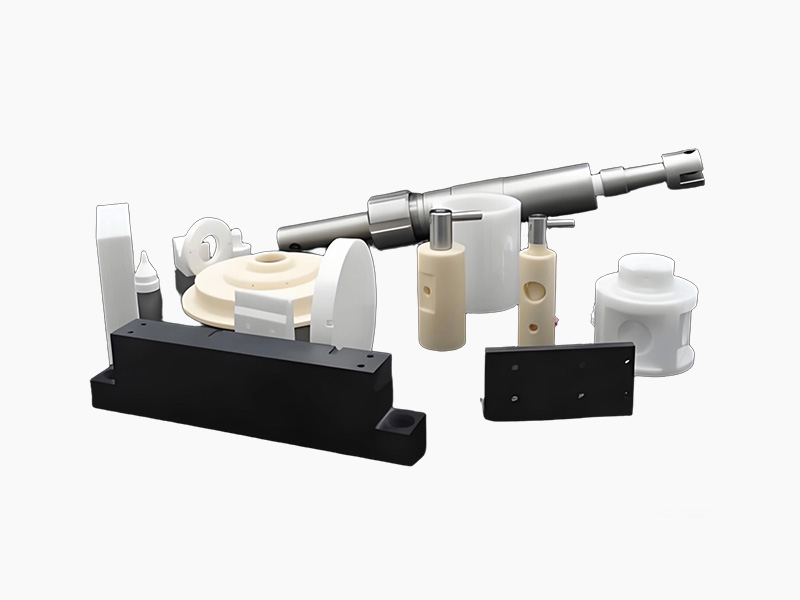
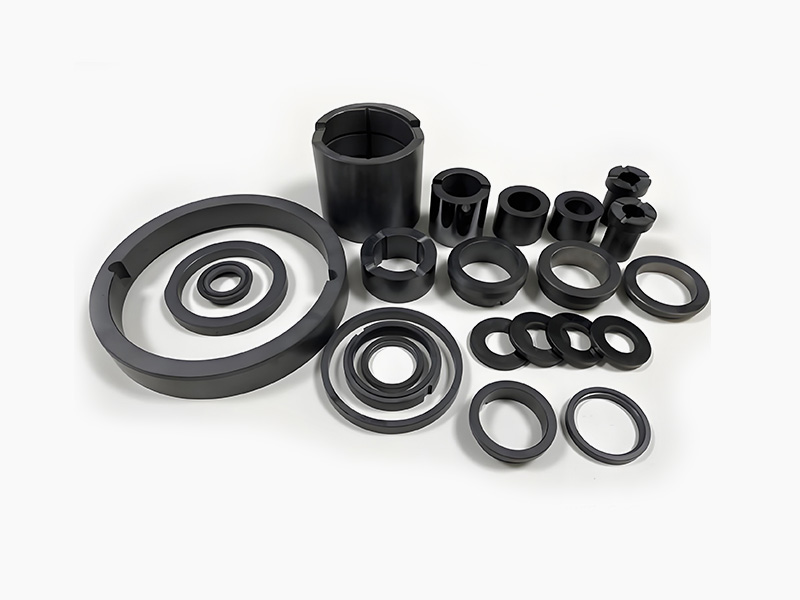




Si₃N₄ Ceramic Matrix
The primary functional ceramic material providing hardness, low density, thermal performance and wear resistance.

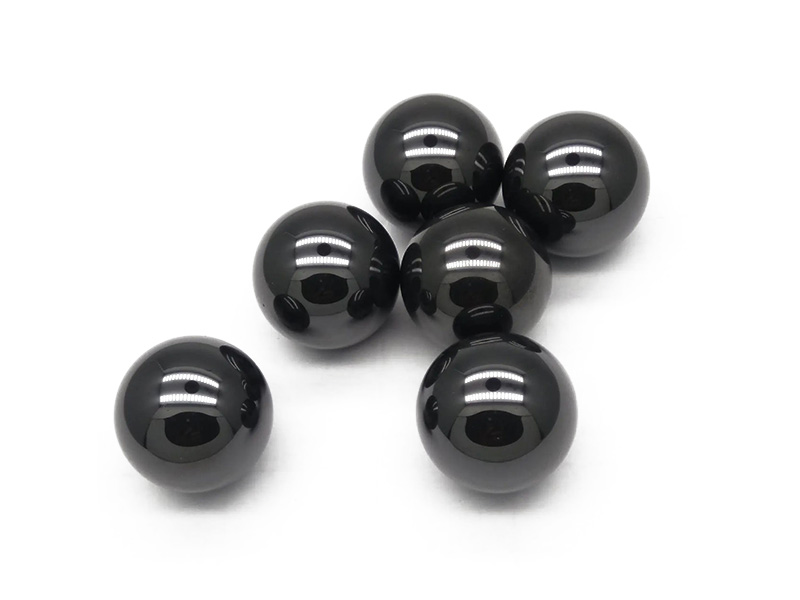
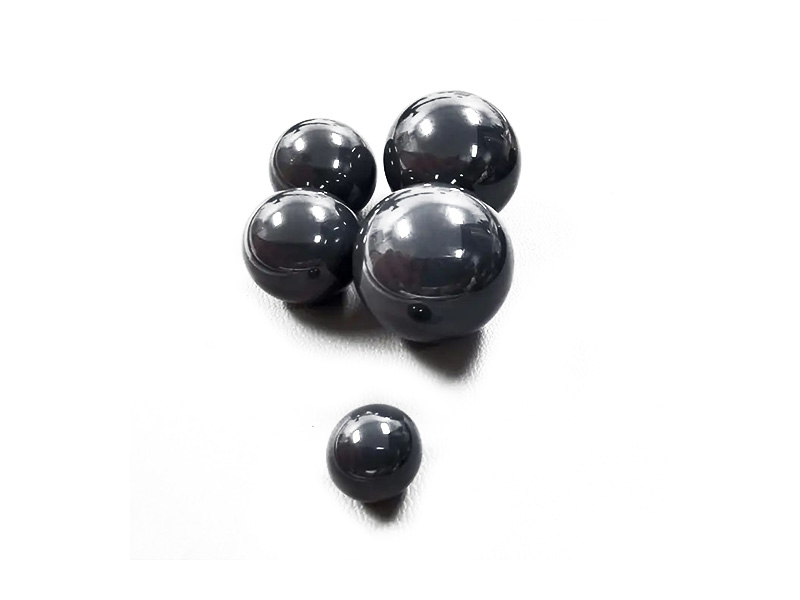
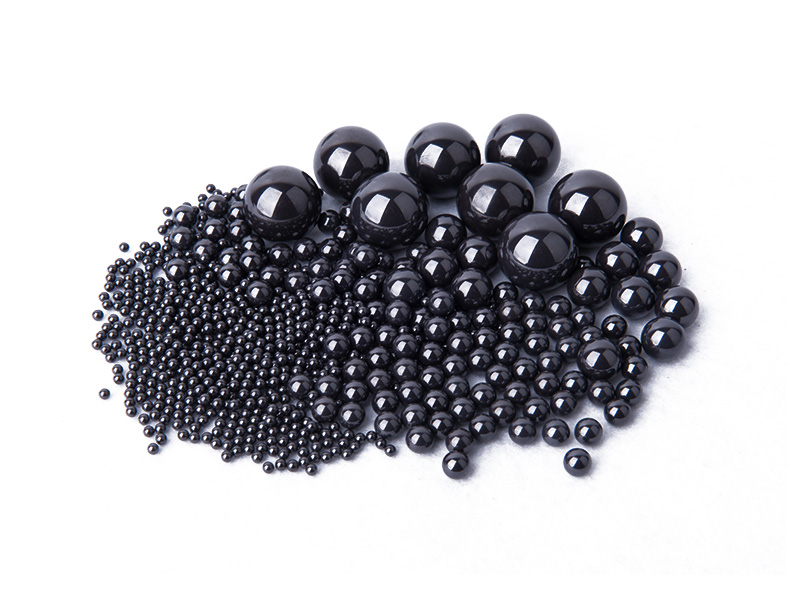
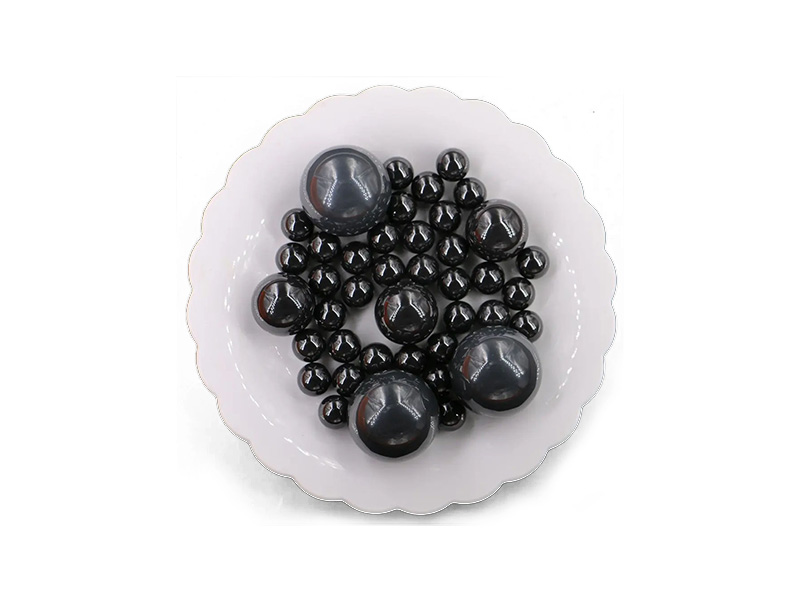
Material: Silicon nitride ceramic
Density: 3.23-3.27g/cm³
Color: Black & Gray
Grade: G3~G100
Specification: φ0.6-φ110mm
Sintering process: HIP&GPS
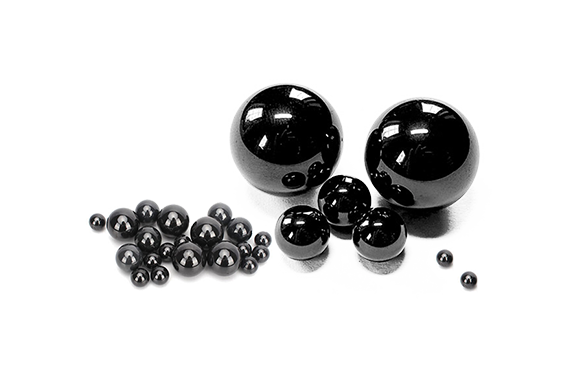
Silicon Nitride Balls are precision-engineered ceramic balls made from silicon nitride (Si₃N₄), an advanced engineering ceramic designed for demanding motion, bearing, rotating equipment and precision instrument applications.
Their combination of low density, high hardness, wear resistance, electrical insulation, non-magnetic behavior, thermal stability and resistance to demanding environments makes Si₃N₄ balls particularly suitable where conventional steel balls may be limited by weight, electrical conductivity, magnetic response, corrosion, high-speed heating or thermal conditions.
Silicon Nitride Balls are spherical precision components manufactured from silicon nitride (Si₃N₄), a high-performance engineering ceramic. They are commonly used as rolling elements in hybrid ceramic bearings and full ceramic bearings, as well as in pumps, compressors, ball screws, flow meters, measuring instruments and other precision mechanical systems.
Silicon nitride is neither a metal nor a plastic. It is an advanced technical ceramic selected when an application requires properties such as low weight, high hardness, electrical insulation, non-magnetic behavior, corrosion resistance and thermal-shock stability.
In high-speed bearing applications, the relatively low density of Si₃N₄ reduces the mass of the rolling element. This can help reduce centrifugal forces and friction-related heating when the bearing system is appropriately designed.
Silicon nitride, chemically represented as Si₃N₄, is an advanced engineering ceramic used in high-performance mechanical and industrial applications. The material combines high hardness and strength with relatively low density, thermal stability and electrical insulation.
For silicon nitride balls, the material is not normally specified simply as a conventional metallic chemical composition. Instead, buyers typically define the ceramic grade together with properties such as density, mechanical strength, hardness, surface quality, roundness, dimensional accuracy and internal defect control.
The final performance of a Si₃N₄ ball depends on the material grade, powder characteristics, additives, forming method, sintering process, density, grinding quality, polishing quality, roundness and defect control.
The primary functional ceramic material providing hardness, low density, thermal performance and wear resistance.
Depending on the production route, oxide-based additives may be used to support ceramic densification and final material performance.
The final product normally undergoes sintering, precision grinding and polishing to achieve the required dimensional and surface characteristics.
Silicon nitride has a density of approximately 3.26 g/cm³. Its lower mass compared with steel rolling elements can reduce centrifugal loading in appropriately designed high-speed bearing systems.
The supplied reference hardness is approximately HV 1400-1600, supporting wear resistance and long-term performance in suitable precision motion systems.
The supplied reference strength is approximately 2300-4000 MPa, with the actual value dependent on material grade and test method.
High hardness and a suitable ceramic microstructure support wear resistance in properly designed rolling and precision motion applications.
Si₃N₄ is an excellent electrical insulator, which can help reduce current paths through bearing systems and lower the risk of electrical damage in suitable motor and electrical applications.
Silicon nitride is non-magnetic, making it useful in precision instruments, sensors and equipment where magnetic interaction can interfere with operation.
Silicon nitride offers strong thermal-shock resistance and high-temperature stability. A reference operating temperature of up to 1200°C is provided for suitable operating conditions.
Si₃N₄ provides excellent corrosion resistance in many environments, although chemical compatibility should be confirmed for concentrated alkaline solutions, sulfuric-acid-containing solutions and other aggressive media.
Silicon nitride balls can be specified according to diameter, precision grade, material grade, surface finish and application requirements. The following technical data are reference values from the supplied product information.
| Parameter | Reference Specification | Notes |
|---|---|---|
| Material | Silicon Nitride / Si₃N₄ | Advanced engineering ceramic |
| Diameter | 1.0-200.0 mm | Reference range; final supply capability should be confirmed |
| HUACIJULI Production Capability | 0.5-63.50 mm | Confirm size, grade and tolerance before quotation |
| Precision Standard | ISO 3290-2 | Final grade confirmed according to application and purchase order |
| Hardness | HV 1400-1600 | Reference range |
| Density | Approx. 3.26 g/cm³ | Actual value depends on material grade and process |
| Young's Modulus | Approx. 300 GPa | Reference value |
| Strength | Approx. 2300-4000 MPa | Depends on grade and test method |
| Temperature Capability | Up to 1200°C reference | Actual limit depends on application design |
| Magnetic Behavior | Non-magnetic | Useful for magnetically sensitive systems |
| Electrical Property | Excellent electrical insulation | Suitable for electrically sensitive applications |
Silicon nitride balls are available in a wide range of diameters depending on the bearing, pump, instrument or precision motion application. The examples below are intended to help buyers understand common size categories. They are not fixed standard inventory sizes.
| Size Category | Example Diameters | Typical Application Direction |
|---|---|---|
| Micro / Small | 0.5, 1, 1.5, 2, 3 mm | Precision instruments, miniature bearings |
| Small | 4, 5, 6, 8, 10 mm | High-speed bearings and precision mechanisms |
| Medium | 12, 15, 20, 25 mm | Industrial bearings, pumps and machinery |
| Large | 30, 40, 50, 60 mm | Specialized machinery and heavy-duty systems |
| Special Size | 63.50 mm and above | Application-specific; production feasibility to be confirmed |
Silicon nitride balls are selected when an application requires a combination of low mass, high hardness, wear resistance, electrical insulation, non-magnetic behavior, thermal stability and chemical resistance. The following applications are specifically relevant to the supplied technical information.
Si₃N₄ balls are widely used as rolling elements in specialized bearing systems where low weight, electrical insulation, high hardness, wear resistance or thermal performance is important.
Lower rolling-element mass can reduce centrifugal forces and support high-speed bearing operation when the bearing geometry, preload, lubrication and operating conditions are properly matched.
Silicon nitride balls are commonly paired with metal bearing rings to create hybrid bearings. This combination can provide ceramic rolling-element advantages while retaining metal raceway structures.
Si₃N₄ balls can also be used in full ceramic bearing systems for demanding environments where non-magnetic, corrosion-resistant and electrically insulating components are required.
Silicon nitride's low wear, thermal stability and resistance to demanding environments can support selected vacuum-pump applications. The medium, temperature and lubrication conditions should be confirmed before selection.
Si₃N₄ balls can be considered for compressor bearing and precision rotating systems where wear resistance, thermal stability and electrical insulation are required.
Silicon nitride rolling elements can be used in selected centrifugal-pump systems where corrosion resistance, low wear and stable performance are required.
High-speed shafts, spindles and precision rotating assemblies can benefit from the low mass and high hardness of Si₃N₄ rolling elements.
Precision silicon nitride balls can be considered for recirculating ball systems and motion-control components where dimensional accuracy, hardness and low mass are important.
The non-magnetic, electrically insulating and corrosion-resistant characteristics of Si₃N₄ can be useful in selected flow measurement systems. Density, buoyancy and chemical exposure should be considered during design.
Precision instruments and sensors can use non-magnetic ceramic balls where magnetic interaction, electrical conductivity or corrosion could interfere with measurement stability.
The low density, high strength and thermal performance of silicon nitride make it relevant to selected aerospace and high-reliability precision equipment.
Silicon nitride balls are not automatically the correct replacement for steel balls in every application. Their value comes from specific engineering characteristics that may solve limitations associated with conventional metallic rolling elements.
| Requirement | Si₃N₄ Ball Characteristic | Potential Benefit |
|---|---|---|
| High-speed rotation | Low density | Lower rolling-element mass and centrifugal loading |
| Electrical insulation | Non-conductive ceramic | Can reduce electrical current paths through bearing systems |
| Magnetic sensitivity | Non-magnetic | Reduces magnetic interaction in sensitive equipment |
| Wear | High hardness | Supports wear resistance |
| Corrosive environment | High corrosion resistance in many environments | Can provide greater environmental stability than many steels |
| High temperature | Thermal stability and thermal-shock resistance | Supports selected high-temperature applications |
One of the most important applications for Si₃N₄ balls is the hybrid ceramic bearing. In a hybrid bearing, silicon nitride balls are combined with metallic inner and outer rings. This design allows engineers to take advantage of the ceramic rolling element's low density, high hardness, electrical insulation and thermal characteristics.
In high-speed rotating systems, the lower mass of silicon nitride balls can reduce centrifugal loading compared with steel balls. This can support high-speed operation when the bearing is properly designed for speed, preload, lubrication, cage material, raceway geometry and thermal conditions.
For precision bearing projects, buyers should specify not only ball diameter but also precision grade, roundness, diameter variation, surface roughness, material grade, inspection requirements and application-specific operating conditions.
Manufacturing precision silicon nitride balls requires significantly more process control than producing a simple ceramic sphere. The supplied technical information identifies powder preparation, forming, sintering, precision grinding, polishing, cleaning, sorting and inspection as important stages.
For high-grade bearing applications, manufacturers need to control density, internal defects, surface finish, roundness, diameter variation and batch-to-batch consistency.
High-quality Si₃N₄ ceramic powder is selected and prepared for the required material grade. Powder characteristics influence the final density, microstructure and mechanical properties.
The silicon nitride powder may be combined with suitable sintering additives, binders and processing agents. Uniform mixing is important for consistent forming and material performance.
The prepared ceramic mixture can be processed into a form suitable for the selected forming technology. Consistent feedstock supports repeatable green body production.
Ceramic material is shaped into spherical green bodies. The forming method is selected according to ball diameter, production volume, material formulation and required quality.
Where binders are used, controlled thermal processing may be required to remove processing additives while minimizing cracking, deformation and internal defects.
Controlled sintering develops the ceramic microstructure and increases density. The sintering route has a major influence on mechanical properties, dimensional stability and defect levels.
After sintering, the ceramic balls are ground to remove excess material and progressively approach the required diameter and spherical geometry.
Precision grinding is used to control diameter, roundness and dimensional variation. This stage is particularly important for bearing-grade ceramic balls.
Finer abrasive processing progressively improves spherical accuracy and surface quality before the final polishing stage.
Controlled polishing produces a smooth surface suitable for precision bearing, instrument and other low-friction applications.
Finished ceramic balls are cleaned to remove abrasive residues, particles and contaminants that could affect precision assemblies.
Balls are sorted and inspected for dimensional accuracy, roundness, surface integrity and other agreed quality requirements.
Quality control is critical for silicon nitride balls because they are frequently used in precision and high-value assemblies. The supplied technical information identifies geometry, surface integrity and material consistency as key quality-control areas.
Verify ball diameter against the agreed specification and precision grade.
Important for precision bearings and rolling-element applications.
Check for chips, cracks, pits, contamination and other surface defects.
Critical for high-grade bearing and low-friction applications.
Reference values can be confirmed when required by the project specification.
Batch identification and packaging inspection support controlled industrial supply.
Samples, inspection reports, third-party testing or PPAP-style documentation can be discussed according to project requirements.
Packaging is checked to reduce the risk of contamination, mixing or surface damage.
The supplied HUACIJULI information states that the company provides silicon nitride balls complying with ASTM F2094 specifications, including Class I and Class II materials.
For procurement, the applicable material class, diameter, precision grade, tolerances, surface quality and inspection documentation should be confirmed as part of the purchase specification.
Selecting the correct ceramic ball requires more than choosing a diameter. Bearing and machinery designers should evaluate the complete operating environment.
Define the ball diameter.Specify the required diameter in millimeters or inches.
Define the precision grade.Confirm the required ISO 3290-2 grade or another project-specific standard.
Define the load.Consider radial load, axial load, contact stress and any shock loading.
Define the speed.Rotational speed is particularly important for high-speed bearing applications.
Define lubrication.Confirm grease, oil, dry-running or other lubrication conditions.
Check temperature.Include normal operating temperature and peak temperature.
Evaluate chemical exposure.Identify gases, liquids, acids, alkalis or other chemicals.
Check electrical requirements.Silicon nitride may be selected where electrical insulation is required.
Check magnetic requirements.Si₃N₄ is non-magnetic and can be useful for magnetically sensitive equipment.
Define inspection and documentation. Specify certificates, testing, samples, traceability and packaging requirements.
Silicon nitride offers excellent mechanical and thermal performance, but it remains a ceramic material. It should not automatically replace steel in applications involving severe impact, edge loading, misalignment or uncontrolled crushing loads.
Although silicon nitride has significantly better fracture toughness than many other ceramics, the complete bearing or mechanical system still needs to be designed around ceramic rolling elements.
For severe impact or general mechanical loading applications, steel, stainless steel or tungsten carbide balls may be more appropriate depending on the operating environment. Material selection should therefore be based on load, speed, temperature, lubrication, geometry, chemical exposure and impact conditions rather than material name alone.
| Material | Key Characteristics | Potential Limitations | Typical Direction |
|---|---|---|---|
| Si₃N₄ | Low density, high hardness, electrical insulation, non-magnetic, thermal stability | Higher cost; ceramic requires care under severe impact | High-speed and precision applications |
| ZrO₂ | Relatively high ceramic toughness and corrosion resistance | Different density and high-temperature characteristics from Si₃N₄ | Corrosion-resistant ceramic applications |
| Al₂O₃ | Hard, corrosion-resistant and relatively economical ceramic | Lower toughness compared with selected alternatives | General ceramic applications |
| AISI 52100 Steel | High precision, high hardness, strong load capacity and relatively low cost | Conductive, magnetic and less corrosion-resistant | General-purpose bearing applications |
| Stainless Steel | Multiple grades and good corrosion resistance | Hardness and bearing performance depend on grade | Corrosive industrial environments |
| Tungsten Carbide | Extremely high hardness and wear resistance | Very high density, heavy weight and high cost | Severe wear applications |
HUACIJULI's supplied product information identifies a production capability for silicon nitride balls from 0.5 mm to 63.50 mm and states that the company provides silicon nitride balls complying with ASTM F2094 Class I and Class II specifications.
Product capability covering silicon nitride ceramic balls for precision and industrial applications.
HUACIJULI's supplied information identifies ASTM F2094 Class I and Class II silicon nitride ball materials.
Ball diameter, precision grade, application conditions, documentation and inspection requirements can be discussed before ordering.
Suitable for project discussions involving bearings, pumps, compressors, instruments and other precision applications.
Precision ceramic balls require protective packaging to minimize surface damage, contamination and mixing between different diameters or precision grades.
Bags, bottles, trays or cartons can be considered according to product size and order quantity.
Individual separation and protective packaging can reduce surface damage for high-value ceramic balls.
Cartons and trays can be arranged for bulk export shipments.
Labels can identify material, diameter, grade, batch number and quantity.
Cleaner packaging solutions can be discussed for bearing, aerospace, instrument and OEM assembly projects.
Providing complete technical information allows the supplier to evaluate the correct material, precision level, production route and inspection requirements.
Material: Si₃N₄ / silicon nitride ceramic
Diameter: Specify mm or inch
Precision Grade: ISO 3290-2 or project-specific requirement
Surface Requirement: Surface roughness or special finish
Quantity: Trial quantity and annual demand forecast
Application: Bearing, spindle, pump, compressor, ball screw, flow meter, instrument or other equipment
Operating Speed: Rotational speed or linear motion speed
Load: Radial, axial, contact and impact conditions
Temperature: Normal and peak temperature
Lubrication: Grease, oil, dry or other lubrication
Chemical Environment: Fluids, gases, acids or alkalis
Electrical Requirements: Insulation requirements
Packaging: Standard or clean packaging
Documentation: Inspection report, testing certificate,sample approval, third-party testing or PPAP-style documentation
Send HUACIJULI your required diameter, precision grade, quantity and application conditions. Technical requirements, inspection documents, packaging and project-specific specifications can be discussed before production.
Request a Quote Contact HUACIJULISpecifications and dimensions of Si3N4 bearing balls for different purposes | ||
Serial number | Use | Specification |
1 | Dental drill bearings | 1mm |
2 | Precision Machine Tools | 3.969mm(5/32in)、6.35mm(1/4in)、7.938mm(5/16in)、9.5mm(3/8in) |
3 | Semiconductor vacuum pump | 9.5mm(3/8in)、11.9mm(15/32in) |
4 | Electric Vehicles | 4mm(5/32in)、4.8mm(3/16in)、8mm(5/16in)、8.7mm(11/32in)、11mm(7/16in) |
5 | Wind power | 47.625mm(1-7/8in)、48.419mm(1-29/32in) |
6 | Motor | 1.59mm(1/16in)、4mm(5/32in) |
7 | X-ray CT | 12.7mm(1/2in) |
8 | Aerospace | 2.5mm(1in about) |
9 | miniature | 0.5mm~1.5mm |