News & Events

Newsroom

All the most important and interesting things about the Huaci company. Learn about the company's new products, developments and major achievements.

02 2026-02
Future Trends of Advanced Silicon Nitride Structural Ceramics
Advanced silicon nitride (Si₃N₄) structural ceramics have become an essential class of engineering materials due to their unique combination of high strength, fracture toughness, thermal stability, wear resistance, and chemical inertness. Over the past decades, silicon nitride has been widely adopted in industries such as aerospace, automotive, energy, semiconductor manufacturing, and chemical processing. As industrial technologies continue to evolve and performance requirements become more demanding, the future development of silicon nitride structural ceramics is expected to accelerate in several important directions.
02 2026-02
Corrosion Resistance of Silicon Nitride Ceramic in Chemical Industry
The chemical industry operates under some of the harshest material conditions found in modern manufacturing. Equipment and components are routinely exposed to strong acids, alkalis, solvents, high temperatures, pressure fluctuations, and abrasive media. Under these conditions, corrosion is one of the primary causes of equipment failure, unplanned downtime, and high maintenance costs. In recent years, silicon nitride (Si₃N₄) ceramic has gained increasing attention as a high-performance material due to its exceptional corrosion resistance combined with excellent mechanical and thermal properties.
02 2026-02
Mechanical Strength Comparison of Silicon Nitride Ceramic Materials
Silicon nitride (Si₃N₄) ceramics are widely recognized as one of the most mechanically robust advanced ceramic materials available today. Thanks to their unique combination of high strength, fracture toughness, thermal stability, and wear resistance, silicon nitride ceramics are extensively used in demanding applications such as bearings, cutting tools, automotive engines, aerospace components, and semiconductor equipment. However, not all silicon nitride ceramic materials exhibit the same mechanical strength. Differences in raw materials, sintering methods, microstructure, and additives can lead to significant variations in performance. This article provides a detailed comparison of the mechanical strength of different silicon nitride ceramic materials and explains the key factors that influence their strength.
30 2026-01
Manufacturing process of high-density silicon nitride ceramic components
High-density silicon nitride (Si₃N₄) ceramic components are widely used in demanding industrial applications due to their excellent mechanical strength, wear resistance, thermal stability, and chemical inertness. Achieving these properties requires a carefully controlled manufacturing process, as the final performance of silicon nitride ceramics is highly dependent on material purity, microstructure, and densification quality. The production of high-density Si₃N₄ components combines advanced material science with precision manufacturing technologies.
30 2026-01
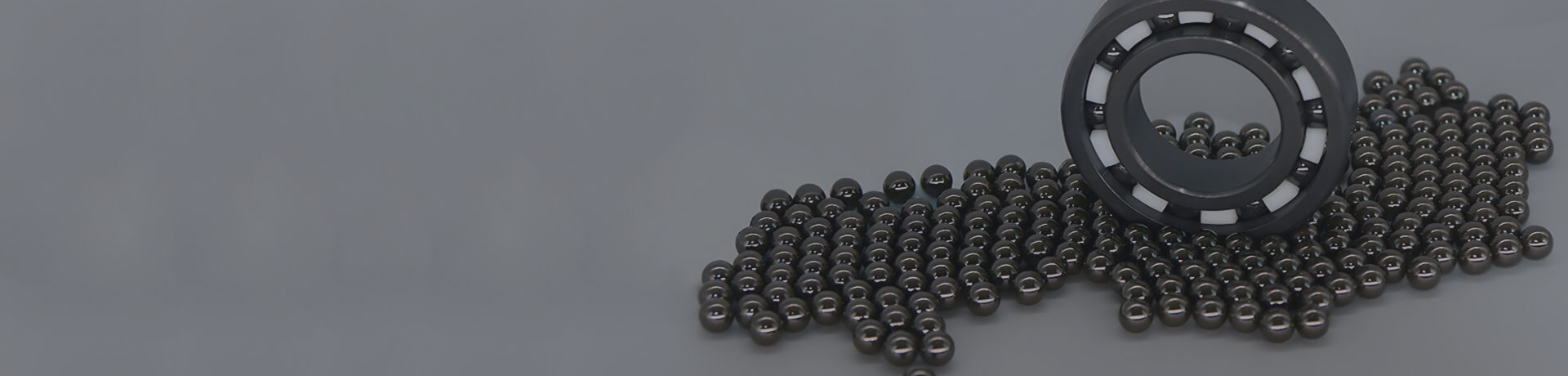
How Silicon Nitride Ceramic Balls Improves Bearing Performance
Bearings are essential components in rotating machinery, directly affecting speed, efficiency, noise level, and service life. As industrial equipment continues to operate under higher speeds, heavier loads, and more demanding environments, traditional steel bearing balls increasingly face performance limitations. Silicon nitride (Si₃N₄) ceramic balls have emerged as a high-performance alternative, offering significant improvements in bearing reliability and efficiency.
30 2026-01
Key Applications of Si3N4 Ceramic in Semiconductor Manufacturing
Semiconductor manufacturing requires extremely high standards for material purity, dimensional accuracy, and long-term stability. Equipment and components are exposed to high temperatures, corrosive process gases, plasma environments, and strict cleanroom conditions. In this context, advanced ceramic materials play a vital role, and silicon nitride (Si₃N₄) ceramic has become one of the most important materials used in semiconductor production due to its balanced mechanical, thermal, and chemical properties.