



ZrO₂
Zirconium Oxide
Zirconium oxide provides the ceramic matrix for high-density and high-hardness ceramic balls. Its chemical stability and wear resistance make it suitable for grinding, polishing and precision component applications.


High-density, high-hardness zirconium oxide ceramic balls designed for grinding, polishing, precision components, chemical processing, electronic materials, pharmaceutical processing and specialized biomedical applications.
XIAMEN HUACIJULI develops zirconia ceramic balls using zirconium oxide materials, including yttria-stabilized zirconia (Y-TZP), for industrial grinding media and precision ceramic component applications.
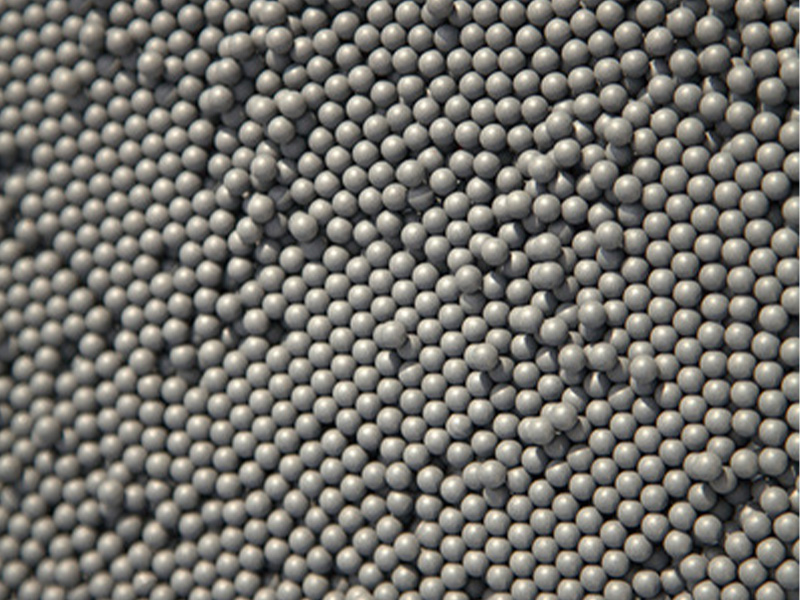
Zirconia ceramic balls are precision ceramic spheres manufactured primarily from zirconium oxide (ZrO₂), commonly using yttria-stabilized zirconia (Y-TZP) for improved structural stability and mechanical performance.
Zirconia ceramic balls combine high density, high hardness, wear resistance, chemical stability, corrosion resistance and good impact resistance. These characteristics make them suitable for both grinding and dispersion applications and precision components such as bearing balls and valve balls.
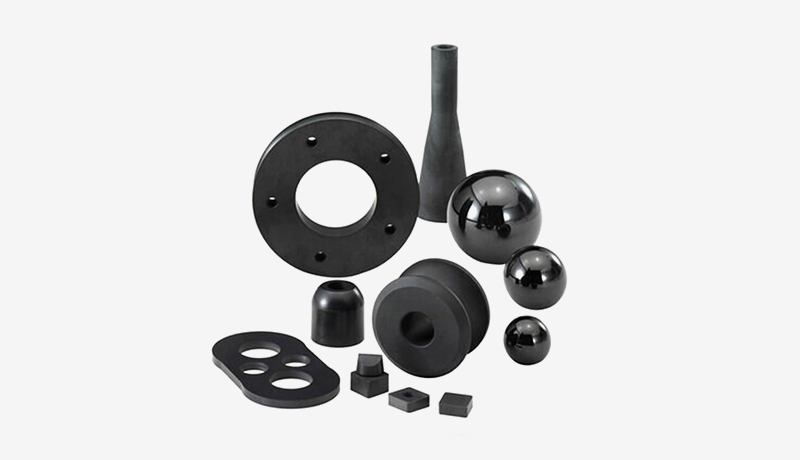
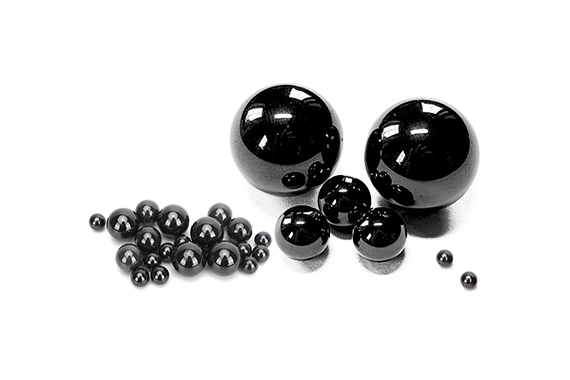
Depending on the grade, size, surface finish and application, zirconia ceramic balls can be supplied as grinding media, precision ceramic balls, bearing balls, valve balls or customized zirconia spheres.
Zirconia is a high-performance oxide ceramic known for its combination of hardness, density, fracture resistance and chemical stability. For zirconia ceramic balls, yttria-stabilized zirconia is an important material system because yttria stabilization modifies the zirconia crystal structure and improves resistance to undesirable phase transformation.
Zirconium oxide provides the ceramic matrix for high-density and high-hardness ceramic balls. Its chemical stability and wear resistance make it suitable for grinding, polishing and precision component applications.
Y-TZP uses yttria stabilization to improve zirconia phase stability and mechanical performance. The supplied product information states that stabilization can increase the critical stress value for crystal phase transformation to above 900 MPa.
Zirconia can be precision-ground into spherical components with controlled diameter, roundness and surface finish for applications requiring repeatable rolling, grinding or fluid-control performance.
| Property | Reference Value | Significance for Ceramic Balls |
|---|---|---|
| Main Material | Zirconium Oxide (ZrO₂) | Provides the ceramic matrix for high-density, wear-resistant spheres |
| Stabilized Grade | Yttria-Stabilized Zirconia (Y-TZP) | Improves phase stability and mechanical performance |
| Density | Approximately 6.0 g/cm³ | High density increases grinding impact and material removal efficiency |
| Hardness | Approximately Mohs 9 | Supports wear resistance and grinding performance |
| Thermal Conductivity | Approximately 3 W/(m·K) | Relatively low thermal conductivity compared with some technical ceramics |
| High-Temperature Resistance | Source-reported up to approximately 2200°C | Indicates high-temperature material capability; actual ball operating temperature is application-dependent |
| Compressive Strength | Source-reported approximately 80 MPa | Relevant to impact and compressive loading |
| Dielectric Constant | Source-reported approximately 10-30 | Relevant to selected electronic and RF-related applications |
| Chemical Stability | Excellent resistance to many acids, bases and salts | Supports use in chemically demanding grinding and fluid-contact applications |
Technical note: The numerical values above are based on the supplied product information and should be treated as reference data. Actual properties vary according to zirconia powder composition, yttria content, density, sintering process, ball size and test method.
With a source-reported density of approximately 6.0 g/cm³, zirconia grinding balls provide substantial mass per unit volume, helping generate effective impact and shear forces during grinding and dispersion.
A source-reported Mohs hardness of approximately 9 provides strong resistance to abrasive wear and allows zirconia balls to process many hard powders and materials.
Zirconia's hardness and microstructural stability provide excellent wear resistance. The supplied information reports a wear rate approximately 70% lower than alumina media under the stated comparison conditions.
Zirconia is resistant to many acids, bases and salts. This makes it useful for grinding systems where media contamination or chemical attack is an important concern.
Y-TZP zirconia provides a useful combination of hardness and toughness, making it suitable for grinding environments involving repeated collision and mechanical impact.
The supplied information identifies resistance to material adhesion at the ball surface, which can help reduce clogging or material build-up in selected grinding processes.
Zirconia is electrically insulating and has a source-reported dielectric constant range of approximately 10-30, making selected zirconia components useful in electrical and electronic environments.
Zirconia is used in selected biomedical and dental applications because of its corrosion resistance and biocompatibility characteristics. Medical use requires application-specific material qualification and regulatory evaluation.
Zirconia ceramic balls are widely used as grinding media because their combination of density, hardness and wear resistance allows them to generate strong mechanical forces while minimizing media wear in properly selected grinding systems.
Suitable for fine and ultra-fine grinding of powders, slurries, coatings, pigments and electronic materials.
High-density spherical media can support efficient dispersion of pigments, inks, coatings and other formulations.
High wear resistance helps reduce ceramic media consumption and potential contamination of the processed material.
The supplied product information reports approximately 70% lower wear than alumina media under the stated comparison conditions.
Zirconia ceramic balls provide strong resistance to many acids, bases and salts, making them suitable for selected chemically aggressive grinding and processing environments.
The supplied product information reports that after immersion in 10% hydrochloric acid for 30 days, weight loss was less than 0.01 g.
This is a source-reported test result. Actual corrosion behavior depends on acid concentration, temperature, exposure time, solution composition, zirconia grade, surface condition and test method.
Zirconia ceramic balls can be produced in different diameters, precision grades and surface finishes according to their intended application. Grinding media specifications differ from precision bearing or valve-ball requirements.
ZrO₂-based ceramic, including yttria-stabilized zirconia (Y-TZP) or other application-specific zirconia grades.
Diameter selected according to mill type, grinding fineness, feed material, energy input and required dispersion performance.
Application-specific spherical accuracy for grinding media, bearings, valve balls or other precision components.
As-sintered, ground or precision-polished surfaces depending on whether the ball is used as grinding media or a precision component.
Source-reported reference density of approximately 6.0 g/cm³ for the specified zirconia material.
Clean and protective packaging according to ball diameter, quantity, surface requirements and transportation conditions.
Grinding media, precision bearing balls, valve balls, polishing balls or customized zirconia spheres.
Material composition, diameter tolerance, surface roughness, roundness, batch quantity and application-specific inspection criteria.
The combination of high density, hardness, wear resistance and chemical stability allows zirconia ceramic balls to serve both as grinding media and as precision ceramic components.
Used for polishing, deburring and surface finishing of stainless steel and other metal workpieces.
Used for fine grinding and dispersion of pigments, inks and coating materials to support uniform particle distribution and surface quality.
Grinding and dispersion of hard ceramic powders, electronic materials and other high-value technical powders where contamination control is important.
Precision zirconia balls can be used as bearing rolling elements and in selected precision mechanical assemblies requiring wear resistance and dimensional stability.
Zirconia spheres can be used as valve balls and sealing components where hardness, corrosion resistance and chemical stability are required.
Used for grinding pharmaceutical raw materials and drug particles where controlled particle size, chemical stability and low contamination are important.
Zirconia is used in selected medical and biomedical components, including artificial-joint-related applications, subject to material grade and medical qualification requirements.
Suitable for selected chemical processing, abrasive processing, high-purity material preparation and other industrial environments requiring chemically stable ceramic media.
The supplied information reports a dielectric constant of approximately 10–30. This characteristic can be relevant to selected electronic and RF-related ceramic applications.
Stabilized zirconia can exhibit oxygen-ion conductivity at elevated temperatures, making zirconia-based ceramics relevant to solid oxide fuel cell and oxygen-ion conducting applications.
Zirconia is used in selected biomedical applications because of its biocompatibility and chemical stability. Medical implant applications require qualified medical-grade zirconia and application-specific validation.
Manufacturing high-quality zirconia ceramic balls requires control of powder composition, forming density, sintering shrinkage and spherical precision. Grinding media and precision balls require different levels of finishing depending on the final application.
Select appropriate ZrO₂ powder and stabilizer system according to the required mechanical, wear, chemical and thermal characteristics.
Mix and condition zirconia powder with appropriate additives to obtain consistent forming behavior and green-body density.
Form spherical green bodies using a suitable ceramic forming method according to ball diameter and production volume.
Remove organic processing additives under controlled conditions to minimize defects before high-temperature densification.
Sinter the zirconia bodies under controlled conditions to achieve the required density, microstructure and mechanical properties.
Diamond-based grinding and finishing are used to improve diameter accuracy, roundness and surface quality.
Inspect ball diameter, roundness, surface condition, density and other application-specific quality parameters.
Clean the finished ceramic balls and package them according to contamination-control, quantity and transportation requirements.
| Characteristic | Grinding Balls | Precision Ceramic Balls |
|---|---|---|
| Primary Function | Grinding and dispersion | Rolling, sealing or fluid-control functions |
| Main Requirement | Wear resistance, density and grinding efficiency | Diameter accuracy, roundness and surface finish |
| Typical Equipment | Sand mills, stirred mills and ball mills | Bearings, valves and precision assemblies |
| Surface Requirement | Application-dependent | Usually higher precision and controlled surface finish |
HUACIJULI focuses on advanced ceramic materials and can develop zirconia components for grinding, precision and specialized industrial applications.
Yttria-stabilized zirconia can be considered where a combination of hardness, wear resistance and structural stability is required.
Ceramic forming, sintering and precision grinding can be coordinated to produce spherical zirconia components with application-specific dimensional requirements.
Ball diameter, material grade and surface condition can be considered according to mill type, processed material and required grinding performance.
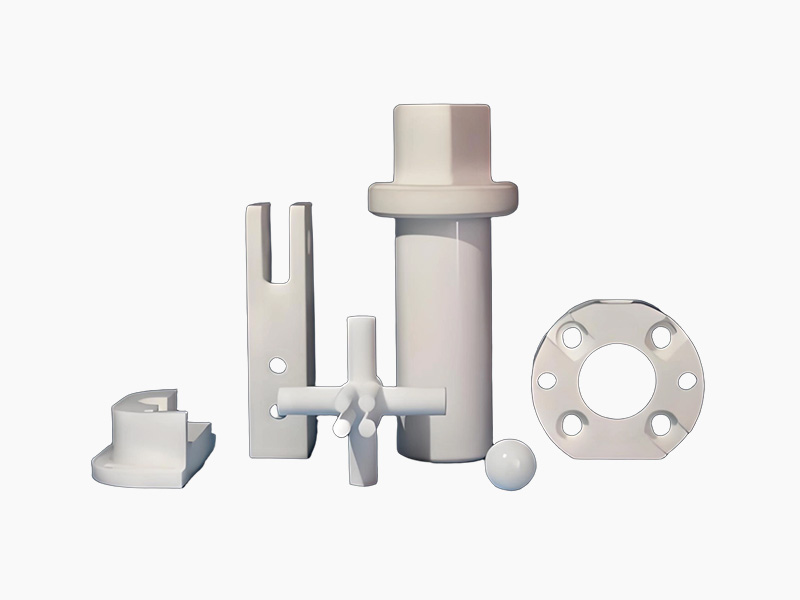
In addition to grinding balls, customized zirconia spheres can be developed for bearing, valve and other precision mechanical applications.
Customer drawings, samples, target particle size, equipment parameters and application requirements can be used for customized product development.
For a quotation or technical evaluation, the following information helps determine the appropriate zirconia grade, ball size and finishing level:
1. Application: grinding, polishing, bearing, valve or other precision use
2. Ball diameter or required size range
3. Required zirconia grade or Y-TZP requirement
4. Grinding equipment and mill type
5. Material being processed
6. Required particle size or grinding fineness
7. Grinding speed and energy conditions
8. Chemical medium, pH or solvent
9. Operating temperature
10. Required density and wear performance
11. Roundness, dimensional tolerance and surface finish
12. Required quantity, packaging and delivery requirements
Zirconia ceramic balls are made primarily from zirconium oxide (ZrO₂). Yttria-stabilized zirconia (Y-TZP) is one important material system used to improve phase stability and mechanical performance.
They are used for grinding and polishing, pigment and coating dispersion, ceramic and electronic material processing, pharmaceutical grinding, precision bearings, valve balls, chemical processing and selected biomedical applications.
Zirconia provides high density, high hardness and strong wear resistance. These characteristics allow the balls to generate effective grinding forces while maintaining relatively low media wear in suitable applications.
The supplied product information gives a reference hardness of approximately Mohs 9. Actual hardness depends on zirconia grade, stabilizer content, density and manufacturing process.
Yes. Zirconia has high hardness and good wear resistance. The supplied product information reports a wear rate approximately 70% lower than alumina media under the stated comparison conditions.
Zirconia generally provides excellent resistance to many acids, bases and salts. The supplied information reports less than 0.01 g weight loss after immersion in 10% hydrochloric acid for 30 days under the stated test conditions.
Yes. Precision-ground zirconia balls can be used as rolling elements in selected bearing systems where corrosion resistance, electrical insulation, wear resistance and dimensional stability are required.
Yes. Zirconia spheres can be manufactured as valve balls for selected fluid-control applications where hardness, corrosion resistance, chemical stability and dimensional precision are important.
Zirconia grinding media can be considered for pharmaceutical material processing where low contamination, chemical stability and controlled particle size are required. The specific grade and cleanliness requirements should be confirmed for the intended pharmaceutical process.
Yes. Diameter, tolerance, roundness, surface finish, zirconia grade, density, packaging and inspection requirements can be customized according to the application.
Provide the ball diameter, grinding equipment, material being processed, target particle size, grinding speed, operating temperature, chemical environment, required quantity and any specific wear or contamination requirements.
| Product | Zirconia Ceramic Balls |
| Main Material | Zirconium Oxide (ZrO₂), including Y-TZP |
| Reference Density | Approximately 6.0 g/cm³ |
| Reference Hardness | Approximately Mohs 9 |
| Key Properties | High density, high hardness, wear resistance, chemical stability, corrosion resistance and impact resistance |
| Main Applications | Grinding, polishing, coatings, pigments, ceramics, electronics, pharmaceuticals, bearings and valve balls |
| Customization | Material grade, ball diameter, tolerance, roundness, surface finish and packaging |
Send your required ball diameter, material grade, grinding equipment, processed material or technical drawing to XIAMEN HUACIJULI. Customized zirconia ceramic balls can be developed for grinding media, precision bearings, valve balls and other specialized ceramic components.
Technical information notice: The technical values on this page are based on the supplied product information and are presented as reference data where appropriate. Actual zirconia ceramic ball properties depend on zirconia composition, yttria content, material grade, density, forming process, sintering conditions, ball diameter, machining and test method.
High-temperature capability, wear rate, corrosion resistance, dimensional accuracy and service performance should be evaluated under the actual application conditions. Final specifications should be confirmed by technical drawings, samples or agreed inspection standards.
Ⅰ.Technical Parameters
Parameter Name | Typical values | Remark |
Specification Range | 0.05mm-20mm | Customizable with different particle sizes. |
density | >6.0g/cm³ | Filling density: 3.7-3.9 g/cm³ |
hardness | HRA>87 | Mohs hardness level 9 |
Crushing strength | 150Kgf(2mm) | Test values for a 2mm diameter sphere |
Chemical composition | ZrO₂ 94.6%, Y₂O₃ 5.2±0.2% | Yttria-stabilized zirconia |
Its thermal expansion coefficient is similar to that of metals, and it exhibits excellent thermal stability.
It can withstand rapid heating and cooling temperature differences of up to 1600℃ without cracking.
Ⅱ.Application areas
Application areas | Application Scenarios | Performance advantages |
mechanical Engineering | Bearings, valves, pump bodies, nozzles | Wear-resistant, corrosion-resistant, and long-lasting. |
Automobile manufacturing | Turbocharger rotor, oxygen sensor | High temperature resistance, 40% longer lifespan. |
Electronic communication | 5G base station filters, chip carriers | Signal penetration, plasma resistance |
Healthcare | Artificial joints, dental implants | Biocompatible, aesthetically pleasing, and durable. |
Energy and environmental protection | Fuel cells, nuclear reactor cladding | Ionic conductivity, radiation resistance |
precision instruments | Watch movements, optical components | High precision, self-lubricating |
Supports custom specifications.