




What Are Silicon Nitride Ball Blanks?
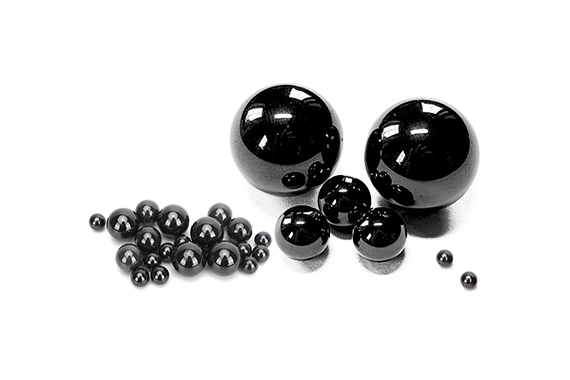
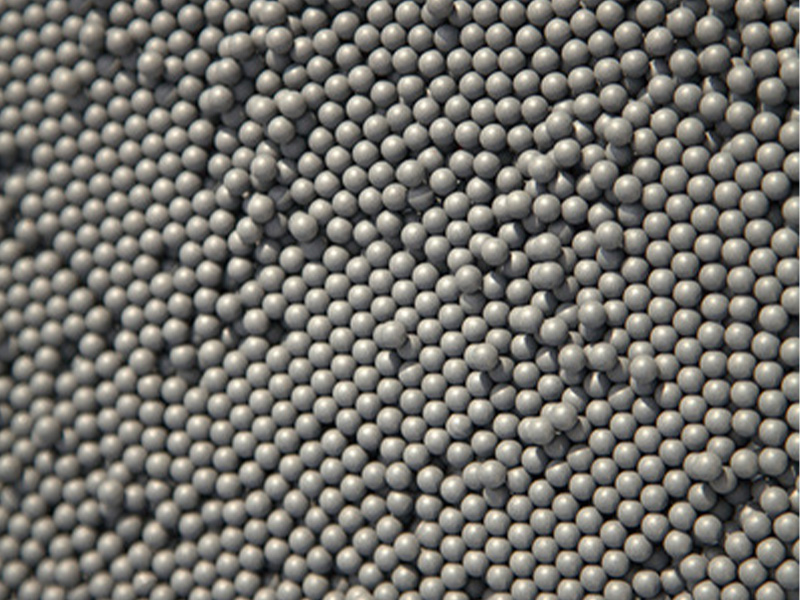
Silicon nitride ball blanks are spherical or near-spherical ceramic preforms manufactured from silicon nitride (Si₃N₄). They are designed as starting components for precision grinding, dispersion and other applications where ceramic media must withstand repeated impact, abrasion, elevated temperature and chemically demanding processing conditions.
Compared with conventional grinding media, silicon nitride provides a combination of low density, high hardness, mechanical strength, wear resistance, corrosion resistance, thermal stability and electrical insulation. These characteristics make Si₃N₄ ball blanks suitable for fine and submicron material processing where contamination control and media durability are important.
Silicon nitride ball blanks are high-performance Si₃N₄ ceramic grinding-media blanks used for fine grinding and dispersion. Their high hardness, wear resistance, thermal stability, chemical resistance and low contamination potential make them suitable for electronic slurries, ceramic powders, battery materials, magnetic materials, rare earth materials, pigments and other precision-processing applications.
Silicon Nitride Material Properties
High Hardness
Silicon nitride has high hardness and strong resistance to abrasive wear, helping ceramic media maintain dimensional stability during repeated grinding cycles.
Wear Resistance
The combination of hardness, strength and fracture toughness supports long-term operation in abrasive grinding and dispersion environments.
Thermal Stability
Si₃N₄ maintains useful mechanical and physical performance at elevated temperatures, subject to material grade, atmosphere and operating conditions.
Chemical Resistance
Silicon nitride offers resistance to many chemically demanding environments, making it useful for processing materials in slurries and aggressive media.
Low Contamination Potential
Low media wear can help reduce unwanted ceramic-media contamination in applications where material purity is important.
Electrical Insulation
High electrical resistivity makes Si₃N₄ suitable for processing environments where electrically insulating ceramic media are preferred.
Reference Silicon Nitride Material Data
| Property | Reference Value | Engineering Relevance |
|---|---|---|
| Material | Si₃N₄ | High-performance engineering ceramic |
| Density | Approximately 3.18-3.40 g/cm³ | Lower density than many conventional ceramic media |
| Hardness | Approximately 15 GPa | Supports abrasion resistance |
| Flexural Strength | Approximately 680-970 MPa | Supports mechanical loading and impact resistance |
| Fracture Toughness, KIC | Approximately 6.1-8.5 MPa·m1/2 | Relevant to resistance against crack propagation |
| Young's Modulus | Approximately 300-340 GPa | High stiffness and dimensional stability |
| Thermal Conductivity | Approximately 22-28 W/(m·K) | Supports thermal management in grinding environments |
| Volume Resistivity | Approximately 1012-1014 Ω·cm | Electrical insulation capability |
| High-Temperature Capability | Approximately 1200-1400°C for representative grades | Actual limit depends on grade, atmosphere and load |
Engineering note: The values above are reference ranges based on representative silicon nitride material data. Actual properties depend on material grade, powder formulation, forming method, sintering process, component geometry and test conditions. Application-specific specifications should be confirmed before production.
Detailed Attributes of Silicon Nitride Ball Blanks
High Wear Resistance
High hardness and mechanical strength help the ball blank resist abrasive wear during repeated grinding and dispersion cycles.
Reduced Media Contamination
Lower media wear can reduce the amount of ceramic material introduced into the processed powder or slurry.
High-Temperature Stability
Si₃N₄ ceramic can retain useful mechanical performance in elevated-temperature processing conditions when the material grade and atmosphere are properly selected.
Chemical Resistance
The material is suitable for many chemically demanding grinding and dispersion environments, subject to slurry chemistry and temperature.
Mechanical Strength
High flexural strength and fracture toughness help the media tolerate repeated mechanical loading and impact.
Electrical Insulation
High electrical resistivity makes silicon nitride useful where electrically insulating grinding media are required.
Wear Performance and Grinding Efficiency
The supplied product information states that the wear of silicon nitride grinding balls over 24 hours can be as low as one millionth under the referenced test conditions, with significantly lower wear than some conventional zirconia and alumina grinding media.
This figure should be treated as a comparative product claim rather than a universal wear rate. Actual wear depends on ball size, grinding equipment, slurry composition, particle hardness, rotational speed, impact energy, temperature, loading, grinding time and test method. Qualification testing under the customer's actual operating conditions is recommended.
Silicon Nitride Ball Blank Specifications
| Specification | Reference / Custom Option | Selection Consideration |
|---|---|---|
| Material | Silicon nitride / Si₃N₄ | Select grade according to wear, temperature and chemical conditions |
| Ball Blank Diameter | Application-specific | Related to mill type, particle size and grinding energy |
| Density | Approximately 3.18-3.40 g/cm³ | Impacts media movement and grinding dynamics |
| Surface Condition | As-sintered, ground or precision-finished | Selected according to equipment and contamination requirements |
| Dimensional Accuracy | Drawing-specific | Final tolerance should be confirmed with the application drawing |
| Sphericity / Roundness | Application-specific | Important for precision grinding and stable media movement |
| Packaging | Customer/application dependent | Clean handling and protection from contamination |
8 Application Fields for Silicon Nitride Ball Blanks
Equipment Using Silicon Nitride Grinding Ball Blanks
Materials Commonly Processed
Silicon Nitride Ball Blank Manufacturing Process
Select suitable silicon nitride powder and processing additives according to the required material grade and application.
Prepare and condition the ceramic powder system to achieve suitable flow, packing and forming characteristics.
Form the green ball blanks using a suitable ceramic forming method according to ball geometry and production requirements.
Control green-body condition and prepare the blanks for controlled densification.
Use controlled sintering and densification to develop the required ceramic microstructure and mechanical properties.
Precision-grind the ceramic blanks to improve dimensional accuracy, roundness and surface quality where required.
Inspect dimensions, surface condition and selected quality parameters before sorting the finished ceramic media.
Clean and package the ball blanks according to application requirements to reduce handling-related contamination.
Key Manufacturing Controls
Why Choose XIAMEN HUACIJULI?
Silicon Nitride Material Focus
HUACIJULI focuses on silicon nitride ceramic components for demanding industrial applications.
Application-Based Material Selection
Material grade and finishing requirements can be considered according to grinding conditions, temperature, chemistry and contamination requirements.
Custom Ball Geometry
Ball dimensions, surface condition and precision requirements can be developed according to equipment and application needs.
Controlled Ceramic Processing
Powder preparation, forming, sintering, grinding and inspection are considered as an integrated manufacturing process.
OEM & Custom Development
Custom silicon nitride ball blanks can be discussed according to drawings, samples, equipment conditions and required performance.
Precision-Oriented Production
The manufacturing approach can include dimensional inspection, surface evaluation, sorting and application-specific quality requirements.
How to Specify Silicon Nitride Ball Blanks
For an accurate recommendation or quotation, provide as much of the following information as possible:
1. Required ball diameter or diameter range.
2. Preferred silicon nitride material grade, if already specified.
3. Grinding equipment type and chamber configuration.
4. Material being processed and target particle size.
5. Grinding temperature and operating environment.
6. Rotational speed, impact intensity or other operating parameters.
7. Slurry chemistry, pH, solvent or other chemical conditions.
8. Required surface finish, roundness or sphericity.
9. Required quantity and packaging conditions.
10. Technical drawing, sample or existing media specification when available.
Silicon Nitride Ball Blanks FAQ
What are silicon nitride ball blanks?
Silicon nitride ball blanks are Si₃N₄ ceramic spherical or near-spherical blanks used as starting or finished media for precision grinding and dispersion applications.
Why use silicon nitride instead of conventional grinding media?
Silicon nitride combines high hardness, wear resistance, mechanical strength, thermal stability and chemical resistance. Its relatively low density and low contamination potential can also be beneficial in selected fine-grinding applications.
Are silicon nitride ball blanks suitable for submicron grinding?
They can be suitable for fine and submicron grinding when the ball size, equipment, material loading and operating parameters are properly matched to the process.
How wear-resistant are silicon nitride grinding balls?
Silicon nitride has high hardness and wear resistance. The supplied product information reports extremely low wear under a referenced 24-hour comparison test. Actual wear should be evaluated under the customer's specific grinding conditions.
Can silicon nitride grinding media reduce contamination?
Lower media wear can reduce the amount of ceramic media introduced into the processed material. The actual contamination level depends on the media grade, grinding conditions, cleaning procedure and material being processed.
What grinding equipment can use silicon nitride ball blanks?
Typical equipment includes sand mills, stirred ball mills, drum ball mills, fine-grinding systems and dispersion equipment. Compatibility should be checked against the equipment manufacturer's requirements.
Can HUACIJULI produce customized silicon nitride ball blanks?
Yes. Custom material grades, dimensions, surface conditions and precision requirements can be discussed according to drawings, samples and application conditions.
What information is required for a quotation?
Useful information includes ball diameter, material grade, equipment type, processed material, target particle size, grinding conditions, slurry chemistry, surface requirements, quantity and packaging requirements.
Are the listed silicon nitride properties guaranteed for every ball blank?
No. The listed values are reference data. Actual properties depend on the selected grade, manufacturing process, geometry, test method and production conditions. Final specifications should be confirmed for the specific order.
Silicon Nitride Ball Blanks: Key Facts
| Product | Silicon Nitride Ball Blanks |
| Material | Silicon Nitride / Si₃N₄ |
| Main Advantages | High hardness, wear resistance, thermal stability, chemical resistance and low contamination potential |
| Typical Equipment | Sand mills, stirred ball mills, drum ball mills and fine-grinding systems |
| Typical Materials | Electronic slurries, ceramic powders, battery materials, magnetic materials, rare earth materials, minerals, pigments, inks and other fine materials |
| Customization | Material grade, diameter, surface condition, dimensional accuracy and packaging can be discussed |
Request Silicon Nitride Ball Blank Specifications
Send your required ball diameter, grinding equipment, processed material, target particle size, operating conditions or technical drawing to XIAMEN HUACIJULI for application-specific evaluation.