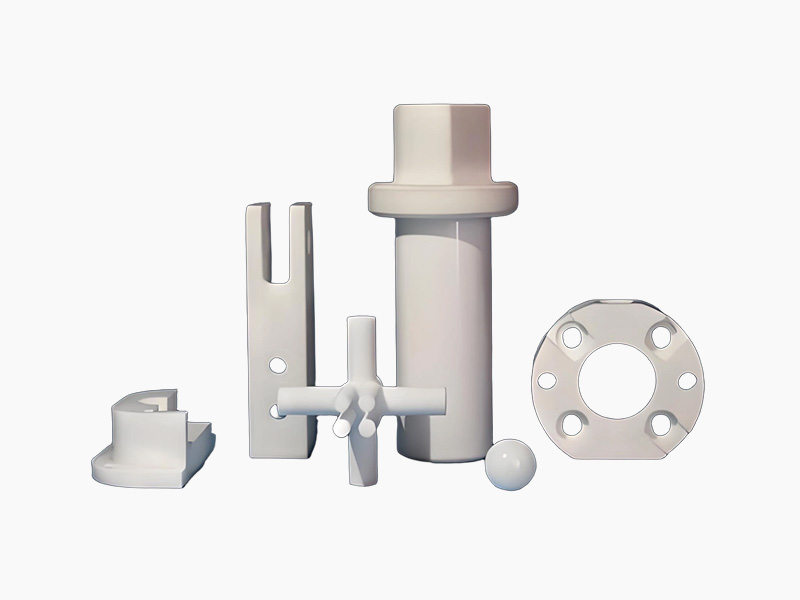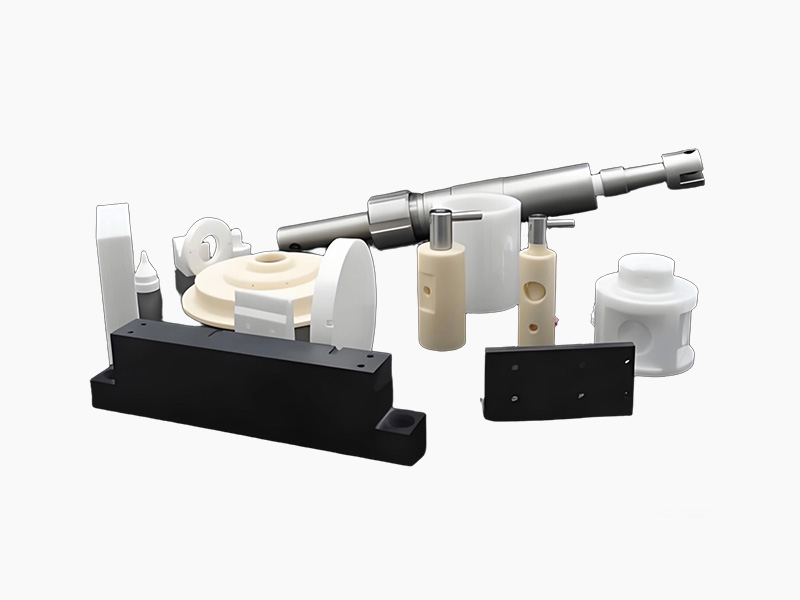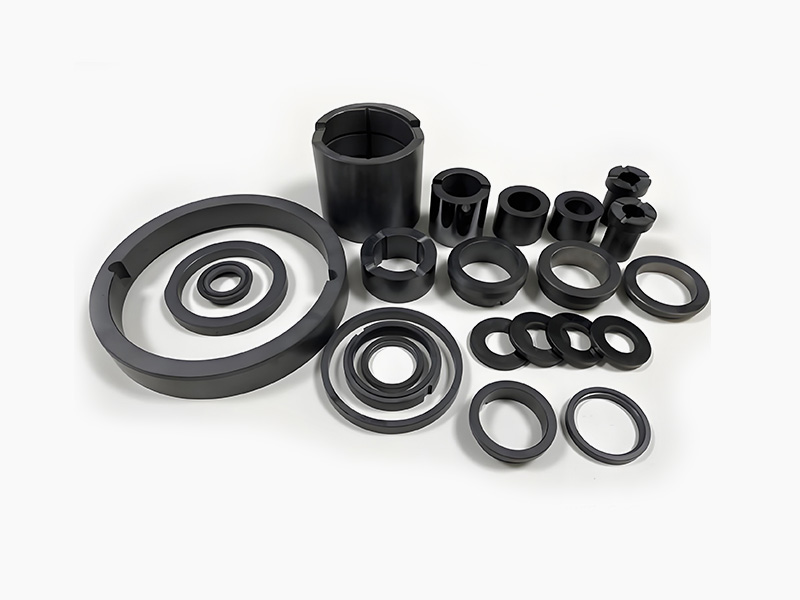
A wear-resistant and corrosion-resistant ceramic valve designed for controlling abrasive, corrosive and demanding industrial media.
A zirconia ceramic ball valve is an industrial flow-control valve that uses zirconium oxide (ZrO₂) ceramic as a key functional material for the valve ball, seat, liner or other media-contacting components. It is designed for applications where conventional metallic valves can experience excessive wear, corrosion, erosion or sealing degradation.
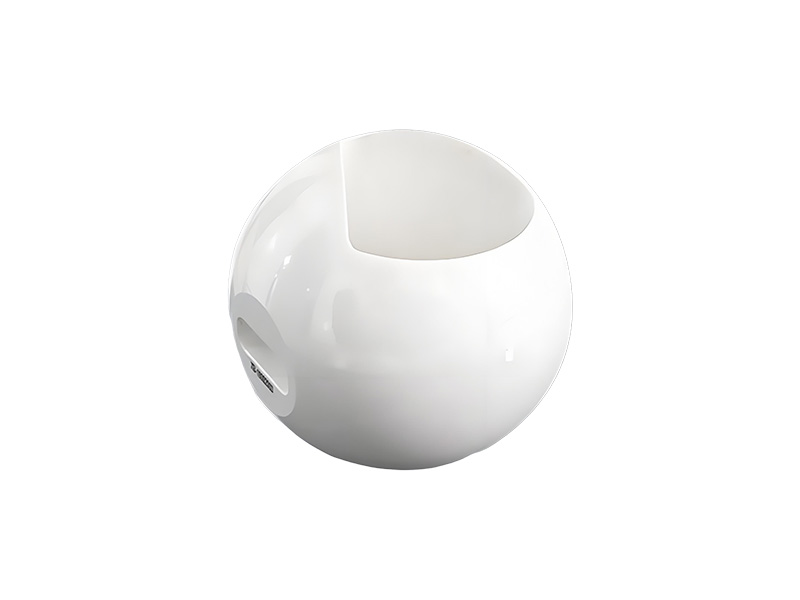
The core valve structure normally includes a zirconia ceramic ball, ceramic valve seat and ceramic liner, combined with a suitable metallic or engineered valve body and actuator interface. The ceramic contact surfaces provide high hardness, chemical resistance and dimensional stability for demanding fluid-control applications.
Zirconia ceramic ball valves are particularly suitable for abrasive slurries, corrosive fluids, particulate-containing media, chemical process streams, mining materials, power-generation solids and selected clean-processing applications.
A zirconia ceramic ball valve is a high-hardness ceramic flow-control component used to regulate abrasive, corrosive and high-temperature media.Its zirconia ball and sealing surfaces provide high wear resistance, chemical stability, dimensional rigidity and low-friction contact characteristics. Typical applications include mining, metallurgy, chemical processing, power generation, environmental engineering, semiconductor equipment, pharmaceutical processing and other specialized industrial systems.
Zirconia, or zirconium oxide (ZrO₂), is an advanced engineering ceramic widely used where hardness, wear resistance, chemical stability and dimensional accuracy are required. Stabilized zirconia grades, including yttria-stabilized zirconia, can provide a combination of strength and fracture toughness that makes them suitable for precision ceramic valve components.
Zirconia ceramic valve components can achieve approximately HRA 87-88 or higher according to the supplied product information, providing strong resistance to abrasive wear and particle erosion.
Zirconia is resistant to many acids, alkalis and salts, making it suitable for selected chemical-processing and corrosive-media applications.
Zirconia has a very high melting temperature, with the supplied product information stating a melting point of approximately 2700°C. Actual valve operating temperature depends on grade, structure, pressure and media.
The high rigidity of ceramic materials helps maintain the geometry of the ball and sealing surfaces under mechanical loading and temperature variation.
The following values consolidate the technical information supplied for zirconia ceramic valve components. Exact values depend on zirconia grade, stabilizer system, forming method, sintering process and final machining.
| Property | Reference Value / Description | Relevance to Ball Valve |
|---|---|---|
| Material | Zirconium Oxide (ZrO₂) | Core ceramic material for ball, seat and liner components |
| Hardness | Approximately HRA 87-88 or higher | Resistance to abrasive wear and particle erosion |
| Melting Point | Approximately 2700°C | Indicates high-temperature material capability; not the valve operating limit |
| Chemical Resistance | High resistance to many acids, alkalis and salts | Suitable for selected corrosive process media |
| Surface Contact | High-sphericity ceramic ball with low-friction characteristics | Supports controlled sealing and reduced contact wear |
| Leakage Test | Supplied data reports no leakage after 10,000 switching cycles in a static-pressure life test | Demonstrates sealing durability under the stated test conditions |
Engineering note: material-property values and test results are reference data based on the supplied product information. Actual performance depends on ceramic grade, valve geometry, pressure, temperature, media chemistry, particle loading, cycling frequency and installation conditions.
The ceramic ball is the primary rotating flow-control element. High hardness and precision spherical geometry help resist erosion, abrasive particles and repeated contact with the valve seat.
The valve seat forms the sealing interface with the ceramic ball. Controlled geometry, surface finish and contact pressure are important for minimizing leakage and wear.
A zirconia liner can protect internal valve surfaces from direct contact with corrosive or abrasive media, extending the functional life of the flow path.
High ceramic hardness helps reduce material loss caused by hard particles, slurry flow and repeated valve operation.
Zirconia provides strong resistance against many chemical media. Compatibility must nevertheless be confirmed for the actual concentration, temperature and chemical composition.
High sphericity, controlled surface finish and ceramic-to-ceramic contact can provide a tight sealing interface. Actual leakage class must be established by the applicable valve test standard and test conditions.
Zirconia ceramic ball valves can be engineered according to valve size, pressure, temperature, media characteristics and installation requirements. The following specifications can be defined during OEM development.
| Specification | Reference / Customization |
|---|---|
| Ceramic Material | ZrO₂ zirconia; grade selected according to mechanical, thermal and chemical requirements |
| Valve Structure | Ball valve with zirconia ceramic ball, seat and/or liner |
| Ball Diameter | Drawing- and valve-size dependent |
| Port Diameter | Full-port, reduced-port or custom geometry according to flow requirements |
| Hardness | Approximately HRA 87-88 or higher based on supplied zirconia product data |
| Temperature | Application-dependent; ceramic melting point is approximately 2700°C, while actual valve service temperature is substantially dependent on valve design and system conditions |
| Pressure Rating | To be specified according to valve body, ceramic geometry, sealing structure and applicable design standard |
| Connection | Flanged, threaded, welded or customized connection according to system design |
| Actuation | Manual, pneumatic, electric or application-specific actuation system |
| Surface Finish | Precision-ground or polished sealing surfaces according to leakage and friction requirements |
| Media | Abrasive slurry, corrosive liquids, powders, particulate fluids and selected clean process media |
The ball and seat are manufactured with controlled spherical geometry and surface finish. When correctly matched, these surfaces can create a highly effective sealing interface and minimize internal leakage.
Compared with softer metallic contact surfaces, high-hardness zirconia can provide improved resistance to erosion caused by suspended particles, mineral slurries and hard particulate media.
The supplied product information reports a static-pressure life test in which no leakage was observed after 10,000 switching cycles. Actual service life depends on pressure, media, temperature, particles, operating torque and cycling conditions.
Control of ore slurry, tailings, mineral particles and other highly abrasive process media.
Flow control for abrasive powders, metal particles, high-temperature process streams and metallurgical materials.
Handling selected acids, alkalis, salts and corrosive chemical process fluids.
Control of pulverized coal, fly ash, particulate materials and demanding thermal process streams.
Applications in wastewater treatment, chemical dosing, sludge handling and exhaust-gas treatment systems.
Specialized equipment requiring ceramic components with chemical resistance and low contamination potential.
Selected clean-fluid systems where compatible ceramic materials and appropriate sanitary design are required.
Corrosive and particle-containing fluid transportation systems requiring durable internal flow-control surfaces.
Custom ceramic valve solutions for specialized machinery, research equipment and demanding process systems.
Zirconia ceramic ball valves are particularly useful when the controlled medium creates severe wear or corrosion challenges for conventional valve materials.
| Medium Type | Potential Requirement | Ceramic Benefit |
|---|---|---|
| Ore Slurry | High abrasion | High hardness and erosion resistance |
| Acidic Fluids | Chemical corrosion | Strong resistance to many chemical media |
| Alkaline Fluids | Chemical attack | Ceramic chemical stability |
| Fly Ash / Powders | Particle erosion | Hard ceramic flow surfaces |
| Clean Process Fluids | Low contamination | Ceramic contact surfaces with application-specific material selection |
Manufacturing a zirconia ceramic ball valve requires coordinated control of ceramic powder processing, forming, sintering, precision machining and valve assembly. The ball and seat surfaces are particularly important because sealing quality depends strongly on geometric accuracy and surface condition.
Select an appropriate zirconia grade and stabilizer system according to hardness, toughness, temperature and chemical requirements.
Prepare and condition zirconia powder with suitable additives and processing controls to achieve consistent forming behavior.
Form ceramic blanks using an appropriate pressing, molding or other forming route according to component geometry.
Controlled thermal processing removes temporary binders and densifies the zirconia ceramic structure.
Ceramic blanks are machined toward the required ball, seat and liner geometry using suitable ceramic machining techniques.
Diamond-based grinding and finishing processes can be used to achieve the required dimensional accuracy and sealing surface quality.
Inspect dimensions, spherical geometry, surface finish, hardness and visual quality according to the component specification.
Assemble ceramic components with the valve body and sealing system, followed by applicable pressure, leakage, cycling and functional tests.
XIAMEN HUACIJULI focuses on advanced ceramic components and can support zirconia ceramic component development according to application requirements, drawings and technical specifications.
Material selection can be matched to hardness, wear, corrosion, temperature and mechanical requirements.
Ball, seat and liner components can be developed around required geometry and interface conditions.
Custom dimensions, drawings, ceramic grades and component configurations can be evaluated for OEM applications.
Selection can consider media chemistry, abrasive particle content, temperature, pressure and operating cycles.
Ceramic grinding and finishing are important for spherical accuracy, surface condition and sealing interfaces.
Technical drawings, samples, operating parameters and application information can be used as the basis for product development.
For an accurate technical quotation or OEM evaluation, provide as many of the following parameters as possible:
1. Valve size: nominal diameter, port diameter and overall dimensions.
2. Media: liquid, gas, slurry, powder or particle-containing fluid.
3. Chemical composition: acids, alkalis, salts, solvents or other process chemicals.
4. Particle loading: particle size, concentration and hardness when abrasive media are involved.
5. Operating temperature: normal temperature, peak temperature and thermal cycling.
6. Operating pressure: working pressure, pressure differential and possible pressure peaks.
7. Valve cycle: switching frequency and expected operating life.
8. Sealing requirement: allowable leakage or applicable valve test specification.
9. Connection: flange, thread, weld or customized connection.
10. Drawing or sample: 2D drawing, 3D model or existing valve sample where available.
It is a ball valve using zirconia ceramic components such as the ball, seat and/or liner to provide high wear resistance, chemical resistance and dimensional stability in demanding media-control applications.
Zirconia provides high hardness and strong chemical resistance, making it useful where abrasive particles or corrosive media can accelerate wear or corrosion of conventional materials.
The supplied product information specifies a hardness of approximately HRA 87–88 or higher. The actual value depends on the zirconia grade and manufacturing process.
They can be suitable for many acids, alkalis and salts because zirconia has strong chemical resistance. Chemical compatibility should always be confirmed for the exact concentration, temperature and process conditions.
Yes. High zirconia hardness makes these valves suitable for selected abrasive applications such as ore slurry, tailings, mineral particles and other hard particulate media.
The supplied material information gives a zirconia melting point of approximately 2700°C, but this is not the valve operating temperature. Actual service temperature must be determined from the zirconia grade, valve structure, pressure, sealing system and process environment.
Service life depends strongly on the medium, pressure, temperature, particle concentration, cycling frequency and valve design. The supplied product information reports no leakage after 10,000 switching cycles in a static-pressure life test.
Yes. Ceramic geometry, dimensions, surface finish, ball diameter, port geometry and component configuration can be developed according to technical drawings, samples and application requirements.
XIAMEN HUACIJULI can evaluate customized zirconia ceramic components based on drawings, samples, dimensions, material requirements and operating conditions.
Useful information includes valve size, ceramic component dimensions, media composition, pressure, temperature, particle loading, cycling frequency, sealing requirement, connection type and drawings or samples.
| Product | Zirconia Ceramic Ball Valve |
| Core Material | Zirconium Oxide (ZrO₂) |
| Main Ceramic Components | Ceramic ball, valve seat and liner |
| Hardness | Approximately HRA 87–88 or higher, according to supplied product data |
| Main Advantages | Wear resistance, corrosion resistance, high-temperature capability, dimensional stability and precision sealing |
| Typical Media | Abrasive slurry, corrosive liquids, powders, particulate fluids and selected clean process media |
| Typical Industries | Mining, metallurgy, chemical, power, environmental, semiconductor, pharmaceutical and advanced industrial equipment |
| Customization | Ceramic grade, ball size, geometry, surface finish, valve configuration and OEM dimensions |
Send your valve drawing, ceramic component dimensions, media information, pressure, temperature and operating-cycle requirements to discuss a suitable zirconia ceramic solution with XIAMEN HUACIJULI.
Technical information on this page is based on supplied product data and is intended for engineering reference. Actual ceramic properties, pressure ratings, temperature limits, leakage performance and service life depend on material grade, valve design, manufacturing process and operating conditions. Final specifications should be confirmed by technical drawing and application requirements.
| Property | Reference Value / Description | Relevance to Ball Valve |
|---|---|---|
| Material | Zirconium Oxide (ZrO₂) | Core ceramic material for ball, seat and liner components |
| Hardness | Approximately HRA 87–88 or higher | Resistance to abrasive wear and particle erosion |
| Melting Point | Approximately 2700°C | Indicates high-temperature material capability; not the valve operating limit |
| Chemical Resistance | High resistance to many acids, alkalis and salts | Suitable for selected corrosive process media |
| Surface Contact | High-sphericity ceramic ball with low-friction characteristics | Supports controlled sealing and reduced contact wear |
| Leakage Test | Supplied data reports no leakage after 10,000 switching cycles in a static-pressure life test | Demonstrates sealing durability under the stated test conditions |