




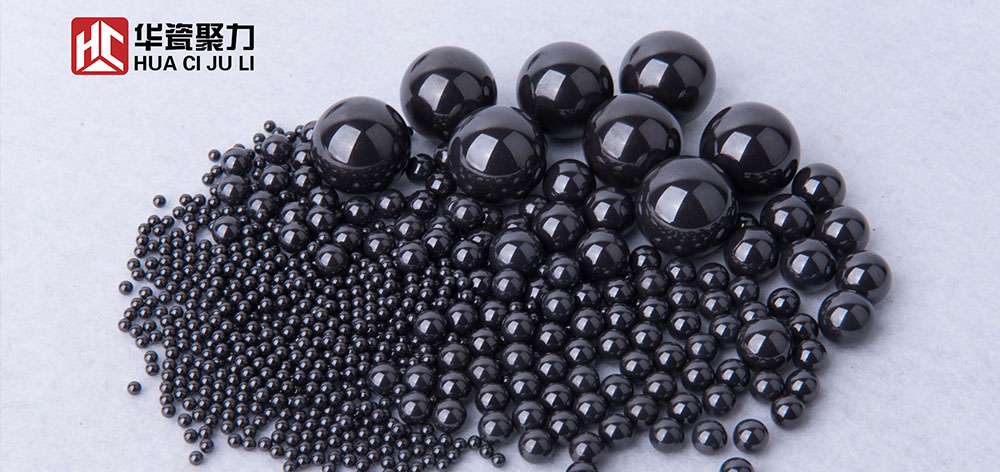
High-speed bearings are widely used in machine tool spindles, high-speed motors, aerospace turbomachinery and precision industrial robots. The rolling ball material directly determines the limit speed, temperature rise, vibration and service life of the bearing. Silicon nitride balls have become the preferred material for high-speed bearings by virtue of unique comprehensive performance.
First, low density is the core advantage of silicon nitride balls. Its density is only about half of steel balls, which greatly reduces centrifugal force during high-speed rotation. When the bearing runs at ultra-high speed, the smaller centrifugal load reduces the pressure on the inner and outer raceways, lowers friction heat generation and effectively inhibits bearing temperature rise. This solves the overheating and stuck failure problems of traditional steel balls at high speed.
Second, silicon nitride balls own ultra-high hardness and wear resistance. Under high-speed cyclic friction, they produce extremely low wear loss, keep long-term dimensional stability and roundness accuracy. Traditional steel balls are easy to wear and deform at high speed, leading to bearing vibration, noise and precision attenuation. Silicon nitride balls can maintain original precision for a long time and extend bearing service life greatly.
Third, low friction coefficient and self-lubricating property adapt to high-speed dry running and oil-lubricated working conditions. Silicon nitride balls form a stable friction pair with bearing steel raceway, reducing friction torque and energy consumption. In high-speed running state, lower friction means less heat generation, making the bearing run more smoothly and quietly.
Fourth, thermal stability ensures performance under high temperature rise of high-speed operation. High-speed bearings inevitably generate heat during operation; steel balls will soften and fail at moderate temperature, while silicon nitride balls still maintain mechanical strength and structural stability. It can bear continuous high temperature working condition without precision loss.
In addition, non-corrosion and non-magnetic properties make silicon nitride balls adapt to complex working conditions such as humidity, chemical mist and electromagnetic interference. For high-speed precision equipment pursuing long life, low noise and high stability, replacing steel balls with silicon nitride balls is the most effective optimization solution.