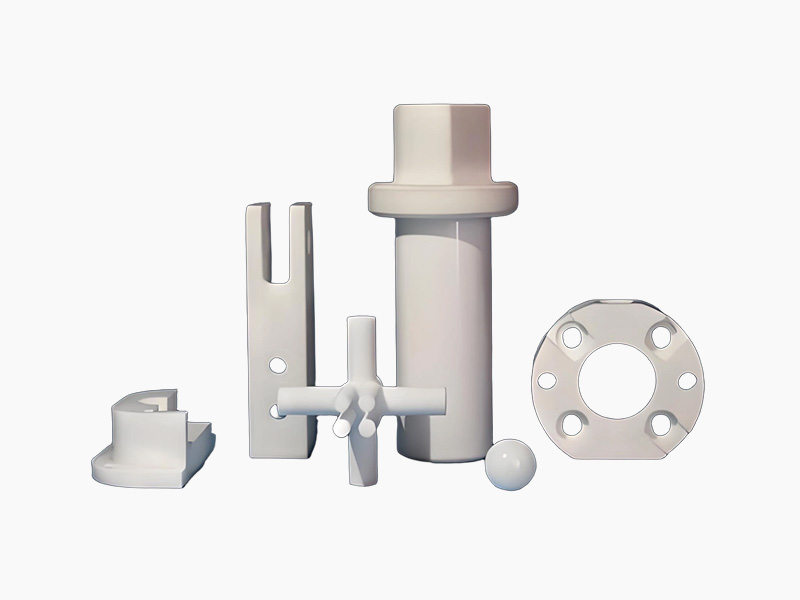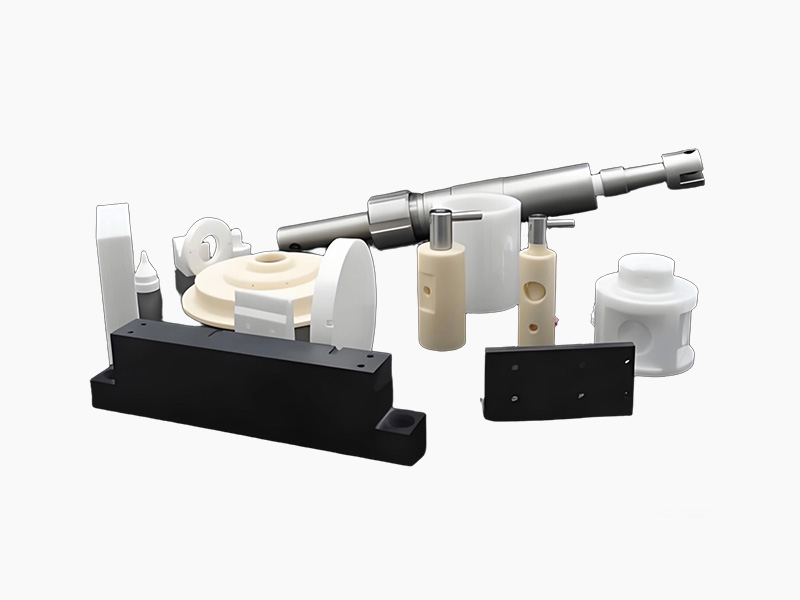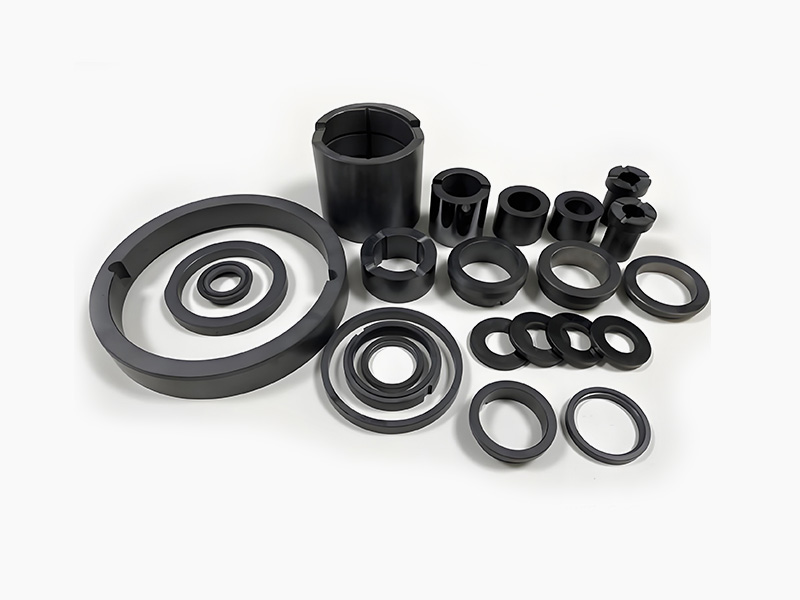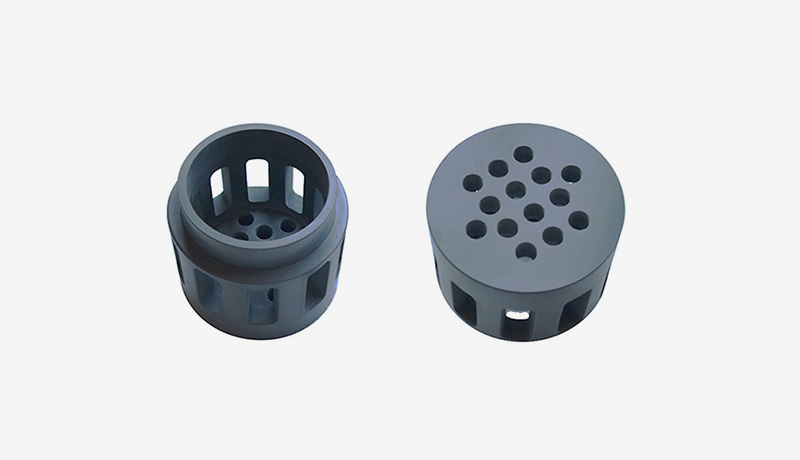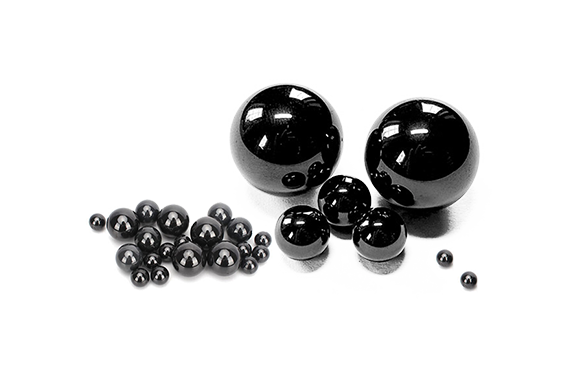
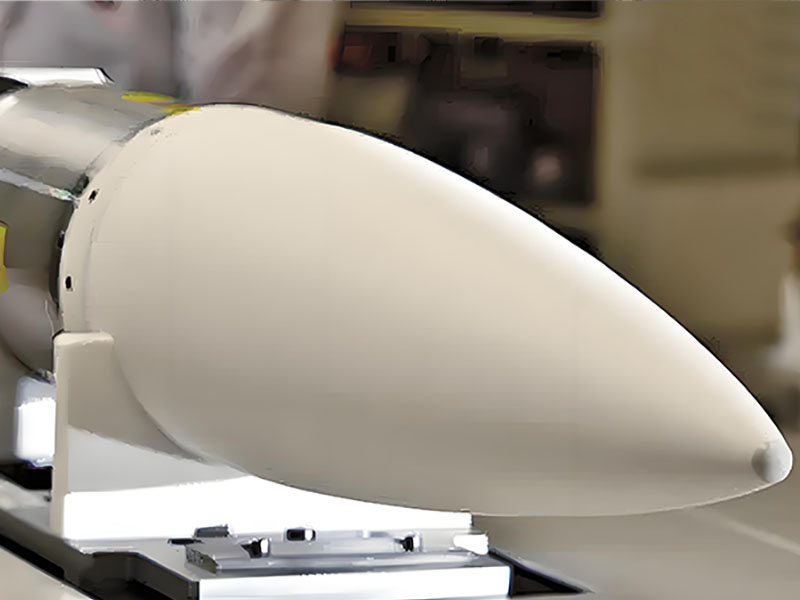
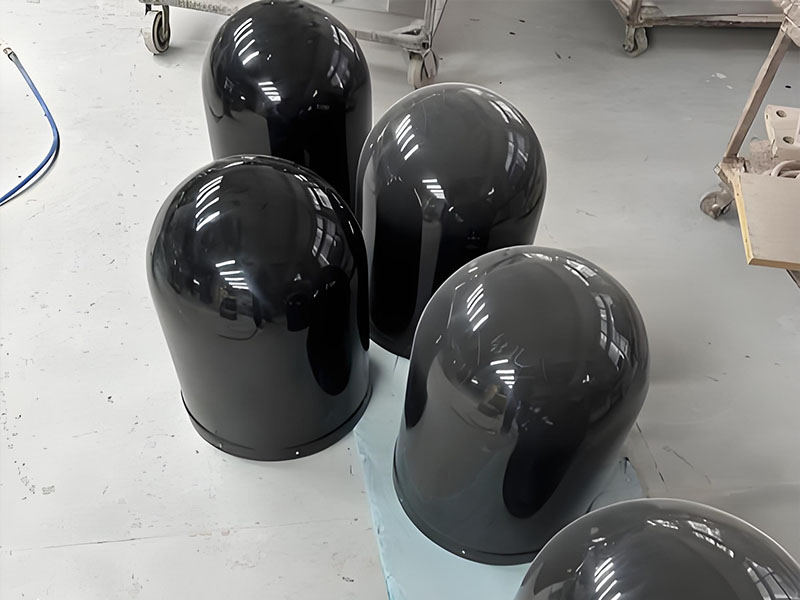
High strength, high hardness, and excellent thermal shock resistance.
Low dielectric constant (typically between 7 and 9) and low dielectric loss tangent.
Excellent resistance to corrosion, oxidation, rain erosion, and particle erosion.
Silicon nitride radomes are high-performance ceramic protective components designed to shield precision antenna arrays while maintaining controlled electromagnetic wave transmission. Their combination of dielectricperformance, high-temperature strength, thermal shock resistance,oxidation resistance and environmental durability makes Si3N4 suitable for demanding radar, aerospace, satellite communication and advanced antenna applications.
A silicon nitride radome is a protective ceramic shell or enclosure positioned around an antenna, radar sensor or precision antenna array. It separates sensitive electromagnetic components from the externalenvironment while allowing radio-frequency and microwave signals to pass through the ceramic structure.
Direct Answer:Silicon nitride radomes are used when antenna protection must combine electromagnetic wave transmission with high mechanical strength,thermal shock resistance, high-temperature stability and resistance to oxidation, corrosion, rain erosion and particle erosion. Typical target applications include aerospace systems, hypersonic vehicles, missile seeker systems, satellite communication antennas, 5G antennas,tracking radar and weather radar.
Unlike a conventional mechanical protective cover, a radome is also part of the electromagnetic system. Its material composition, dielectric properties, wall thickness, geometry and surface condition can influence signal transmission, reflection and phase behavior.
Silicon nitride provides an engineering material option for applications where electromagnetic transmission must be combined with demanding
The performance of a silicon nitride radome begins with the properties of the Si3N4 ceramic material. For radome engineering, electromagnetic behavior should be considered together with thermal, mechanical and environmental performance.
The supplied application information identifies a typical dielectric constant of approximately 7-9. A controlled dielectric response can support electromagnetic transmission when wall thickness and geometry are correctly designed for the operating frequency.
Silicon nitride ceramic can provide low dielectric-loss characteristics suitable for electromagnetic transmission. The actual dielectric loss tangent is frequency-dependent and should be measured at the required operating frequency.
Si3N4 maintains useful mechanical performance at elevated temperatures, making it suitable for demanding environments where polymeric materials may not provide the required structural stability.
Silicon nitride has good resistance to rapid temperature changes. This is important where a radome experiences repeated heating and cooling or severe thermal gradients.
The high hardness of engineering Si3N4 ceramics supports resistance against surface wear, particle impact and erosion.
Silicon nitride provides strong chemical and oxidation stability, supporting applications involving temperature cycling, atmospheric exposure, moisture and particulate erosion.
The following values combine the supplied radome information with representative engineering data for silicon nitride ceramic materials. They are reference values rather than universal specifications for every silicon nitride radome grade.
| Property | Reference / Typical Value | Radome Engineering Significance |
|---|---|---|
| Material | Silicon Nitride (Si3N4) | High-performance engineering ceramic for protective radome structures. |
| Dielectric Constant | Approximately 7-9* | Influences electromagnetic reflection, transmission and phase behavior. |
| Dielectric Loss | Low; frequency and grade dependent* | Lower dielectric loss can support efficient electromagnetic transmission. |
| Density | Approximately 3.18-3.40 g/cm³* | Affects component mass and mechanical design. |
| Hardness | Approximately 15-16 GPa* | Supports surface wear and particle-erosion resistance. |
| Flexural Strength | Approximately 680-970 MPa* | Provides structural resistance under mechanical loading. |
| Fracture Toughness | Approximately 6.1-8.5 MPa·m1/2* | Relevant to crack resistance and thermal/mechanical shock. |
| Thermal Conductivity | Approximately 22-28 W/m·K for selected engineering grades* | Supports thermal management and reduction of severe local temperature gradients. |
| High-Temperature Capability | Grade and atmosphere dependent; Si3N4 components can operate above 1000°C in suitable conditions | Supports high-temperature aerospace and thermal applications. |
A radome is not simply a ceramic cover. Its geometry and material characteristics must be coordinated with the antenna system and external environment.
● Controlled dielectric constant
● Low dielectric-loss characteristics
● Low signal attenuation when properly designed
● Frequency-specific electromagnetic qualification
● Controlled wall thickness and geometry
● High-temperature stability
● Good thermal shock resistance
● Resistance to rapid temperature changes
● Resistance to thermal gradients
● Suitable for demanding thermal environments
● High hardness
● High flexural strength
● Good fracture toughness
● Structural stability under mechanical loads
● Resistance to particle impact and erosion
● Oxidation resistance
● Corrosion resistance
● Rain erosion resistance
● Particle erosion resistance
● Long-term atmospheric exposure capability
Silicon nitride radomes can be developed as custom ceramic components according to the antenna assembly, installation interface, electromagnetic frequency range and environmental conditions.
| Specification Category | Typical Customization / Engineering Considerations |
|---|---|
| Material | Silicon Nitride (Si3N4); grade selected according to mechanical, thermal and electromagnetic requirements. |
| Radome Geometry | Conical, ogive, hemispherical, cylindrical, nose-cone or application-specific geometry. |
| Overall Dimensions | Custom outer diameter, inner diameter, length, height and mounting dimensions. |
| Wall Thickness | Frequency- and structure-dependent; optimized according to electromagnetic transmission and mechanical requirements. |
| Surface Finish | Controlled ceramic surface finish according to aerodynamic, erosion and interface requirements. |
| Dielectric Properties | Dielectric constant and loss characteristics should be specified at the actual operating frequency. |
| Temperature Requirement | Application-specific thermal profile, thermal cycling and peak temperature. |
| Mechanical Requirement | Wind load, vibration, impact, pressure, acceleration and installation loads. |
| Mounting Interface | Custom flange, bolt pattern, interface diameter, support structure or antenna assembly interface. |
| Inspection | Dimensional inspection, visual inspection, material testing and application-specific qualification. |
The main functional difference between a radome and a conventional mechanical protective cover is that electromagnetic waves must pass through the radome with controlled attenuation, reflection and phase behavior.
A provide efficient transmission of electromagnetic signals while minimizing material-related losses.
Dielectric properties and wall thickness directly affect electromagnetic reflection. Radome thickness should therefore be designed together with the operating wavelength and antenna architecture.
Communication and radar systems may operate across different frequency bands. Dielectric properties should therefore be evaluated over the complete required frequency range.
Silicon nitride radomes are particularly relevant where antenna protection must be combined with demanding thermal, mechanical and electromagnetic requirements.
High-speed platforms can generate severe aerodynamic heating and rapid thermal changes. Si3N4 provides a high-temperature ceramic option for protecting antenna and sensor systems.
Seeker systems require protection of precision sensors while maintaining required electromagnetic transmission under demanding thermal and mechanical conditions.
Satellite communication systems require stable electromagnetic characteristics together with resistance to temperature cycling and environmental exposure.
Si3N4 radome structures can be considered for advanced antenna protection where stable millimeter-wave transmission and environmental durability are required.
Tracking radar systems require protection from weather and mechanical loads while maintaining predictable electromagnetic transmission.
Weather radar radomes must withstand rain, wind, temperature cycling and potential hail or particle impact while maintaining radar signal transmission.
Aerospace radar and electromagnetic sensing systems can use ceramic radome structures where thermal stability and environmental durability are important.
Specialized microwave and RF equipment can use Si3N4 protective structures when mechanical protection and controlled electromagnetic transmission must be combined.
| Environment | Primary Challenge | Relevant Si3N4 Property |
|---|---|---|
| Hypersonic Flight | Severe aerodynamic heating and thermal gradients | High-temperature stability and thermal shock resistance |
| High-Altitude Flight | Low temperature, rapid temperature changes and aerodynamic loads | Thermal stability and mechanical strength |
| Desert Environment | Sand and particle erosion | High hardness and erosion resistance |
| Marine Environment | Moisture, corrosion and weather exposure | Chemical and environmental stability |
| Outdoor Radar | Rain, hail, wind and temperature cycling | Mechanical strength and environmental durability |
| Satellite Systems | Thermal cycling and long-term environmental exposure | Thermal and dimensional stability |
Protects multiple antenna elements while maintaining the required electromagnetic transmission characteristics across the antenna aperture.
Uses radome structures where stable dielectric behavior is required for high-frequency communication signals.
Provides environmental and thermal protection for radar sensors exposed to demanding flight conditions.
Protects satellite communication antenna assemblies from environmental exposure and temperature cycling.
Supports long-term protection of precision radar antenna arrays in outdoor environments.
Protects radar antennas against rain, wind, hail and atmospheric temperature changes.
Provides a ceramic electromagnetic window around sensitive RF and microwave sensing components.
Designed for antenna systems where ordinary polymer or fiberglass protective materials may not provide the required thermal stability.
Manufacturing a ceramic radome requires coordinated control of material composition, forming, sintering, machining, dimensional accuracy and, where required, electromagnetic performance.
High-purity silicon nitride powder and suitable processing additives are selected according to the ceramic grade and application.
Powder is mixed and conditioned to obtain suitable particle distribution, flow behavior and forming characteristics.
The radome preform is produced using a suitable forming route according to geometry, wall thickness and size.
Where required, the green body is machined to establish important geometric features before final densification.
Controlled sintering densifies the Si3N4 ceramic and develops the required mechanical, thermal and structural properties.
Precision grinding and machining are performed where dimensional accuracy, mounting interfaces or surface requirements demand it.
Critical dimensions, geometry, surface condition and visible defects are inspected according to the drawing and quality requirements.
Where required, dielectric properties and finished radome performance can be evaluated at the target frequency and environmental conditions.
The operating frequency must be defined before finalizing material grade and wall thickness because dielectric behavior is frequency-dependent.
Radome wall thickness influences electromagnetic transmission, reflection, mechanical strength and thermal response.
Peak temperature, heating rate, cooling rate and thermal gradients should be considered when selecting the ceramic structure.
Wind loads, vibration, acceleration, pressure, impact and mounting stress should be incorporated into structural design.
Rain, sand, dust, humidity, temperature cycling and other environmental conditions can influence long-term radome performance.
The radome should be designed together with the antenna aperture, mounting structure, sealing system and installation interface.
XIAMEN HUACIJULI focuses on silicon nitride ceramic component development and manufacturing. For radome projects, material selection, geometry, processing and application requirements need to be considered as one engineering system.
HUACIJULI works with silicon nitride ceramic materials for demanding applications involving high temperature, mechanical strength, electrical insulation and dimensional stability.
Radome geometry can be developed according to customer drawings, antenna configuration, mounting interface and application requirements.
Material selection can be coordinated with required mechanical, thermal and electromagnetic characteristics.
Forming, sintering, grinding and precision machining can be coordinated to produce complex Si3N4 ceramic components.
Development can consider frequency, temperature, mechanical loading, environmental exposure and antenna integration requirements together.
Custom silicon nitride radomes can be developed from engineering drawings, samples, dimensional specifications and application data.
To develop a suitable silicon nitride radome, customers are encouraged to provide as much of the following information as available.
● Operating frequency or frequency range
● Bandwidth
● Required transmission characteristics
● Antenna type and aperture information
● Known dielectric requirements
● Overall radome dimensions
● Wall thickness
● Mounting interface
● Wind, vibration and impact requirements
● Engineering drawing or 3D model
● Operating temperature
● Peak temperature
● Heating and cooling rate
● Thermal cycling requirements
● Atmosphere and pressure conditions
● Rain or hail exposure
● Sand and particle erosion
● Humidity and marine exposure
● Outdoor service conditions
● Required service life and qualification conditions
A silicon nitride radome is a Si3N4 ceramic protective enclosure used around an antenna, radar sensor or antenna array. It protects internal components from thermal, mechanical and environmental loads while allowing electromagnetic signals to pass through.
Silicon nitride combines controlled dielectric properties with high hardness, mechanical strength, thermal shock resistance, high-temperature stability and environmental durability. This combination is useful where a radome must function as both an electromagnetic window and a structural protective component.
The supplied application information identifies a typical dielectric constant of approximately 7-9. However, dielectric constant is not a universal fixed value for all silicon nitride ceramics. It depends on frequency, material composition, density, porosity, microstructure and manufacturing process.
Silicon nitride can provide low dielectric-loss characteristics suitable for electromagnetic transmission applications. For an actual radome, dielectric loss tangent should be measured at the intended frequency range because electromagnetic performance is application-specific.
Yes. Silicon nitride ceramics are known for high-temperature mechanical stability and thermal shock resistance. The actual allowable operating temperature depends on material grade, atmosphere, geometry, thermal gradients and mechanical loading.
Silicon nitride is a candidate ceramic material for severe high-temperature aerospace radome environments because of its high-temperature strength, hardness and thermal shock resistance. Final suitability must be established through application-specific thermal, mechanical and electromagnetic qualification.
Yes. Radome geometry, wall thickness, dimensions, mounting interfaces and surface requirements can be customized according to the antenna system and operating conditions. Wall thickness should be designed together with electromagnetic transmission requirements.
Yes. The supplied application information identifies 5G communication base stations and satellite communication antennas as application areas. For millimeter-wave systems such as 28 GHz or 39 GHz, frequency-specific dielectric characterization and electromagnetic simulation are recommended.
Depending on material grade and design, silicon nitride provides strong resistance to oxidation, corrosion, wear and erosion. Radome qualification should consider actual exposure to rain, hail, sand, dust, humidity, temperature cycling and other environmental conditions.
The most useful information includes operating frequency, antenna type, radome dimensions, wall thickness, temperature profile, mechanical loads, environmental conditions, mounting interface and required electromagnetic performance. A technical drawing or 3D model is highly recommended.
Product: Silicon Nitride Radome / Si3N4 Ceramic Radome
Primary Function: Protect an antenna or precision antenna array while allowing controlled transmission of electromagnetic signals.
Material: Silicon Nitride (Si3N4).
Key Properties: Controlled dielectric performance, low dielectric-loss characteristics, high hardness, high mechanical strength, thermal shock resistance, high-temperature stability ,oxidation resistance, corrosion resistance and erosion resistance.
Typical Dielectric Constant: Approximately 7-9 according to the supplied application information; actual value must be confirmed at the target frequency and material grade.
Main Applications: Hypersonic vehicles, aerospace radar, missile seeker systems, satellite communication antennas, 5G antennas, ground tracking radar, weather radar and advanced RF/microwave systems.
Customization: Geometry, dimensions, wall thickness, mounting interface, surface finish, material grade and application-specific electromagnetic requirements.
XIAMEN HUACIJULI can support custom silicon nitride ceramic componentdevelopment based on engineering drawings, samples and applicationrequirements. For a radome project, provide the operating frequency,dimensions, wall thickness, temperature profile, environmental conditionsand antenna interface so that the material and manufacturing approachcan be evaluated together.
Request Silicon Nitride Radome InformationEngineering disclaimer: The technical values and application descriptions on this page are intended for engineering reference. Actual silicon nitride radome performance depends on ceramic composition, density, microstructure, manufacturing process, geometry, wall thickness, operating frequency, temperature, environmental conditions and antenna configuration. Values should be confirmed through material testing, electromagnetic simulation and application-specific qualification before final production.
| Property | Reference / Typical Value | Radome Engineering Significance |
|---|---|---|
| Material | Silicon Nitride (Si3N4) | High-performance engineering ceramic for protective radome structures. |
| Dielectric Constant | Approximately 7–9* | Influences electromagnetic reflection, transmission and phase behavior. |
| Dielectric Loss | Low; frequency and grade dependent* | Lower dielectric loss can support efficient electromagnetic transmission. |
| Density | Approximately 3.18–3.40 g/cm³* | Affects component mass and mechanical design. |
| Hardness | Approximately 15–16 GPa* | Supports surface wear and particle-erosion resistance. |
| Flexural Strength | Approximately 680–970 MPa* | Provides structural resistance under mechanical loading. |
| Fracture Toughness | Approximately 6.1–8.5 MPa·m1/2* | Relevant to crack resistance and thermal/mechanical shock. |
| Thermal Conductivity | Approximately 22–28 W/m·K for selected engineering grades* | Supports thermal management and reduction of severe local temperature gradients. |
| High-Temperature Capability | Grade and atmosphere dependent; Si3N4 components can operate above 1000°C in suitable conditions | Supports high-temperature aerospace and thermal applications. |