



01
Metallurgical Industry
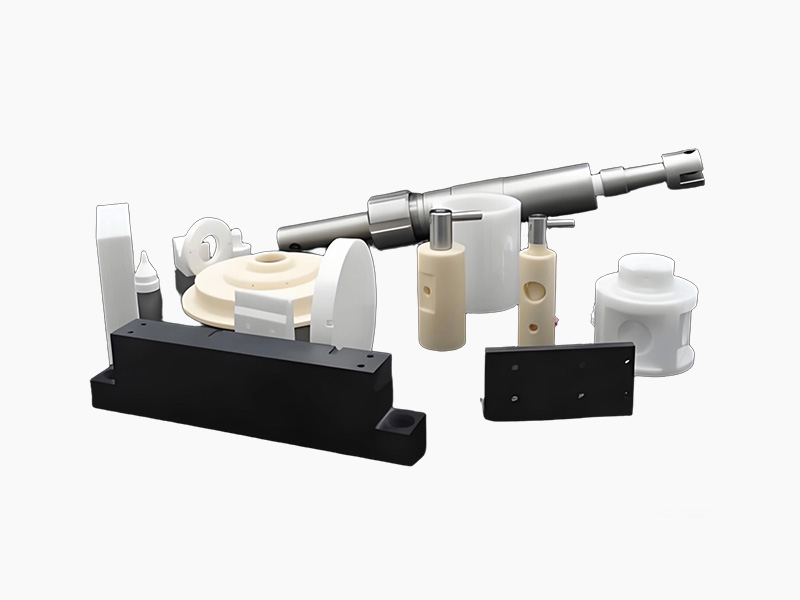
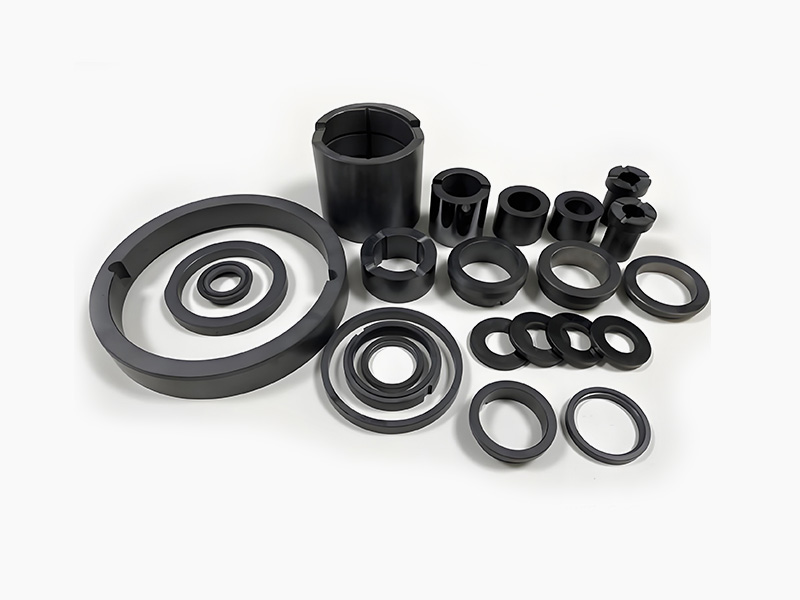
Used for guide rollers, rolling mill components, roller assemblies and selected high-temperature metal-processing equipment.

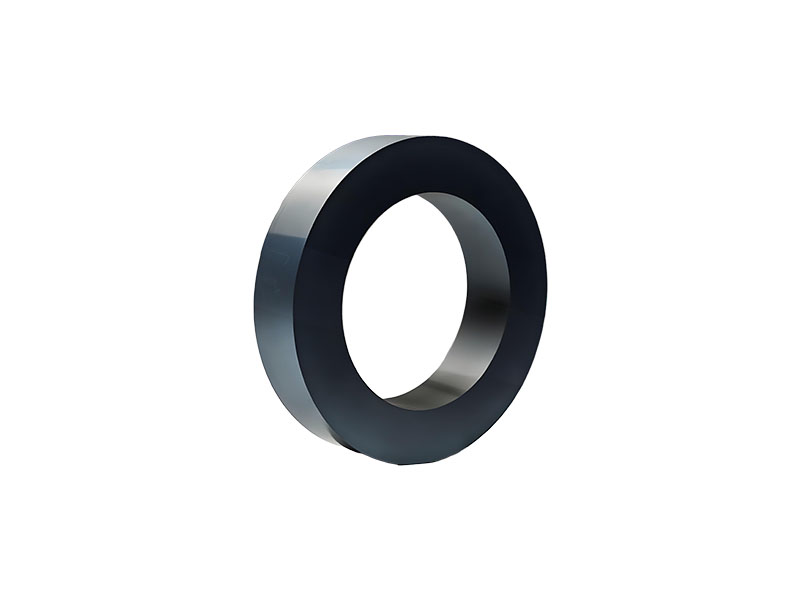
Bulk Density: 3.1-3.3 g/cm³.
Flexural Strength: 600-800 MPa.
Appearance Color: Blackish gray.
Product Purity: 99.9%.
Common Specifications: φ55×20×15MM, 150×20×10MM, etc.
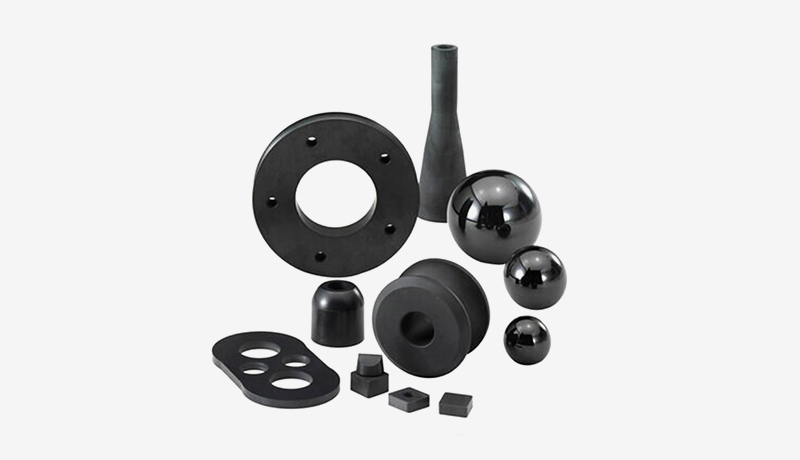
High-performance silicon nitride ceramic roller rings designed for demanding roller, guide, bearing, forming and high-temperature mechanical applications where wear resistance, thermal stability, chemical resistance and low friction are important.
A Silicon Nitride Ceramic Roller Ring is a precision-engineered ceramic ring manufactured from silicon nitride (Si₃N₄). It is designed for rotating, guiding, rolling, pressing, positioning and other mechanical functions where conventional metallic roller components may be exposed to high temperature, abrasive wear, chemical corrosion or friction.
Silicon nitride combines high hardness, mechanical strength, fracture toughness, thermal stability, chemical resistance and low-friction behavior. These characteristics make Si₃N₄ suitable for ceramic roller rings used in metallurgical equipment, mechanical systems, chemical processing equipment, precision machinery and selected aerospace or automotive applications.
Depending on the equipment design, a silicon nitride roller ring can function as a guide roller component, rolling ring, bearing-related component, forming roller element, wear-resistant ring or high-temperature mechanical interface. Dimensions, material grade, manufacturing route and surface finish can be selected according to the working environment and engineering drawing.
The performance of a Silicon Nitride Ceramic Roller Ring begins with the properties of the Si₃N₄ ceramic material. The following values are reference data based on the supplied product information. Actual performance depends on material grade, microstructure, manufacturing process, geometry, surface condition and operating environment.
Supplied reference data indicates use up to approximately 1400°C in an oxidizing atmosphere and up to approximately 1850°C in neutral or reducing atmospheres, depending on material grade and operating conditions.
Silicon nitride has very high hardness, with the supplied product information indicating a Mohs hardness of 9 or higher, supporting resistance to abrasive contact and surface wear.
Reference flexural strength is approximately 600–800 MPa, providing the mechanical strength required for demanding ceramic roller and guide applications.
The supplied reference range is approximately 6–8 MPa·m1/2, contributing to resistance against crack propagation under mechanical loading.
Silicon nitride is resistant to many inorganic acids and to sodium hydroxide solutions below 30%, making it suitable for selected corrosive processing environments.
The supplied information gives a coefficient of friction of approximately 0.02-0.1 for relevant conditions. This low-friction behavior can help reduce sliding resistance and mechanical wear.
| Property | Reference Data | Relevance to Roller Rings |
|---|---|---|
| High-temperature capability | Up to approx. 1400°C oxidizing / 1850°C neutral or reducing, application dependent | Supports selected high-temperature roller and guide environments |
| Mohs hardness | ≥9 | Supports wear resistance and surface durability |
| Flexural strength | 600-800 MPa | Provides mechanical strength for rotating and guiding components |
| Fracture toughness | 6-8 MPa·m1/2 | Helps resist crack propagation under mechanical loading |
| Chemical resistance | Resistant to many inorganic acids and NaOH solutions below 30% | Useful for selected chemical-processing environments |
| Coefficient of friction | Approx. 0.02–0.1 under relevant conditions | Supports low-friction sliding and rolling interfaces |
Engineering note: The values above are reference ranges from the supplied product information, not universal guaranteed values for every silicon nitride grade or roller ring design. Final material and performance selection should be based on operating temperature, atmosphere, load, speed, contact condition, geometry and test requirements.
The high hardness of Si₃N₄ makes the roller ring suitable for applications involving continuous contact, rolling, guiding or sliding.
The low-friction behavior of silicon nitride can reduce resistance at appropriate contact interfaces and support longer operating intervals.
Si₃N₄ roller rings can be engineered for demanding thermal environments where metallic roller components may experience oxidation, softening or excessive thermal expansion.
Chemical stability makes the material suitable for selected corrosive environments, including applications exposed to certain inorganic acids and alkaline solutions.
Roller rings can be manufactured according to specified outside diameter, inside diameter, width, groove, profile, bore and mounting requirements.
The ceramic material provides a non-metallic component option for equipment requiring high hardness, chemical stability or electrical insulation characteristics.
Silicon Nitride Ceramic Roller Rings can be manufactured as standard or drawing-based components. Because roller geometry is closely related to the equipment and contact conditions, final specifications should be confirmed from the customer's technical drawing or application requirements.
| Specification | Reference Requirement | Customization |
|---|---|---|
| Material | Silicon nitride (Si₃N₄) | Material grade selected according to application |
| Outside Diameter | According to equipment design | Custom dimensions available |
| Inside Diameter / Bore | According to shaft or mounting interface | Drawing-based machining |
| Width / Thickness | Determined by load and equipment structure | Custom width and thickness |
| Profile / Groove | Flat, grooved, profiled or application-specific | Custom profile according to drawing |
| Surface Finish | Selected according to contact and friction requirements | Precision grinding and finishing |
| Tolerance | Application and drawing dependent | Precision machining available |
Silicon Nitride Ceramic Roller Rings can be integrated into equipment where roller, guide, bearing, forming or wear-resistant ceramic components are required. Typical equipment categories include:
Guide rollers, rolling elements and high-temperature roller assemblies.
Roller and guide components used in metal processing and high-temperature production lines.
Ceramic roller-related components for demanding bearing and rotating systems.
Guide, positioning and wear-resistant components for precision mechanical equipment.
Corrosion-resistant mechanical components used in selected chemical processing systems.
Wear-resistant rings and ceramic components for pumps, plungers and fluid-handling systems.
Selected high-temperature and wear-resistant ceramic component applications.
Ceramic roller, guide and wear-resistant components for selected engine and automotive systems.
Used for guide rollers, rolling mill components, roller assemblies and selected high-temperature metal-processing equipment.
Suitable for selected rolling, guiding and forming interfaces where hardness, dimensional stability and thermal resistance are important.
Applied to bearings, seals, pump plungers, guide components and other wear-resistant mechanical parts.
Used for selected corrosion-resistant components exposed to chemically aggressive operating conditions.
Potentially used in selected high-temperature, wear-resistant and precision ceramic component applications.
Applicable to selected high-temperature and wear-resistant engine-related components and precision mechanical systems.
Used where dimensional stability, wear resistance, low friction and ceramic material characteristics are required.
Suitable for customized roller rings, guide rings and other industrial ceramic components requiring long-term wear resistance.
For general guiding, rolling and wear-resistant interfaces.
Designed for guided movement, positioning or material transport.
Manufactured for controlled dimensional and surface requirements.
Designed for selected rotating and bearing-system applications.
Used where controlled guidance and wear resistance are required.
Produced according to customer drawings and equipment interfaces.
Manufacturing a precision Silicon Nitride Ceramic Roller Ring requires controlled ceramic processing followed by precision machining. The production route can be adjusted according to material grade, component geometry and final performance requirements.
Select silicon nitride powder and material grade according to temperature, mechanical load, wear and chemical conditions.
Prepare the ceramic powder with suitable processing additives and conditioning steps to achieve consistent forming behavior.
Form the green ceramic body using a suitable forming method according to the ring geometry and production requirements.
Perform pre-sintering machining where appropriate to establish the basic geometry before final densification.
Use a controlled sintering process to densify the Si₃N₄ ceramic and develop the required microstructure and mechanical properties.
Precision diamond grinding is used to achieve the required diameter, flatness, roundness, profile and surface condition.
Inspect dimensions, surface quality and application-specific requirements before final packaging and delivery.
For a ceramic roller ring, material properties alone do not determine component performance. The final design should consider the relationship between the ceramic material, ring geometry and operating equipment.
Diameter, width, bore and profile should match the equipment assembly and contact requirements.
Surface finish affects friction, contact stress, wear and interaction with mating components.
The actual allowable temperature must be determined from material grade, atmosphere, load and continuous operating conditions.
Radial load, axial load, impact, contact pressure and rotational speed should be considered during component selection.
XIAMEN HUACIJULI focuses on engineering ceramic components and customized silicon nitride parts. For roller ring applications, the manufacturing approach can be developed around the customer's drawing, equipment structure and working environment.
Material selection can be matched to mechanical, thermal, wear and chemical requirements.
Custom roller rings and other silicon nitride components can be developed from drawings or application specifications.
Diamond grinding and finishing processes support demanding dimensional and surface requirements.
Component design can consider temperature, atmosphere, load, friction, speed and mating materials.
OEM ceramic parts can be produced according to customer drawings, specifications and application requirements.
Technical requirements can be reviewed before material, geometry and manufacturing route are finalized.
To select a suitable Si₃N₄ roller ring, provide the following information when requesting an engineering quotation:
1. Drawing or dimensional requirements: OD, ID, width, profile, grooves and mounting interface.
2. Operating temperature: continuous temperature, peak temperature and thermal cycling conditions.
3. Atmosphere: oxidizing, neutral, reducing, vacuum or chemically aggressive environment.
4. Mechanical conditions: load, speed, contact pressure, impact and operating cycle.
5. Contact conditions: mating material, lubrication condition and friction requirements.
6. Surface requirements: roughness, roundness, flatness and dimensional tolerance where applicable.
It is a precision ceramic ring manufactured from silicon nitride (Si₃N₄) for rolling, guiding, bearing-related, forming and wear-resistant applications.
Silicon nitride offers a combination of high hardness, high-temperature resistance, chemical stability, mechanical strength and low-friction behavior. It can therefore be considered when these properties are important to the equipment design.
The supplied product information indicates up to approximately 1400°C in an oxidizing atmosphere and up to approximately 1850°C in neutral or reducing atmospheres. These are reference values; actual component service temperature depends on material grade, atmosphere, load, geometry, thermal cycling and operating conditions.
Yes. Its high hardness and wear resistance make silicon nitride suitable for many demanding rolling, guiding and sliding applications. Actual wear performance depends on load, speed, mating materials, lubrication, surface finish and operating environment.
The supplied information gives a reference coefficient of friction of approximately 0.02-0.1 under relevant conditions. Friction varies significantly with contact pair, surface finish, load, speed, lubrication and temperature.
Yes. Custom roller rings can be developed according to customer drawings or application specifications, including outside diameter, inside diameter, width, groove, profile, surface finish and dimensional requirements.
Typical application fields include metallurgy, metal rolling and forming, mechanical manufacturing, chemical processing, aerospace, automotive engines, precision instruments and industrial wear-resistant equipment.
A technical drawing is preferred. If a drawing is not available, provide the ring dimensions, operating temperature, atmosphere, load, rotational speed, contact material, lubrication condition, surface requirements and expected service environment.
No. The listed values should be treated as reference data from the supplied product information. Actual performance depends on the selected Si₃N₄ grade, manufacturing route, component dimensions, microstructure, surface finish and application conditions. Final specifications should be confirmed for the individual component.
Product: Silicon Nitride Ceramic Roller Ring
Material: Silicon Nitride (Si₃N₄)
Main properties: High hardness, high-temperature resistance, wear resistance, chemical stability, mechanical strength and low friction.
Typical functions: Guide roller, rolling ring, bearing-related component, forming roller component and wear-resistant ring.
Typical industries: Metallurgy, machinery, chemical processing, aerospace, automotive, precision equipment and industrial manufacturing.
Customization: Dimensions, profiles, bores, grooves, surface finish and application-specific requirements can be developed according to engineering drawings.
Send your drawing, dimensions or application requirements to XIAMEN HUACIJULI for silicon nitride ceramic roller ring engineering and manufacturing evaluation.
Supports custom specifications.