



1. Low Density
With a reference density of approximately 3.2 g/cm³, silicon nitride is substantially lighter than bearing steel. Lower rolling-element mass can be valuable in high-speed bearing systems.

Lightweight: density3.2 g/cm³
Hard: Vickers hardness reaches 1400-1800 HV
Stable: The thermal expansion coefficient -100℃ to 1200℃
Insulating: The volume resistivity is as high as 10¹⁴-10¹⁶ Ω·cm
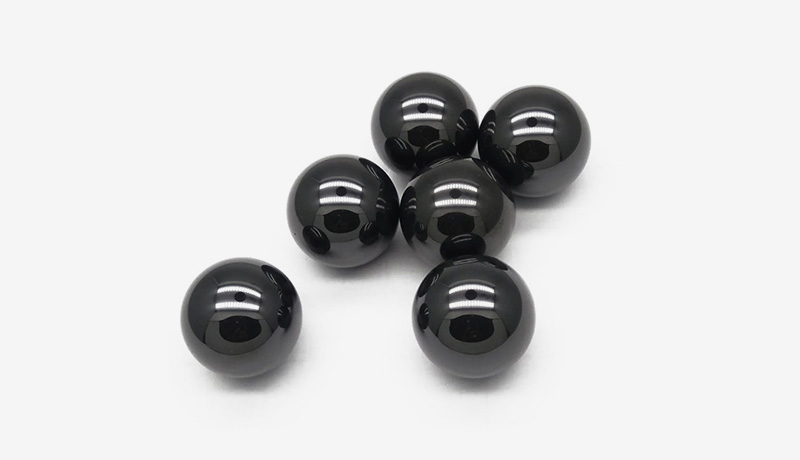
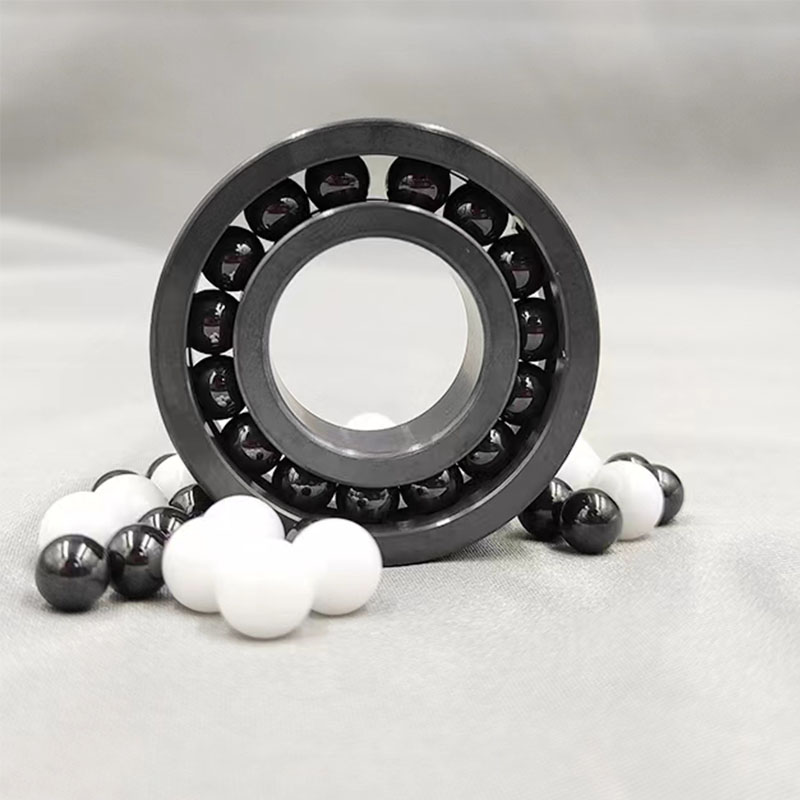
Silicon Nitride Bearing Balls are high-performance Si₃N₄ ceramic rolling elements designed for bearing systems that require low density, high hardness, high-speed capability, temperature stability, electrical insulation and resistance to wear and demanding operating environments.
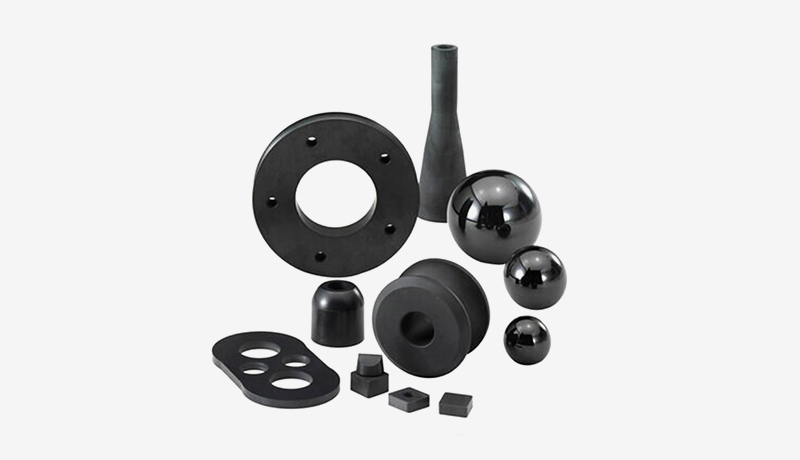
Silicon Nitride Bearing Balls are precision ceramic rolling elements manufactured from sintered silicon nitride (Si₃N₄), a non-oxide advanced structural ceramic. They are used as rolling elements in bearing systems where conventional steel balls may be limited by weight, electrical conductivity, wear, temperature or demanding operating conditions.
Compared with conventional bearing steel, silicon nitride provides a combination of low density, high hardness, low thermal expansion, electrical insulation and good chemical stability. These characteristics make Si₃N₄ bearing balls
In simple terms: Silicon Nitride Bearing Balls are lightweight, hard and electrically insulating ceramic rolling elements developed for demanding bearing applications where high rotational speed, reduced centrifugal loading, dimensional stability and resistance to wear are important.
Silicon Nitride Bearing Balls are precision rolling elements used between the inner and outer raceways of a bearing. The material selected for the ball directly influences the bearing's rotational mass, wear behavior, electrical performance, thermal stability and suitability for demanding operating environments.
Silicon nitride is a non-oxide structural ceramic with a dense microstructure, fine grains, high hardness and strong mechanical performance. When manufactured and finished appropriately, Si3N4 ceramic balls can provide the dimensional precision required for specialized bearing systems.
They are particularly relevant where conventional steel rolling elements may be limited by electrical conductivity, higher density, thermal expansion or demanding wear conditions.
The following values are reference data based on the supplied product description. Actual values can vary according to ceramic grade, manufacturing process, density, sintering conditions and finishing requirements.
| Property | Reference Value | Relevance |
|---|---|---|
| Chemical Formula | Si3N4 | Non-oxide structural ceramic |
| Density | Approx. 3.2 g/cm³ | Much lower mass than bearing steel |
| Vickers Hardness | Approx. 1400-1800 HV | High hardness and wear resistance |
| Thermal Expansion | Approx. 1/4 of steel | Supports dimensional stability |
| Reference Temperature Stability | -100°C to 1200°C | Material-level reference range; actual bearing limits depend on system design |
| Volume Resistivity | 10¹⁴-10¹⁶ Ω·cm at room temperature | Electrical insulation |
With a reference density of approximately 3.2 g/cm³, silicon nitride is substantially lighter than bearing steel. Lower rolling-element mass can be valuable in high-speed bearing systems.
The supplied reference hardness of approximately 1400-1800 HV supports applications requiring resistance to surface wear and rolling contact stresses.
Silicon nitride has a relatively low coefficient of thermal expansion compared with steel, which can help control dimensional changes in temperature-variable environments.
The high volume resistivity of Si3N4 makes ceramic balls suitable for bearing systems where electrical isolation between rolling elements and raceways is important.
Silicon nitride provides chemical and environmental resistance that can be useful in applications where metallic rolling elements face challenging operating conditions.
Precision grinding and finishing allow silicon nitride balls to be manufactured for demanding rolling-contact applications where roundness, surface finish and dimensional consistency are critical.
Ceramic bearing balls can be produced according to application requirements, technical drawings and required bearing specifications. The following information provides a general specification framework rather than a universal standard.
| Material | Silicon Nitride (Si3N4) |
|---|---|
| Ball Diameter | Application dependent; customized according to drawing or bearing requirements |
| Example Small Ball Size | 1-2.381 mm for the supplied dental application example |
| Hardness | Approx. 1400-1800 HV reference |
| Density | Approx. 3.2 g/cm³ reference |
| Electrical Resistivity | 10¹⁴-10¹⁶ Ω·cm at room temperature |
| Surface Finish | Precision ground and polished according to application requirements |
| Roundness / Sphericity | Manufactured according to application, bearing grade or customer drawing |
| Packaging | Protective packaging suitable for precision ceramic components |
The combination of low density, high hardness, electrical insulation and thermal stability makes Si3N4 bearing balls suitable for a wide range of precision and high-speed applications.
High-speed EV drive motors can operate at rotational speeds reaching the range described in the supplied application information, with electromagnetic conditions that may generate shaft currents. Electrically insulating Si3N4 rolling elements can help isolate the rolling contact system.
Dental handpieces can require extremely high rotational speeds. The supplied application information identifies speeds up to approximately 450,000 rpm and small ball diameters such as 1-2.381 mm. Si3N4 ceramic balls can support stable rolling performance in appropriately designed miniature bearing systems.
Ceramic bearing balls can be used in roller skate bearing systems where smooth rolling, environmental resistance and durability are desired.
Si3N4 balls can be used in bicycle hubs and bottom bracket bearing systems where reduced rolling-element mass, precision and durability are important.
Low density and high hardness make silicon nitride ceramic balls relevant to selected high-speed precision bearing applications.
The electrical insulation of Si3N4 makes ceramic rolling elements useful where electrical isolation is an important part of bearing-system design.
| Property | Silicon Nitride | Bearing Steel |
|---|---|---|
| Density | Approx. 3.2 g/cm³ | Higher |
| Hardness | Approx. 1400–1800 HV reference | Lower than the supplied Si3N4 reference range |
| Electrical Behavior | Electrically insulating | Electrically conductive |
| Thermal Expansion | Approximately 1/4 of steel according to supplied data | Higher |
| High-Speed Relevance | Low rolling mass can benefit high-speed systems | Higher rolling mass |
| Corrosion / Chemical Resistance | High resistance characteristic | Depends on steel grade and environment |
Silicon nitride powder is selected according to the required ceramic performance and application.
Powder is mixed with appropriate binders and additives to obtain suitable forming characteristics.
Ceramic blanks are formed using an appropriate shaping process according to ball geometry and production requirements.
Formed parts undergo controlled drying and binder removal before high-temperature densification.
The formed Si3N4 material is sintered under controlled conditions to achieve the required ceramic structure and density.
Initial grinding and dimensional correction prepare the sintered balls for precision finishing.
Precision grinding and polishing are used to achieve the required diameter, roundness and surface condition.
Finished balls are inspected according to the applicable dimensional and surface requirements before protective packaging.
HUACIJULI focuses on technical ceramic products and application-oriented ceramic component development.
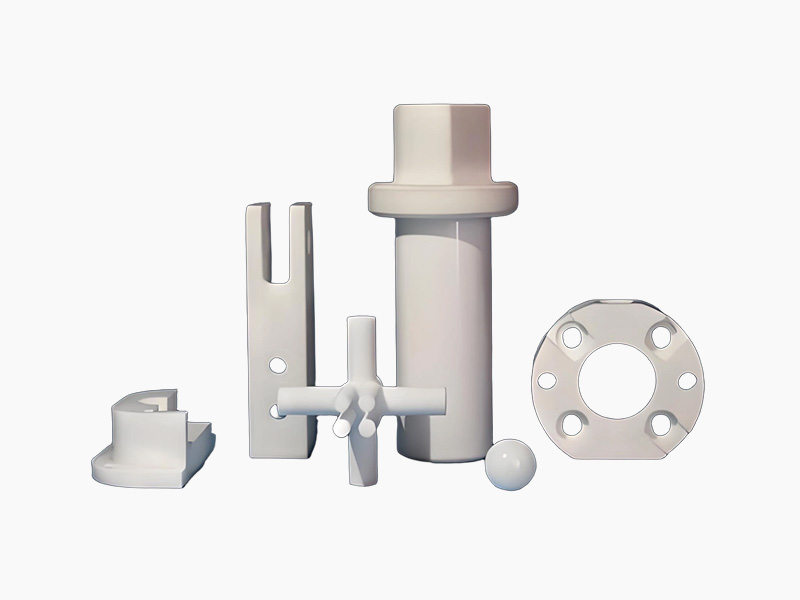
Silicon nitride components can be developed according to customer drawings, dimensions and application requirements.
Material selection can consider mechanical load, temperature, electrical insulation, wear, chemical environment and dimensional requirements.
Precision grinding and finishing are important parts of producing ceramic rolling elements for demanding applications.
HUACIJULI works with technical ceramic materials including silicon nitride, zirconia and aluminum nitride for different engineering requirements.
Customers can provide drawings, dimensions, application conditions and performance requirements for technical evaluation and quotation.
Silicon Nitride Bearing Balls are precision rolling elements made from sintered Si3N4 ceramic and used in specialized bearing systems requiring properties such as low density, high hardness, wear resistance and electrical insulation.
Silicon nitride has substantially lower density than steel, high hardness, lower thermal expansion and electrical insulation properties. These characteristics can be useful in high-speed or electrically sensitive bearing systems.
The supplied reference value is approximately 3.2 g/cm³, which is substantially lower than the density of conventional bearing steel.
The supplied reference hardness is approximately 1400-1800 HV. Actual hardness depends on the selected silicon nitride grade and manufacturing process.
Yes. Silicon nitride is electrically insulating, and the supplied reference volume resistivity is approximately 10¹⁴–10¹⁶ Ω·cm at room temperature.
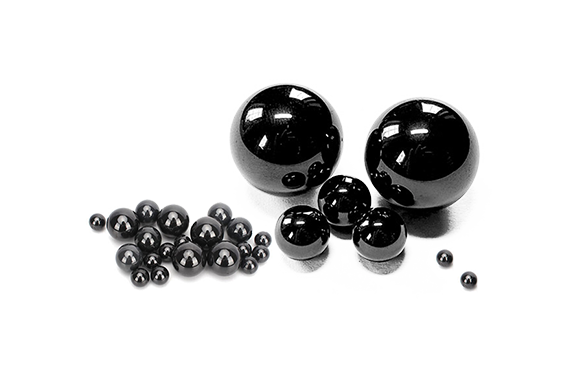
Ball diameter is application dependent. Small sizes such as 1-2.381 mm are included in the supplied dental application example. Other dimensions can be specified according to bearing requirements or customer drawings.
Custom production can be discussed according to customer drawings, ball diameter, dimensional requirements, surface finish, application conditions and required ceramic properties.
Silicon nitride balls can be considered for EV motor bearing systems where high rotational speed and electrical insulation are important design requirements. Final suitability depends on the complete bearing design, operating speed, load, lubrication, temperature and electrical conditions.
Si3N4 ceramic balls are suitable for selected miniature dental bearing applications. The supplied application example describes rotational speeds up to approximately 450,000 rpm and ball diameters of 1-2.381 mm.
Useful information includes ball diameter, required grade or dimensional tolerance, roundness or sphericity requirements, surface finish, material requirements, quantity, operating temperature, rotational speed, load conditions and application.
Send your drawing, ball diameter, bearing specification, application conditions or technical requirements to discuss a suitable Si3N4 ceramic bearing ball solution with XIAMEN HUACIJULI.
Performance parameters
performance | unit | ZrO₂ | Si₃N4 | SiC | Ai₂O3 |
density | g/cm³ | 6-6.05 | 3.22-3.25 | 3.15-3.2 | 3.85-3.92 |
hardness | kg/mm | 1250 | 1600 | 2450 | 1800 |
toughness | MN/m | 7.0 | 6.0 | 2.5 | 3.0 |
Bending strength | kgf/cm³ | 100-120 | 80-100 | 40-50 | 30-40 |
Thermal shock resistance | △T,℃ | 280 | 900 | 400 | 200 |
Coefficient of thermal expansion | x10-6/℃ | 9.0 | 3.5 | 4.2 | 7.0 |
Operating temperature | ℃ | 400 | 1200 | 1500 | 1600 |
Corrosion resistance (acids and bases) | / | Good | Good | Excellent | Excellent |
Thermal conductivity | w/mk | 3.0 | 29 | 120 | 23 |
Fatigue life | / | 80x | 100x | 50x | 40x |
magnetic | / | Non | Non | Non | Non |
Insulation | // | Insulation | Insulation | Insulation | Insulation |
Compressive strength | Mpa | 2000 | 3500 | 2250-300 | 2800-3500 |
fracture toughness | Mpa:m-3/2 | 11 | 7 | 4-5 | 2-4 |
Weber modulus | GPa | >15 | >15 | >6 | >6 |
Elastic modulus | GPa | 210 | 320 | 410 | 420 |
Poisson's ratio | / | 0.3 | 0.26 | 0.26 | 0.2 |
resistance | mm2/m | >10 | >10 | 100-2 | >10 ->10 |
resistivity | mm2/m | 1015 | 1018 | / | / |
Specific heat | J/KgK | 400 | 800 | / | / |
Number of stress cycles (50% probability of failure) | / | 50*106 | 50*106 | / | / |
Failure modes due to rolling contact fatigue | / | Peeling/Cracking | peeling off | / | / |
Dimensional stability | / | good | good | good | good |
Supports custom specifications.