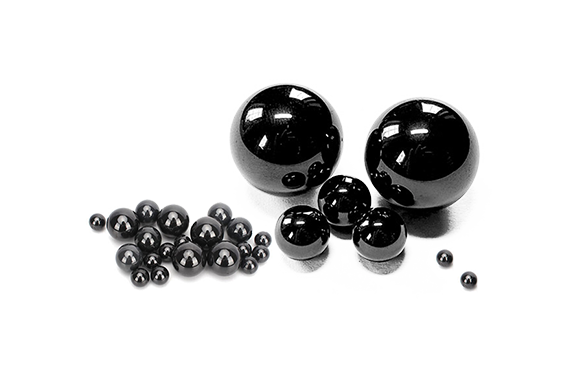




High Hardness
High ceramic hardness helps resist abrasive and erosive wear.

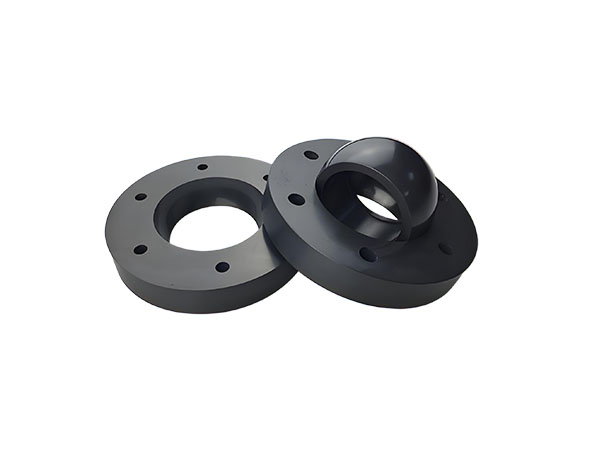
Name: Ball Valve
Material: Silicon Nitride
Appearance: gray
Advantages: good wear-resistance
Application: valves
Common Size: 25,40,65,80(customized available)
High-hardness, wear-resistant and temperature-resistant silicon nitride ceramic valve components for demanding fluid-control, high-temperature and industrial wear applications.
A silicon nitride ceramic valve is a valve or valve component manufactured primarily from silicon nitride (Si₃N₄), a high-performance engineering ceramic known for high hardness, wear resistance, fracture toughness, thermal resistance, chemical stability and low friction.
Silicon nitride ceramic valve components are intended for demanding environments where conventional materials may experience excessive wear, corrosion, thermal degradation or friction. Depending on the valve design, Si₃N₄ can be used for valve bodies, valve seats, valve cores, balls, sealing components or other precision wear-resistant parts.
Silicon nitride ceramic valves are engineered for applications where the valve component must maintain dimensional and mechanical performance under severe operating conditions.
The supplied source describes silicon nitride as a material with high hardness, high wear resistance, strong fracture toughness, high-temperature resistance, chemical stability, low density, high elastic modulus and self-lubricating characteristics. These properties make Si₃N₄ relevant to wear-resistant valve systems and high-temperature industrial equipment.
High ceramic hardness helps resist abrasive and erosive wear.
A KIC value of at least 6.5 MPa·m¹/² is specified in the supplied source.
The source states up to 1000°C in air and up to 1400°C in a protective atmosphere.
Low friction characteristics can help reduce contact friction between valve components.
Silicon nitride is an inorganic compound with the chemical formula Si₃N₄. It is a technical ceramic selected for applications that require a combination of hardness, strength, thermal stability, chemical resistance and low friction.
For silicon nitride ceramic valves, the material properties are important because valve components can experience repeated contact, pressure fluctuations, abrasive particles, cavitation-related impact, temperature changes and chemical exposure.
| Property | Source-Specified Data | Relevance to Ceramic Valves |
|---|---|---|
| Chemical Formula | Si₃N₄ | High-performance engineering ceramic material |
| Hardness | Approximately HRA93; HV10 ≥ 1400 | High resistance to wear and surface damage |
| Fracture Toughness | KIC ≥ 6.5 MPa·m¹/² | Helps resist crack initiation and propagation |
| Temperature Resistance | Up to 1000°C in air; up to 1400°C in protective atmosphere | Suitable for selected high-temperature environments |
| Density | 3.2-3.3 g/cm³ | Low material density can reduce component mass |
| Elastic Modulus | 300-320 GPa | High stiffness and dimensional stability |
| Friction | Low-friction / self-lubricating characteristic | Can reduce contact friction between mating components |
| Chemical Stability | Resistant to most inorganic acids except hydrofluoric acid and sodium hydroxide solutions below 25%, according to the source | Useful for selected chemically demanding valve environments |
Material selection note:The listed values are source-provided reference values. Actual properties should be confirmed for the specific Si₃N₄ grade, processing route and test method before engineering approval.
The source specifies approximately HRA93 and HV10 ≥ 1400. Such high hardness can help ceramic valve surfaces resist abrasive wear, erosion and repeated mechanical contact.
The supplied document specifically describes the hardness as helping resist micro-jet and micro-cutting impacts associated with cavitation bubble collapse.
With KIC ≥ 6.5 MPa·m¹/² in the source, the material can absorb impact energy and help inhibit crack initiation and propagation.
The supplied material data specifies resistance up to approximately 1000°C in air and up to 1400°C in a protective atmosphere.
Silicon nitride provides strong chemical stability and resistance to many inorganic acids, supporting selected corrosive-media applications.
With a density of 3.2-3.3 g/cm³, Si₃N₄ is relatively lightweight compared with many metallic engineering materials.
The source gives an elastic modulus of 300–320 GPa, indicating high stiffness that can support dimensional stability in precision components.
Silicon nitride has low-friction and self-lubricating characteristics, which can help reduce sliding or contact friction between valve components.
Ceramic valves can be manufactured in different geometries depending on the fluid-control mechanism and installation requirements. The final dimensions should be defined by engineering drawings and the specific valve design.
| Specification | Available / Typical Configuration | Customization |
|---|---|---|
| Material | Silicon Nitride (Si₃N₄) | Material grade selected according to operating conditions |
| Valve Type | Ceramic valve components / ceramic valve assemblies | Design-dependent |
| Valve Component | Valve seat, valve core, ball, sealing component or other wear component | Drawing-specific |
| Diameter | Custom | According to valve design |
| Length / Height | Custom | According to assembly requirements |
| Flow Passage | Straight, angled or application-specific geometry | Based on fluid-control design |
| Sealing Surface | Precision-ground / finished ceramic surface | Specified according to sealing requirements |
| Hardness | Approx. HRA93; HV10 ≥ 1400 | Confirm according to selected grade |
| Fracture Toughness | KIC ≥ 6.5 MPa·m¹/² | Material-grade dependent |
| Density | 3.2-3.3 g/cm³ | Confirm material specification |
| Elastic Modulus | 300-320 GPa | Grade dependent |
| Temperature | Up to 1000°C in air / 1400°C in protective atmosphere | Actual service limit depends on environment and design |
The source identifies mechanical engineering, chemical and marine industries, and high-temperature processing as important application fields for silicon nitride ceramic valves.
Silicon nitride components can be used in demanding mechanical systems where wear resistance, stiffness, low density and high-temperature capability are required.
◼️High-speed bearing systems
◼️High-speed machine tools
◼️Aerospace engine bearing systems
◼️Automotive engine bearing systems
◼️Wind turbine bearing systems
The supplied document identifies corrosion-resistant pipelines and wear-resistant valve systems for transporting corrosive media as application areas.
◼️Corrosive-media handling
◼️Wear-resistant valve systems
◼️Chemical process equipment
◼️Marine equipment
Silicon nitride's thermal stability makes it relevant to selected high-temperature piping and process-control applications.
◼️Petrochemical high-temperature pipelines
◼️Metallurgical equipment
◼️High-temperature process systems
◼️Thermally demanding valve components
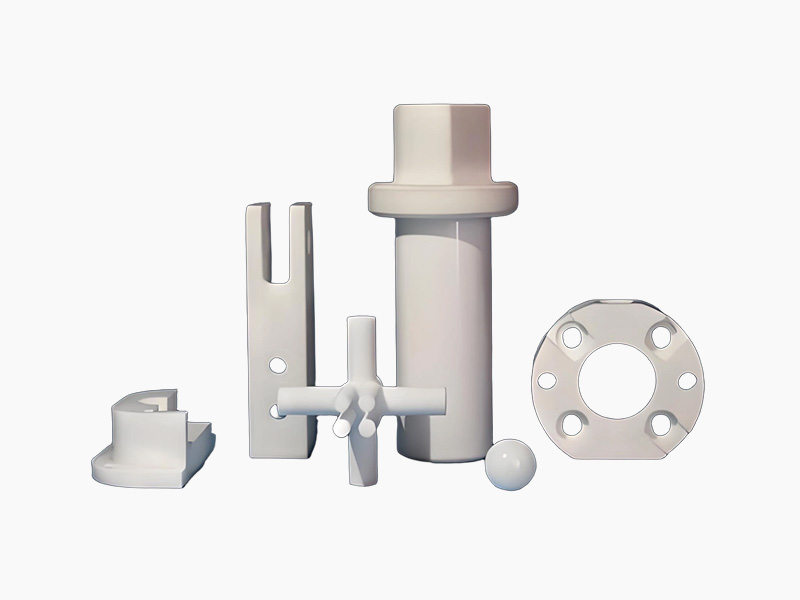
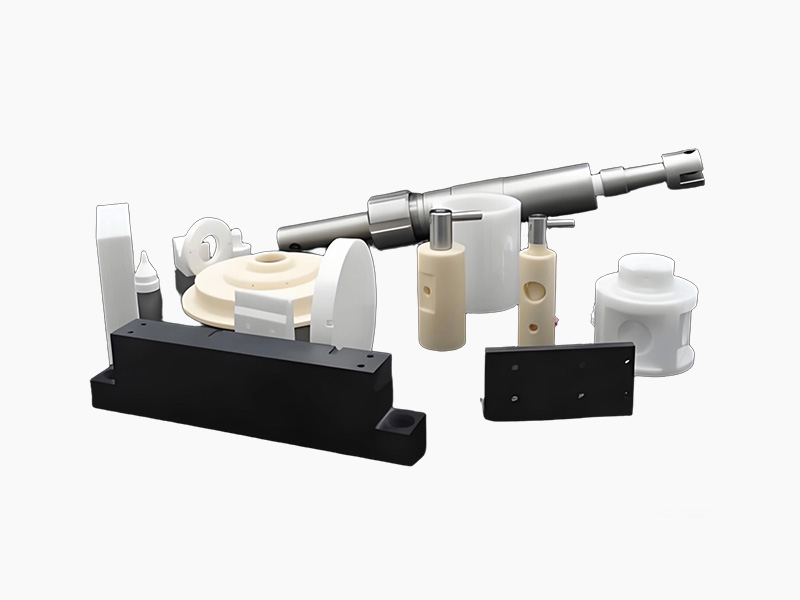
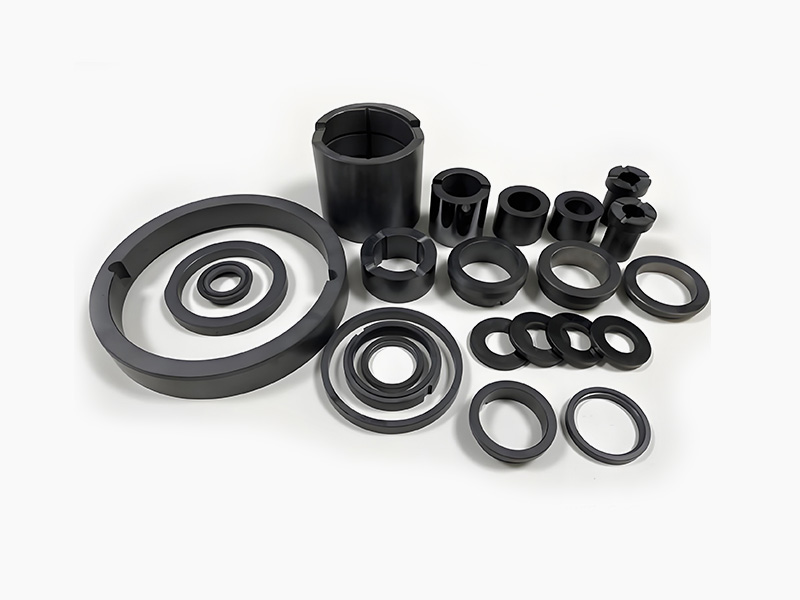
The supplied document also identifies several related silicon nitride components, including die-casting machine plungers, sleeves and goosenecks; crusher components such as classifiers, jet mills and bead mills; and wear components such as wire-drawing guide rollers, motor shafts, bearings, fishing-line guides and wire-drawing winches.
Plungers, sleeves and goosenecks.
Classifiers, jet mills and bead mills.
Guide rollers, shafts, bearings and other wear parts.
A silicon nitride ceramic valve or valve component may be considered when the operating environment combines several demanding conditions, such as:
1. Significant abrasive or erosive wear
2. Cavitation-related impact
4. Elevated operating temperature
5. Corrosive or chemically aggressive media
6. Repeated valve opening, closing or sliding contact
7. Requirements for low friction and long-term dimensional stability
Material selection should be evaluated together with pressure, temperature, fluid chemistry, flow velocity, cavitation conditions, sealing requirements, valve structure and maintenance conditions.
Precision silicon nitride valve components require controlled ceramic processing followed by machining and finishing. The exact production route depends on the valve geometry, material grade, dimensions and required surface characteristics.
Select a suitable Si₃N₄ ceramic grade according to hardness, fracture toughness, thermal requirements, chemical environment and mechanical loading.
Silicon nitride powder is prepared with appropriate processing additives to obtain the required forming characteristics and material uniformity.
The ceramic raw materials are mixed and conditioned for the selected forming process.
The prepared material is formed into a near-net-shape ceramic blank using a suitable ceramic forming technology.
Moisture and temporary organic components are carefully removed before high-temperature densification.
Controlled sintering develops the required ceramic microstructure, density and mechanical properties.
Sintered ceramic blanks are machined or ground toward the required valve geometry.
Critical sealing, mating and dimensional surfaces are precision-ground to achieve the specified geometry and surface condition.
Edges, sealing surfaces, holes, channels and other functional features are finished according to the engineering drawing.
Precision-cleaning removes machining particles and surface contamination before final inspection.
Critical dimensions, geometry and functional surfaces are inspected against the approved drawing.
Finished ceramic valve components are checked, cleaned and protected with suitable packaging before shipment.
Manufacturing note: The process sequence is a general precision ceramic manufacturing route. The exact forming, sintering, grinding and finishing parameters should be determined according to the selected Si₃N₄ grade and valve design.
Ceramic valve components require controlled inspection because dimensional accuracy, sealing geometry and surface condition directly affect valve performance.
Confirm the selected Si₃N₄ material and applicable material requirements.
Check critical dimensions against engineering drawings.
Inspect the functional contact and sealing surfaces.
Check grinding quality and visible surface defects.
Inspect for cracks, chips, abnormal marks and contamination.
Additional testing can be defined according to customer requirements.
Silicon nitride valve components are often application-specific. Instead of selecting a ceramic valve only by nominal size, the complete fluid-control geometry and operating environment should be considered.
1.2D engineering drawing or 3D CAD model.
2.Valve type and component name.
3.Outside diameter, inside diameter, length and other critical dimensions.
4.Dimensional tolerance and geometric tolerance requirements.
5.Sealing surface and surface-finish requirements.
6.Operating temperature and pressure.
7.Fluid or chemical medium being handled.
8.Flow velocity and cavitation conditions, where applicable.
9.Expected service life and duty cycle.
10.Required quantity and packaging requirements.
For a new valve design:Providing operating pressure, temperature, medium chemistry and wear conditions can help determine whether silicon nitride is appropriate for the valve's functional components.
The supplied company information states that HUACIJULI focuses on precision ceramic processing and customization, with high-performance ceramic products including zirconia ceramic, silicon nitride and aluminum nitride. These ceramic components are intended for demanding applications in aerospace, electronics, machinery, automotive and other industrial fields.
HUACIJULI's product scope includes silicon nitride and other high-performance technical ceramics for demanding components.
Ceramic valve components can be developed around customer drawings, dimensions and application requirements.
Silicon nitride can be evaluated according to hardness, temperature, wear, chemical and mechanical requirements.
Precision grinding and finishing are important for ceramic valve components with demanding sealing and dimensional requirements.
HUACIJULI's stated technical ceramic range includes silicon nitride, zirconia and aluminum nitride.
The supplied company information identifies aerospace, electronics, machinery, automotive and related industrial applications.
A silicon nitride ceramic valve is a valve or valve component primarily manufactured from silicon nitride (Si₃N₄), a high-performance engineering ceramic with high hardness, wear resistance, thermal resistance and chemical stability.
The supplied material data includes approximately HRA93 hardness, HV10 ≥ 1400, KIC ≥ 6.5 MPa·m¹/², density of 3.2-3.3 g/cm³, elastic modulus of 300–320 GPa, high-temperature resistance and low-friction characteristics.
The supplied document specifies approximately HRA93 and HV10 ≥ 1400. Actual hardness should be confirmed for the selected material grade and testing method.
The supplied ceramic valve document specifies KIC ≥ 6.5 MPa·m¹/². Fracture toughness is an important consideration when a ceramic component is exposed to mechanical impact or stress concentrations.
The supplied source states that silicon nitride can withstand temperatures up to approximately 1000°C in air and up to approximately 1400°C in a protective atmosphere. Actual valve service temperature depends on the material grade, atmosphere, pressure, thermal cycling and valve design.
The supplied source states that silicon nitride resists corrosion from most inorganic acids, with the stated exceptions being hydrofluoric acid and sodium hydroxide solutions below 25%. Actual compatibility should be checked against the specific chemical, concentration, temperature and exposure conditions.
Low friction can reduce resistance between contacting valve components and may help control wear and operating torque. The actual effect depends on the valve structure, mating materials, lubrication and operating conditions.
Custom ceramic components can be discussed according to engineering drawings, dimensions, material requirements, surface finish and operating conditions.
A 2D drawing or 3D model is preferred. Valve type, dimensions, tolerances, sealing geometry, operating pressure, temperature, fluid medium, flow conditions, quantity and surface requirements are also useful.
The supplied document identifies mechanical engineering, chemical and marine industries, and high-temperature processing. Related applications include high-speed bearing systems, corrosive-media handling, wear-resistant valve systems and high-temperature industrial equipment.
The supplied material description specifically identifies high hardness as a property that can resist the micro-jet and micro-cutting impacts associated with cavitation bubble collapse. Suitability for a specific cavitation environment should nevertheless be verified using the actual pressure, flow velocity, medium and valve design.
Send your engineering drawing, valve specifications or operating conditions to discuss custom Si₃N₄ ceramic valve components for demanding industrial applications.
Custom Si₃N₄ Ceramic Components by HUACIJULITechnical Parameters
Performance indicators | Reference values | Remark |
Hardness HV10 | ≥ 1400 | High surface hardness |
Fracture toughness K_IC | ≥ 6.5 MPa·m¹/² | Excellent impact resistance |
density | 3.2-3.3 g/cm³ | Lightweight design |
Elastic modulus | 300-320 GPa | High rigidity |
Temperature resistance range | In air: 1000℃ / In protective atmosphere: 1400℃ | High temperature stability |
Coefficient of thermal expansion | 2.35×10⁻⁶/K | Low thermal expansion |
Thermal conductivity | 18.4 W/(m·K) | Good heat conduction |
Supports custom specifications.