



High Strength
Silicon nitride provides strong mechanical performance for demanding rolling applications.

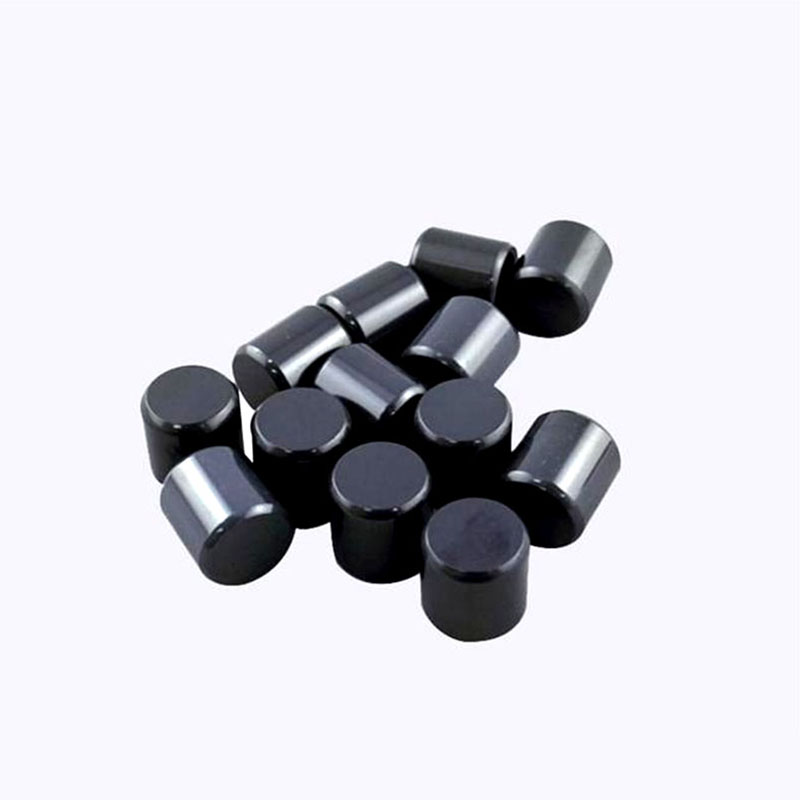
Material: Silicon nitride ceramic.
Density: 3.23-3.27g/cm³.
Sintering process: HIP&GPS.
High-strength, wear-resistant Si₃N₄ ceramic bearing rollers designed for demanding high-speed, high-load, high-temperature and corrosive operating environments.
1500 HV
Vickers hardness
A silicon nitride ceramic bearing roller is a precision rolling element manufactured from silicon nitride (Si₃N₄) engineering ceramic. It is also described as a high-strength, wear-resistant ceramic bearing cylinder.
Compared with conventional metallic rolling elements, silicon nitride ceramic rollers combine high hardness, wear resistance, low density, corrosion resistance, thermal resistance and a smooth surface finish. These characteristics make them suitable for demanding bearing and rotating-equipment applications where speed, load, temperature, friction and service life are important design considerations.
Silicon nitride ceramic bearing rollers are engineered rolling components for bearings and rotating mechanisms that require a combination of strength, wear resistance, low weight and thermal stability.
The supplied product information identifies these rollers as high-strength, wear-resistant ceramic bearing cylinders. Their material characteristics are particularly relevant to applications involving high rotational speed, high mechanical loading, elevated temperature or chemically demanding environments.
Silicon nitride provides strong mechanical performance for demanding rolling applications.
High hardness helps the roller resist wear during repeated rolling contact.
The source states a density of approximately 3.2 g/cm³, helping reduce rolling-element mass.
The supplied information specifies suitability for operating temperatures up to approximately 1200°C.
Silicon nitride, commonly written as Si₃N₄, is a high-performance engineering ceramic used where conventional materials may face limitations related to wear, temperature, corrosion, mass or electrical insulation.
Its combination of mechanical strength, hardness, thermal stability, chemical stability and relatively low density makes silicon nitride suitable for precision components used in high-performance mechanical systems.
| Material Property | Description | Relevance to Bearing Rollers |
|---|---|---|
| Hardness | Up to 1500 HV according to the supplied source | Supports resistance to rolling-contact wear |
| Flexural Strength | Up to 600 MPa according to the supplied source | Supports mechanical loading capability |
| Density | Approximately 3.2 g/cm³ according to the supplied source | Lower rolling-element mass |
| Temperature Resistance | Source specifies use up to approximately 1200°C | Suitable for selected high-temperature environments |
| Chemical Stability | Good corrosion and chemical resistance | Useful in demanding environmental conditions |
The supplied Roller.txt source states a Vickers hardness of up to 1500 HV. This high hardness contributes to the roller's resistance to repeated rolling contact and abrasive wear.
A flexural strength of up to 600 MPa is stated in the source. This provides a basis for using silicon nitride ceramic rollers in applications involving substantial mechanical loading.
The source identifies operating temperatures up to approximately 1200°C, making Si₃N₄ rollers relevant to selected high-temperature applications. Actual operating limits should be determined from the specific material grade and bearing design.
Silicon nitride has good chemical stability and corrosion resistance, supporting longer service in selected chemically demanding environments.
With a source-stated density of approximately 3.2 g/cm³, silicon nitride is significantly lighter than many conventional metallic bearing materials. Lower rolling-element mass can be beneficial in high-speed rotating systems.
A highly finished roller surface can reduce frictional interaction and support smoother bearing operation. Reduced friction and heat generation are particularly relevant to high-speed applications.
Bearing rollers are precision components, so final dimensions and tolerances should be defined according to the bearing design, mating components, operating speed, load and application environment. HUACIJULI can support drawing-based customization rather than limiting customers to a single standard geometry.
| Specification | Typical / Available Configuration | Customization Consideration |
|---|---|---|
| Material | Silicon nitride (Si₃N₄) | Material grade can be selected according to application requirements |
Product Type | Ceramic bearing roller / ceramic rolling cylinder | Geometry can follow the bearing design |
Diameter | Custom | Specified by engineering drawing or application requirement |
Length | Custom | Matched to bearing geometry |
End Geometry | Flat, chamfered, radiused or drawing-specific | Defined according to assembly and contact requirements |
Surface Finish | Ground / fine-ground / precision finished | Surface requirement should be specified for the bearing application |
Dimensional Tolerance | Application and drawing dependent | Precision requirements should be confirmed before production |
Hardness | Up to 1500 HV stated in source | Actual value depends on ceramic grade and testing method |
Flexural Strength | Up to 600 MPa stated in source | Actual value depends on material grade and manufacturing process |
Density | Approximately 3.2 g/cm³ stated in source | Confirm against selected material grade |
Temperature Capability | Up to approximately 1200°C stated in source | Actual service temperature depends on load, atmosphere, speed and bearing design |
Engineering note:For a precision bearing roller, dimensional tolerance, roundness, cylindricity, surface roughness and geometry should be defined together rather than specifying diameter alone.
The supplied Roller.txt identifies aerospace, automotive, electronic equipment and industrial machinery as important application areas. The common theme is the need for rolling components capable of operating under demanding speed, load, temperature or environmental conditions.
Silicon nitride bearing rollers can be considered for aerospace engines and other rotating components exposed to demanding temperature, pressure and mechanical conditions.
In high-performance automotive powertrain systems, ceramic rolling elements can reduce rolling-element mass while supporting demanding speed and operating requirements.
High-speed rotating electronic equipment, including high-speed motors and certain precision drive systems, can benefit from low-density and wear-resistant ceramic rolling elements.
Textile machinery, production-line equipment and other high-load or high-speed industrial systems are potential application areas identified in the supplied source.
Based on the material characteristics described in the source, silicon nitride ceramic rollers may also be evaluated for precision rotating equipment where reduced rolling-element mass, wear resistance, chemical stability, thermal resistance and smooth surface performance are important. Final suitability should always be verified against the actual bearing construction and operating conditions.
Silicon nitride ceramic rollers are particularly relevant when a bearing system needs to address one or more of the following engineering requirements:
High rolling-contact wear resistance
Reduced rolling-element mass for high-speed rotating systems
Operation in elevated-temperature environments
Resistance to corrosion or chemically demanding environments
Smooth rolling surfaces and controlled friction
High mechanical performance under demanding loads
The decision should be made from the complete bearing system rather than the roller material alone. Load, rotational speed, lubrication, raceway material, temperature, atmosphere, dimensional accuracy and installation conditions should all be considered.
Manufacturing a precision silicon nitride bearing roller requires controlled ceramic processing followed by precision machining and inspection. The exact process route depends on the selected Si₃N₄ material grade, roller geometry, dimensions and required performance.
STEP 01
Select silicon nitride ceramic powder and supporting additives according to the required mechanical, thermal, electrical and dimensional performance.
STEP 02
Ceramic powder is prepared and mixed with suitable processing additives to obtain consistent forming characteristics and material distribution.
STEP 03
The prepared ceramic material is conditioned for the selected forming process. Process selection depends on roller geometry, dimensions and production requirements.
STEP 04
The ceramic powder is formed into a preliminary roller or cylindrical blank using a suitable ceramic forming method.
STEP 05
Moisture and temporary organic processing components are carefully removed before high-temperature sintering to minimize defects and dimensional distortion.
STEP 06
The formed Si₃N₄ components are sintered under controlled conditions to develop the required ceramic microstructure, density and mechanical performance.
STEP 07
After sintering, excess material is removed and the roller is brought closer to its final dimensions through controlled ceramic grinding.
STEP 08
Precision grinding controls the roller's critical dimensions and geometry. This stage is especially important for bearing components where dimensional consistency directly affects assembly and running performance.
STEP 09
Chamfers, end geometry and final surface conditions are processed according to the engineering drawing and bearing requirements.
STEP 10
Finished ceramic rollers are cleaned to remove machining particles and contaminants before inspection and packaging.
STEP 11
Critical dimensions and geometry are inspected against the approved engineering drawing and applicable quality requirements.
STEP 12
Finished rollers undergo final visual and dimensional checks before protective packaging for storage, shipment and customer assembly.
Process note:The manufacturing sequence above represents a typical precision silicon nitride ceramic route. The actual forming, sintering, grinding and finishing process is selected according to the material grade, roller geometry and customer specification.
Because ceramic bearing rollers operate as precision rolling elements, quality control should cover material consistency, geometry, dimensions and surface condition.
Confirm the selected silicon nitride material and applicable material requirements.
Check critical roller dimensions against the approved drawing.
Evaluate cylindricity, roundness and other geometry requirements when specified.
Check grinding quality, surface condition and visible defects.
Inspect finished rollers for chips, cracks, abnormal marks and contamination.
Use protective packaging appropriate for precision ceramic components.
Custom ceramic bearing rollers are typically manufactured according to engineering drawings rather than selected only by nominal diameter. This allows the roller geometry and surface requirements to match the complete bearing system.
2D engineering drawing or 3D CAD model, if available.
Required roller diameter and length.
Dimensional tolerance requirements.
Roundness, cylindricity or other geometric requirements.
Surface finish or roughness requirement.
Operating temperature and environmental conditions.
Bearing type and mating raceway information where relevant.
Required quantity and delivery requirements.
For new applications:If the final roller specification has not yet been determined, application information such as speed, load, temperature, lubrication and operating environment can help the engineering team evaluate an appropriate ceramic roller configuration.
According to the supplied company information, HUACIJULI focuses on precision ceramic processing and customization, with high-performance ceramic products including zirconia ceramic, silicon nitride and aluminum nitride components. These materials are used in demanding sectors such as aerospace, electronics, machinery, military and automotive applications.
HUACIJULI's product scope includes high-performance technical ceramics, supporting applications where ceramic material performance is important.
Ceramic components can be developed around customer drawings, dimensions and application requirements rather than relying only on standard components.
Silicon nitride is part of HUACIJULI's high-performance ceramic product range, making it relevant to demanding mechanical and thermal applications.
Product discussions can focus on the actual operating conditions, component geometry and performance requirements rather than material selection in isolation.
In addition to silicon nitride, HUACIJULI's stated product range includes zirconia and aluminum nitride, supporting broader technical ceramic component requirements.
The supplied company information identifies machinery, automotive, electronics, aerospace and military-related applications among the fields served by its ceramic components.
It is a precision rolling element made from silicon nitride (Si₃N₄) ceramic and used in bearing or rotating systems where high wear resistance, low density, thermal resistance and mechanical performance are required.
The main characteristics include high hardness, wear resistance, mechanical strength, corrosion resistance, low density, high-temperature capability and a smooth surface suitable for precision rolling applications.
The supplied Roller.txt states a Vickers hardness of up to 1500 HV. Actual hardness depends on the selected material grade and test conditions.
The supplied source gives a density of approximately 3.23-3.27 g/cm³. The actual density should be confirmed for the selected material grade.
Yes. The supplied source states that these rollers can withstand operating temperatures up to approximately 1200°C. The actual allowable service temperature depends on material grade, load, speed, atmosphere, lubrication and bearing design.
Silicon nitride has good chemical stability and corrosion resistance, which makes it suitable for selected chemically demanding environments.
Custom dimensions and geometry can be discussed according to the customer's engineering drawing and application requirements. Diameter, length, end geometry, dimensional tolerance and surface requirements should be confirmed before production.
The supplied source identifies aerospace, automotive, electronic equipment and industrial machinery as application areas. High-speed motors, powertrain systems, production machinery and demanding rotating equipment are examples of potential uses.
A 2D drawing or 3D model is preferred. Diameter, length, tolerances, geometry, surface finish, material requirements, operating temperature, speed, load, quantity and application environment are also useful.
Silicon nitride offers a combination of lower density, high hardness, wear resistance, corrosion resistance and thermal performance. These properties can be valuable where conventional metallic rolling elements face limitations. The appropriate choice depends on the complete bearing design and operating conditions.
Send your drawing, dimensions or application requirements to discuss a silicon nitride ceramic bearing roller configuration for your bearing or rotating equipment.
Custom Si₃N₄ Ceramic Components by HUACIJULIPerformance parameters
performance | unit | ZrO₂ | Si₃N4 | SiC | Ai₂O3 |
density | g/cm³ | 6-6.05 | 3.22-3.25 | 3.15-3.2 | 3.85-3.92 |
hardness | kg/mm | 1250 | 1600 | 2450 | 1800 |
toughness | MN/m | 7.0 | 6.0 | 2.5 | 3.0 |
Bending strength | kgf/cm³ | 100-120 | 80-100 | 40-50 | 30-40 |
Thermal shock resistance | △T,℃ | 280 | 900 | 400 | 200 |
Coefficient of thermal expansion | x10-6/℃ | 9.0 | 3.5 | 4.2 | 7.0 |
Operating temperature | ℃ | 400 | 1200 | 1500 | 1600 |
Corrosion resistance (acids and bases) | / | Good | Good | Excellent | Excellent |
Thermal conductivity | w/mk | 3.0 | 29 | 120 | 23 |
Fatigue life | / | 80x | 100x | 50x | 40x |
magnetic | / | Non | Non | Non | Non |
Insulation | // | Insulation | Insulation | Insulation | Insulation |
Compressive strength | Mpa | 2000 | 3500 | 2250-300 | 2800-3500 |
fracture toughness | Mpa:m-3/2 | 11 | 7 | 4-5 | 2-4 |
Weber modulus | GPa | >15 | >15 | >6 | >6 |
Elastic modulus | GPa | 210 | 320 | 410 | 420 |
Poisson's ratio | / | 0.3 | 0.26 | 0.26 | 0.2 |
resistance | mm2/m | >10 | >10 | 100-2 | >10 ->10 |
resistivity | mm2/m | 1015 | 1018 | / | / |
Specific heat | J/KgK | 400 | 800 | / | / |
Number of stress cycles (50% probability of failure) | / | 50*106 | 50*106 | / | / |
Failure modes due to rolling contact fatigue | / | Peeling/Cracking | peeling off | / | / |
Dimensional stability | / | good | good | good | good |
Supports custom specifications.