




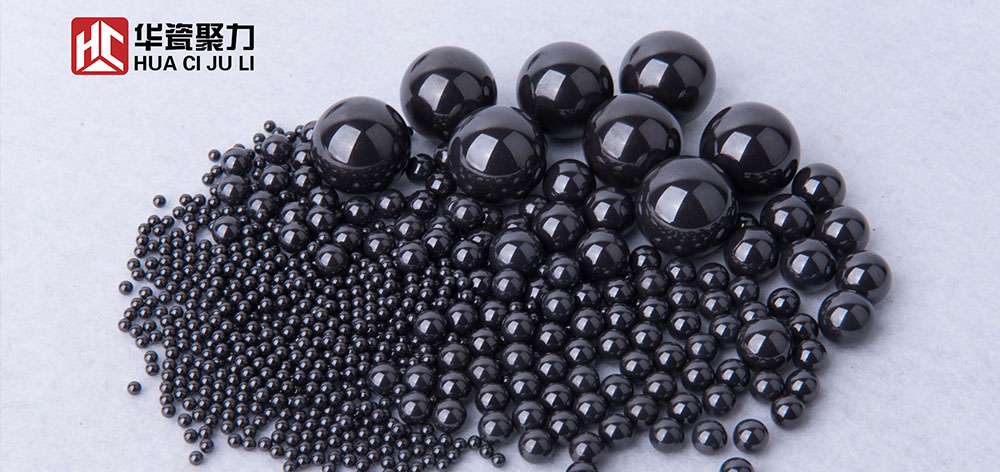
Silicon nitride balls and zirconia balls are two mainstream ceramic rolling elements widely used in precision bearings, industrial equipment and high-speed machinery. Many engineers and procurement staff often struggle to choose between these two ceramic materials for their projects. Understanding their differences in physical properties, service environment and cost performance is essential for correct selection.
Silicon nitride balls feature low density around 3.2g/cm³, much lighter than zirconia balls at 6.0g/cm³. In high-speed bearing operation, lighter rolling elements greatly reduce centrifugal force, lower raceway pressure and running temperature. This makes silicon nitride balls the first choice for high-speed spindle bearings, motor bearings and aerospace rotating parts. Zirconia balls are heavier and more suitable for low-speed, heavy-load scenarios without strict speed limits.
In terms of hardness and wear resistance, silicon nitride balls maintain stable ultra-high hardness at high temperature, while zirconia will gradually degrade under prolonged high heat. Silicon nitride balls can work continuously above 1000℃ without deformation, showing outstanding thermal stability. Both materials own excellent corrosion resistance against acid, alkali and salt water, but silicon nitride performs better in extreme temperature alternating environments.
Electrical insulation and non-magnetic characteristics are another advantage of silicon nitride balls. They will not generate magnetic adsorption or electric leakage interference, perfect for semiconductor equipment, electronic precision instruments and medical MRI compatible devices. Zirconia balls also have insulation properties but are weaker in high-frequency working conditions.
In fatigue life and impact resistance, silicon nitride ceramic structure is more compact and tough, resisting cyclic load fatigue and sudden impact cracking. Zirconia balls are easy to produce phase transformation and micro-cracks under long-term alternating load. Although zirconia has a lower unit price, silicon nitride balls have 5–10 times longer service life, greatly reducing replacement frequency and overall maintenance cost.
For modern industrial high-speed, high-temperature, high-precision demands, silicon nitride balls show comprehensive advantages. Zirconia balls are more suitable for conventional low-cost and low-standard scenarios. Choosing the right ceramic ball material directly affects equipment stability, energy consumption and long-term operating cost.