




Introduction: The Corrosion Challenge in Chemical Processing
The global chemical processing industry operates under some of the most hostile environments imaginable. Equipment components are continuously exposed to corrosive acids, caustic alkalis, molten metals, high-pressure steam, abrasive slurries, and extreme temperature cycling. The economic impact of corrosion in chemical plants is staggering - the global cost of corrosion is estimated at over $2.5 trillion annually, representing approximately 3-4% of global GDP.
Traditional metallic materials - stainless steels, Hastelloy, titanium alloys - have long been the default choice for chemical equipment, but they come with fundamental limitations. Metals are inherently susceptible to pitting corrosion, crevice corrosion, stress corrosion cracking, and galvanic corrosion in aggressive chemical environments. Polymer linings and coatings offer temporary protection but degrade rapidly at elevated temperatures. This has driven the industry to seek more durable, chemically inert alternatives.
Silicon nitride (Si₃N₄) ceramics have emerged as a transformative material solution for the chemical industry. With its unique combination of near-universal chemical inertness, exceptional mechanical strength, thermal stability up to 1400°C, and outstanding wear resistance, Si₃N₄ is replacing metals in an expanding range of chemical processing applications - from pump seals and valve components to crucibles, heat exchangers, and thermocouple protection tubes. This comprehensive technical guide explores every dimension of Si₃N₄'s role in the chemical industry.
Silicon Nitride (Si₃N₄) - Material Fundamentals for Chemical Applications
Silicon nitride is a non-oxide covalent ceramic with a chemical formula of Si₃N₄. Its crystal structure consists of [SiN₄] tetrahedra linked into a dense three-dimensional network, where each silicon atom bonds covalently to four nitrogen atoms and each nitrogen atom bridges three silicon atoms. This strongly bonded architecture is the fundamental origin of its chemical inertness - there are simply no weak planes or ionic bonds for chemical agents to attack.
Chemical Inertness
Resists most acids, alkalis, molten metals
Max Service Temp.
Up to 1400°C (2550°F)
Flexural Strength
700-1000 MPa
Density
3.17-3.44 g/cm³
Key Chemical Properties
Resistant to HCl, HNO₃, dilute H₂SO₄, H₃PO₄
Resistant to NaOH, KOH (moderate concentration/temperature)
Inert to molten Al, Cu, Zn, Pb, Sn, and their alloys
Resistant to organic solvents and hydrocarbons
NOT resistant to hot concentrated HF or hot conc. H₂SO₄
Key Mechanical & Thermal Properties
Fracture toughness: 6-8 MPa·m½ (highest among ceramics)
Vickers hardness: 13-17 GPa
CTE: 3.2 × 10⁻⁶/°C (excellent thermal shock resistance)
Thermal conductivity: 20-30 W/m·K
Self-lubricating with low friction coefficient
Molecular Structure of Si₃N₄ - The Foundation of Chemical Inertness
The extraordinary chemical resistance of silicon nitride originates directly from its atomic-level architecture. Unlike oxide ceramics where ionic bonding creates potential sites for chemical attack, the strong covalent Si–N bonds (bond energy ~335 kJ/mol) form a dense, three-dimensional network with no weak planes, grain boundary phases susceptible to dissolution, or ionic pathways for corrosive species to penetrate. This molecular diagram illustrates the tetrahedral network structure that makes Si₃N₄ virtually impervious to chemical attack in most environments.
Si₃N₄ Tetrahedral Covalent Network - Origin of Chemical Resistance

Why Covalent Bonding = Chemical Resistance
In ionic ceramics (like Al₂O₃ or MgO), the electrostatic bonds can be disrupted by polar solvents, acidic protons, or hydroxide ions. In contrast, the covalent Si-N bonds in Si₃N₄ share electrons tightly between atoms, leaving no charges exposed for chemical species to attack. Breaking these bonds requires energy far exceeding what most chemical environments can provide.
The Exception: Hydrofluoric Acid (HF)
Hot concentrated HF is one of the few chemicals that can attack Si₃N₄. Fluoride ions have an exceptional affinity for silicon, forming volatile SiF₄ gas and breaking the Si–N network. Si₃N₄ should also be avoided in hot concentrated H₂SO₄ (>90%) and molten alkali metals (Na, K), which can reduce the silicon nitride at extreme temperatures.
Si₃N₄ Chemical Resistance Spectrum
Understanding exactly which chemicals Si₃N₄ can and cannot resist is essential for proper material selection in chemical processing. The following diagram provides a comprehensive visual overview of Si₃N₄'s resistance profile across the major categories of chemicals encountered in industrial processing environments.
Si₃N₄ Chemical Resistance Spectrum Map

Extended Knowledge - Corrosion Mechanism: When Si₃N₄ is exposed to aqueous environments, a thin, self-passivating SiO₂ layer (~2-10 nm) forms on the surface. This silica layer acts as an additional protective barrier, further inhibiting chemical attack. In most acid environments, this passive layer is stable and self-healing. Only HF can dissolve the SiO₂ layer (forming volatile SiF₄), which is why hot concentrated HF is the primary chemical to avoid.
Why Silicon Nitride for Chemical Processing?
Si₃N₄ delivers six critical advantages that make it superior to metals, polymers, and other ceramics in chemical processing environments:
1
Near-Universal Chemical Inertness
Si₃N₄ resists over 90% of chemicals encountered in industrial processing - including most mineral acids, alkalis, molten metals, organic solvents, salt solutions, and high-pressure steam. This eliminates the need for frequent material changes, protective coatings, or complex alloy selections that plague metal-based equipment.
2
High-Temperature Stability
Unlike polymer linings (limited to ~250°C) and many metals (which lose strength above 400°C), Si₃N₄ maintains full mechanical performance up to 1400°C. This is essential for high-temperature reactors, furnace components, molten metal handling, and thermal processing equipment where no other non-metallic material can compete.
3
Thermal Shock Resistance
Chemical reactors and heat exchangers frequently experience rapid temperature changes during startup, shutdown, and batch cycling. Si₃N₄'s low CTE (3.2 × 10⁻⁶/°C) and moderate thermal conductivity provide thermal shock resistance 3–5× superior to Al₂O₃, preventing catastrophic cracking that destroys conventional ceramic linings.
4
Wear & Abrasion Resistance
Many chemical processes involve abrasive slurries, catalyst particles, and erosive flows that rapidly degrade metal surfaces. Si₃N₄'s combination of high hardness (HV 13-17 GPa), low friction, and excellent toughness provides outstanding resistance to combined corrosive-abrasive wear - a failure mode where metals and polymers fail rapidly.
5
Non-Contaminating & High Purity
In pharmaceutical, food-grade, and high-purity chemical production, equipment materials must not leach metallic ions or contaminants into the process stream. Si₃N₄ is chemically inert and non-leaching, ensuring product purity in sensitive applications - unlike stainless steel which can release Fe, Cr, and Ni ions.
6
Extended Service Life & Lower TCO
While the initial cost of Si₃N₄ components is higher than metals, the total cost of ownership (TCO) is typically 40-70% lower due to 5-10× longer service life, reduced maintenance downtime, fewer replacement cycles, and elimination of corrosion-related product contamination. Many plants report payback periods of 6-18 months.
Si₃N₄ Applications Across Chemical Processing Equipment
Silicon nitride ceramic components are deployed across virtually every major equipment category in chemical processing plants:
① Mechanical Seals & Pump Components
Mechanical seals are the most critical wear components in chemical pumps. Seal face failure is the #1 cause of pump downtime in chemical plants, accounting for an estimated 40% of all pump maintenance costs.
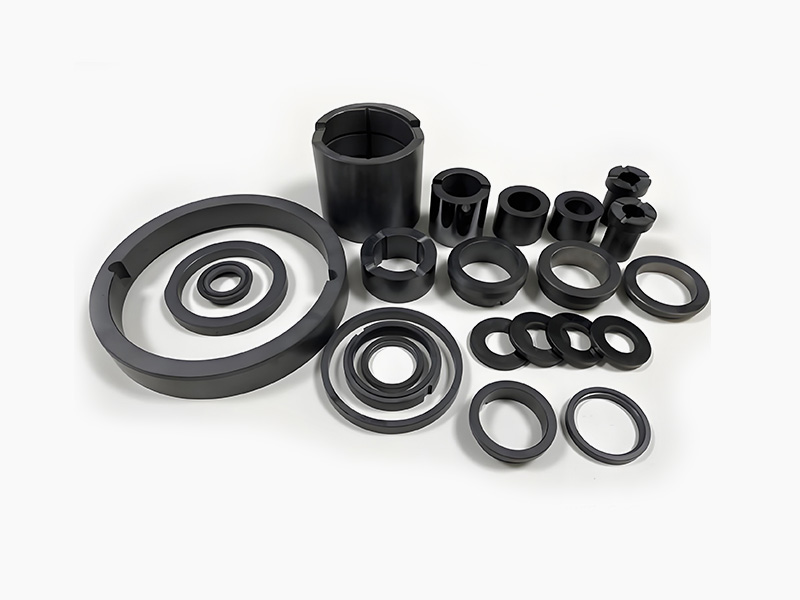
Si₃N₄ components: Seal faces (rotating and stationary rings), shaft sleeves, pump bearings, impeller wear rings, and dosing pump plungers. Si₃N₄ seal faces operate successfully in API 682 Plan arrangements for handling HCl, H₂SO₄, NaOH, solvents, and abrasive slurry services. Their self-lubricating properties enable dry-run capability and operation with marginal lubrication - conditions that rapidly destroy carbon/SiC seal pairs. Service life is typically 3-5× longer than SiC/SiC pairs in corrosive-abrasive services.
② Valve Seats, Trim & Flow Control
Control valves and isolation valves in corrosive services face constant attack from process fluids, high-velocity flows, and cavitation erosion.
Si₃N₄ components: Valve balls, seats, plugs, trim inserts, and actuator bushings. Si₃N₄ ball valves and check valves are now standard in chemical plants handling aggressive acids and alkalis. The material's low friction coefficient ensures smooth valve operation without seizing - a common failure mode with metal-to-metal valve trim in corrosive services. Si₃N₄ valve components maintain leak-tight sealing over 100,000+ operating cycles.
③ Heat Exchangers & Thermal Equipment
Heat exchangers in chemical plants must transfer heat efficiently while resisting corrosion from both process and utility-side fluids.
Si₃N₄ components: Heat exchanger tubes, tube sheets, furnace rollers, kiln furniture, burner nozzles, and refractory linings. Si₃N₄'s moderate thermal conductivity (20-30 W/m·K) is sufficient for many heat exchange applications while providing the corrosion resistance that metals cannot match. In high-temperature furnaces (800-1400°C), Si₃N₄ fixtures and setters maintain dimensional stability through thousands of thermal cycles without warping or cracking.
④ Crucibles, Ladles & Molten Metal Handling
Foundries and metallurgical plants require containers and tools that can withstand contact with molten metals at 600-1600°C without contamination or degradation.
Si₃N₄ components: Crucibles, ladle linings, pouring nozzles, thermocouple protection tubes, riser tubes for low-pressure die casting, degassing rotors, and immersion heaters. Si₃N₄ is non-wetted by molten aluminum, copper, zinc, lead, and their alloys - meaning molten metal does not adhere to or react with the ceramic surface. This ensures clean metal transfer, prevents inclusions in castings, and extends crucible life by 3-8× compared to graphite or conventional refractory crucibles.
⑤ Thermocouple Protection Tubes & Instrumentation
Temperature measurement in corrosive and high-temperature chemical processes requires protective sheaths that shield thermocouple elements from chemical attack and mechanical damage.
Si₃N₄ components: Thermocouple protection tubes, pH electrode bodies, level sensor probes, and analytical instrument components. Si₃N₄ thermocouple tubes can operate continuously at temperatures up to 1400°C in corrosive atmospheres - far exceeding the capability of stainless steel (~600°C in corrosive service) or Inconel (~900°C). The material's thermal shock resistance allows direct immersion into molten metals without preheating.
⑥ Catalyst Supports, Filters & Reactor Internals
Chemical reactors rely on internal components - catalyst beds, filter elements, distributor plates - that operate in the most chemically aggressive zones of the process.
Si₃N₄ components: Catalyst support grids, filter membranes and candle filters, reactor distributor plates, bubble caps, spray nozzles, and static mixer elements. Si₃N₄'s chemical inertness ensures that catalyst support structures do not interact with or poison expensive catalysts - a significant problem with metal supports in pharmaceutical and fine chemical synthesis. Porous Si₃N₄ filter elements provide sub-micron filtration capability in hot corrosive gas streams where polymer and metal filters fail.
Si₃N₄ Components in a Chemical Pump & Reactor System
The following cross-sectional diagram illustrates how silicon nitride ceramic components are integrated into a typical chemical pump and reactor system - one of the most common equipment configurations in chemical processing plants. Each labeled position represents a specific Si₃N₄ application that leverages the material's corrosion resistance, wear resistance, and thermal stability.
Si₃N₄ Components in a Chemical Processing System

①②③ Pump Section
Si₃N₄ seal faces, shaft sleeves, and bearings eliminate corrosion-driven pump failures. Combined corrosive-abrasive services that destroy SiC seals in 6–12 months routinely run 3–5 years with Si₃N₄.
④ Pipeline Valves
Si₃N₄ ball/seat valve trim provides leak-tight shutoff in corrosive acid and alkali services. Maintains sealing integrity over 100,000+ cycles without seizing or galling.
⑤⑥⑦ Reactor Internals
Thermocouple tubes, reactor liners, and spray nozzles in Si₃N₄ resist process chemicals at operating temperature, protecting measurement accuracy and preventing vessel corrosion.
⑨⑩ Molten Metal Handling
Si₃N₄ crucible linings and immersion TC probes are non-wetted by molten Al/Cu/Zn. Crucible life extends 3–8× vs graphite. TC probes survive thermal shock from direct immersion.
Material Comparison: Si₃N₄ vs Metals & Other Ceramics for Chemical Service
The following table compares silicon nitride with materials commonly used in chemical processing equipment:
| Property | Si₃N₄ | 316L SS | Hastelloy C-276 | Al₂O₃ | SiC | PTFE |
|---|---|---|---|---|---|---|
| Acid Resistance | Excellent ★ | Poor-Good | Good | Good | Good | Excellent |
| Max Temperature | 1400°C ★ | 400°C | 450°C | 1200°C | 1600°C | 260°C |
| Fracture Toughness | 6-8 ★ | — | — | 3–5 | 3–5 | — |
| Thermal Shock | Excellent ★ | Good | Good | Moderate | Good | Poor |
| Abrasion Resistance | Excellent ★ | Poor | Poor | Excellent | Excellent | Poor |
| Density (g/cm³) | 3.2–3.4 | 8.0 | 8.9 | 3.9 | 3.2 | 2.2 ★ |
| Relative Cost | High | Low ★ | Very High | Moderate | High | Low ★ |
★ = Best in category. Si₃N₄ is the only material offering excellent performance across ALL categories simultaneously.
Key Insight: The critical advantage of Si₃N₄ is that it is the only material combining high-temperature capability (>1000°C), near-universal chemical resistance, outstanding fracture toughness, and excellent abrasion resistance in a single package. Metals fail in corrosive environments, PTFE fails at high temperatures, Al₂O₃ and SiC are brittle - but Si₃N₄ succeeds in combined corrosive + high-temperature + abrasive + thermally-shocking conditions where no other material survives.
Selection Guide: When to Specify Si₃N₄ for Chemical Applications
Choose Si₃N₄ When:
Process fluids include corrosive acids + abrasive particles (combined attack mode)
Operating temperatures exceed 300°C in corrosive environments (beyond polymer/metal capability)
Thermal cycling is frequent (batch reactors, startup/shutdown cycles)
Components are in contact with molten non-ferrous metals
Product purity requirements prohibit metallic ion leaching
Total cost of ownership (including downtime) is the evaluation criterion, not just initial cost
Avoid Si₃N₄ When:
Process fluid contains hot concentrated HF (hydrofluoric acid)
Process involves hot concentrated H₂SO₄ (>90%, >150°C)
Environment contains molten alkali metals (Na, K, Li)
Application requires flexible or deformable components (gaskets, O-rings)
Service conditions are mild/non-corrosive and standard metals perform adequately at lower cost
Conclusion
Silicon nitride ceramics represent a paradigm shift in materials selection for the chemical processing industry. Where metals corrode, polymers melt, and conventional ceramics crack under thermal shock, Si₃N₄ delivers reliable, long-lasting performance across the most aggressive combinations of chemical exposure, high temperature, abrasion, and thermal cycling.
From pump seals that last 5× longer than conventional options, to crucibles that are non-wetted by molten metals, to thermocouple tubes that survive direct immersion into 1400°C melts - Si₃N₄ components consistently deliver lower total cost of ownership, higher process uptime, and improved product quality.
Xiamen HUACIJULI New Material Co., Ltd. manufactures a comprehensive range of chemical-grade Si₃N₄ components - from standard seal rings and bearing balls to custom-engineered crucibles, nozzles, and reactor internals - with the precision, purity, and reliability that the chemical industry demands.
Frequently Asked Questions (FAQ)
Q1: Why is silicon nitride used in chemical processing equipment?
Si₃N₄ offers exceptional resistance to most acids, alkalis, molten non-ferrous metals, and organic solvents, combined with high mechanical strength (700-1000 MPa), thermal stability up to 1400°C, and outstanding wear resistance. It extends component life by 5-10× in corrosive-abrasive services compared to metals.
Q2: What chemical industry components are made from Si₃N₄?
Key components include mechanical seal faces, pump shaft sleeves, bearings, valve balls and seats, heat exchanger tubes, crucibles, thermocouple protection tubes, spray nozzles, filter membranes, catalyst support grids, and corrosion-resistant reactor linings.
Q3: How does Si₃N₄ compare to stainless steel in chemical environments?
Si₃N₄ dramatically outperforms stainless steel in corrosive environments. While 316L SS suffers from pitting, crevice corrosion, and SCC in chloride/acidic services, Si₃N₄ is chemically inert to most process fluids. Si₃N₄ also weighs 60% less and offers 5-10× longer service life in combined corrosive-abrasive applications.
Q4: Which chemicals can silicon nitride resist?
Si₃N₄ resists HCl, HNO₃, dilute H₂SO₄, H₃PO₄, NaOH/KOH (moderate), molten Al/Cu/Zn/Pb/Sn, organic solvents, salt solutions, seawater, and steam. Avoid: hot concentrated HF, hot concentrated H₂SO₄ (>90%), and molten alkali metals (Na, K).
Q5: What is the total cost of ownership advantage of Si₃N₄ in chemical applications?
Although Si₃N₄ components have higher initial cost than metals, the total cost of ownership (TCO) is typically 40-70% lower due to 5-10× longer service life, fewer unplanned shutdowns, reduced maintenance labor, and elimination of corrosion-related product contamination. Most plants report payback within 6-18 months of switching from metal to Si₃N₄ components.