




Introduction: The $120 Billion Cost of Mechanical Wear
Mechanical wear is one of the most pervasive and costly failure modes in industrial equipment worldwide. Industry estimates place the global economic impact of wear, friction, and corrosion at over $120 billion annually - equivalent to approximately 1-2% of global GDP. In mining, mineral processing, chemical manufacturing, and heavy industry, wear-related component replacement accounts for 30-60% of total maintenance expenditure.
Traditional approaches - hardened steels, wear-resistant alloys, surface coatings, and polymer linings - each come with fundamental limitations. Metals degrade rapidly in corrosive-abrasive environments. Coatings delaminate under impact loading. Polymers fail at elevated temperatures. This performance gap has driven a fundamental shift toward advanced structural ceramics, and among these, silicon nitride (Si₃N₄) has emerged as the preeminent material for wear-resistant mechanical components.
This comprehensive technical guide explores every dimension of Si₃N₄'s wear-resistant capabilities - from its unique tribological properties and manufacturing process to real-world deployment across mining, chemical processing, automotive, energy, and heavy industrial applications.
Why Si₃N₄ for Wear-Resistant Mechanical Parts?
Wear resistance in mechanical components is governed by a complex interplay of hardness, toughness, friction characteristics, thermal stability, and chemical inertness. Si₃N₄ delivers exceptional performance across all these parameters simultaneously - a combination no other engineering material can match:
Exceptional Hardness
HV 13-17 GPa (Vickers)
Highest Ceramic Toughness
KIC 6-8 MPa·m½
Low Friction
μ = 0.1-0.3 (self-lubricating)
Thermal Stability
Service to 1400°C (2550°F)
The Hardness-Toughness Paradox Solved
In most ceramics, high hardness comes at the expense of brittleness. Si₃N₄ is unique: its β-phase features elongated, interlocking grains that create crack-bridging and grain pull-out toughening mechanisms. This gives it the highest fracture toughness of any monolithic ceramic while maintaining excellent hardness - solving the fundamental hardness-toughness tradeoff.
Combined Wear Mode Resistance
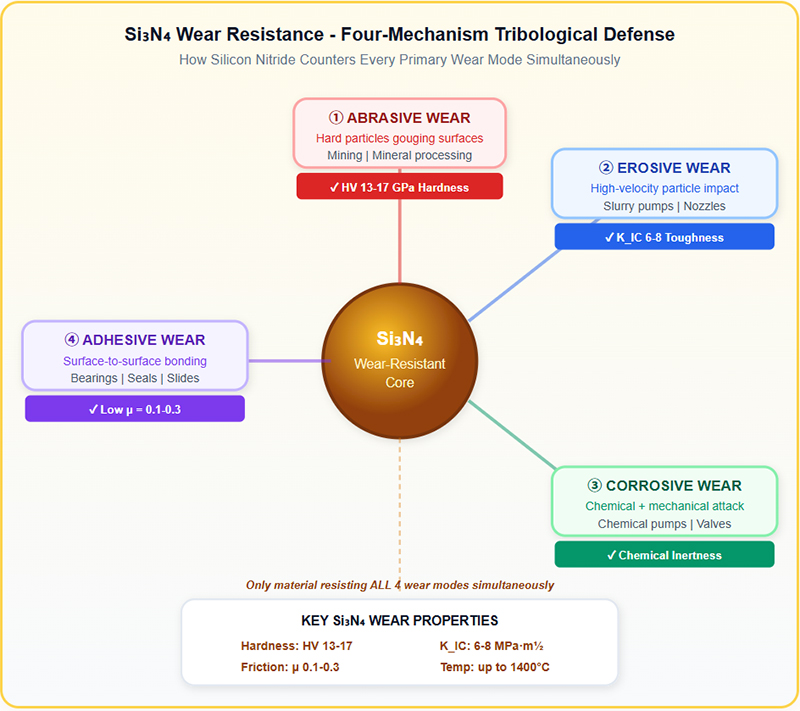
Real-world mechanical wear rarely occurs in isolation. Components face abrasive + erosive + corrosive + adhesive wear simultaneously. Si₃N₄ is one of the few materials that resists all four wear modes at once, making it uniquely suited for the most demanding combined-wear environments in mining, chemical processing, and energy.
Tribological Performance: The Science Behind Wear Resistance
Tribology - the science of friction, wear, and lubrication - provides the framework for understanding why Si₃N₄ outperforms all other materials in wear-resistant applications. The following diagram illustrates the four primary wear mechanisms and how Si₃N₄'s material properties counter each one:
Diagram 1: Si₃N₄ Wear Resistance Mechanisms - Tribological Performance Map
Extended Knowledge - Wear Rate Comparison
In standardized pin-on-disk tests (ASTM G99), Si₃N₄ exhibits specific wear rates of 10⁻⁶ - 10⁻⁷ mm³/N·m - comparable to or lower than SiC and Al₂O₃. However, in combined corrosive-abrasive environments (e.g., acidic slurry), Si₃N₄'s corrosion resistance advantage gives it 3-5× lower total material loss than other ceramics that corrode while wearing.
Self-Lubricating Mechanism
Si₃N₄ forms a thin tribofilm of SiO₂·nH₂O (hydrated silica gel) at the sliding interface in humid environments. This self-generated lubricating layer reduces the friction coefficient to μ ≈ 0.1 - comparable to oiled steel-on-steel - enabling dry-running or marginally lubricated operation in seal and bearing applications.
Manufacturing Process for Wear-Resistant Si₃N₄ Components
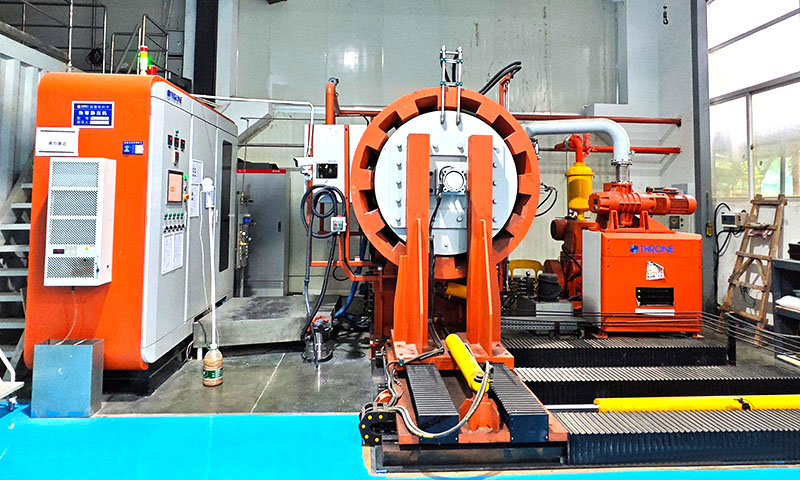
The manufacturing process for wear-resistant Si₃N₄ components requires precise control at every stage to ensure the optimal microstructure - dense, fine-grained β-Si₃N₄ with elongated interlocking grains that maximize both hardness and toughness. Here is the complete production workflow:
Powder Synthesis
High-purity α-Si₃N₄ powder (>99.5%) with Y₂O₃ + Al₂O₃ sintering aids. Ball-milled to sub-micron particle size.
CIP Forming
Cold isostatic pressing at 200-300 MPa. Uniform green body density (>55% TD) for defect-free sintering.
GPS / HIP Sintering
Gas pressure sintering at 1750-1900°C under 1-10 MPa N₂. α→β phase transformation with elongated grain growth.
CNC Machining
Diamond grinding, lapping, and polishing. Tolerances to ±1μm. Surface finish Ra<0.2μm for seal/bearing faces.
QC & Testing
100% dimensional inspection. Density, hardness, strength verification. Ultrasonic flaw detection.
Sintering - The Critical Step
During sintering, the α-Si₃N₄ starting powder dissolves and reprecipitates as elongated β-Si₃N₄ grains. The grain morphology is controlled via temperature, time, and nitrogen pressure. Optimal sintering produces a microstructure with aspect ratios of 5-10:1 (length:diameter), creating the interlocking network responsible for Si₃N₄'s unique toughness. Over-sintering produces excessively large grains that reduce strength.
Surface Finish for Wear Performance
Surface roughness directly affects wear behavior. For mechanical seal faces, Ra<0.1μm mirror finish minimizes leakage and friction. For bearing races, Ra<0.05μm ensures hydrodynamic film formation. For slurry-facing components, a slightly rougher finish (Ra 0.3-0.5μm) may be specified to reduce adhesive contact area with abrasive particles.
Si₃N₄ Wear-Resistant Product & Application Map
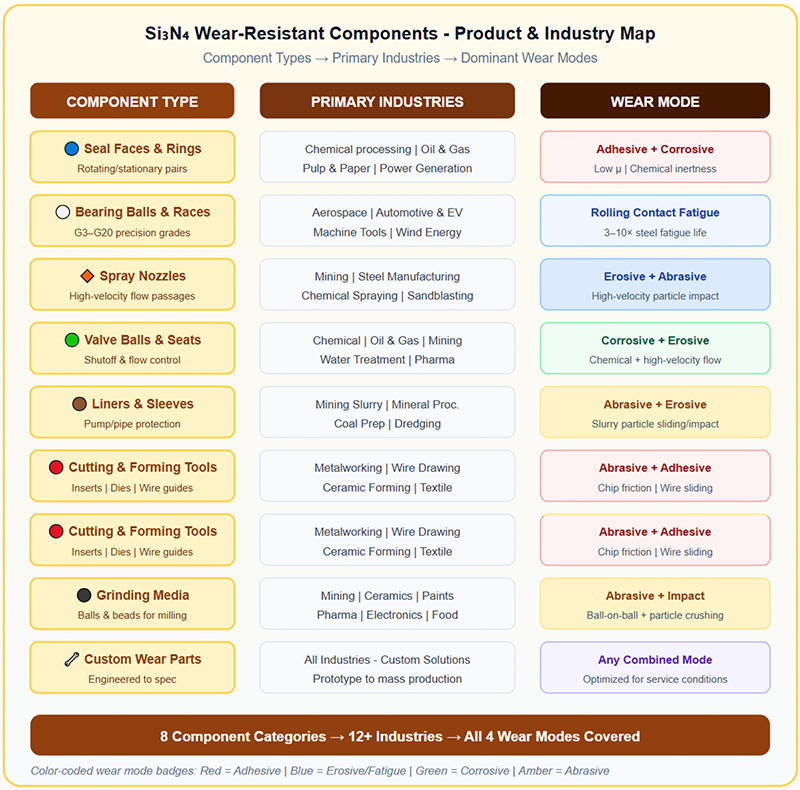
The following diagram maps our complete range of Si₃N₄ wear-resistant component types to their primary industrial applications and dominant wear modes:
Diagram 2: Si₃N₄ Wear-Resistant Components - Product & Industry Mapping
Si₃N₄ Wear-Resistant Components - Industry Applications in Detail
Each industry presents unique wear challenges. Here is how Si₃N₄ components address the specific demands of each application domain:
Mining & Mineral Processing
Wear challenge: Abrasive ore slurries, high-impact crushing, erosive hydrocyclone flows, and corrosive leaching chemicals.
Si₃N₄ solutions: Slurry pump impellers and liners, hydrocyclone vortex finders, flotation cell nozzles, grinding media, and pipeline elbows. Si₃N₄ pump parts last 5–10× longer than high-chrome iron in abrasive slurry service.
Chemical Processing
Wear challenge: Combined chemical corrosion + mechanical wear from catalyst particles, crystalline precipitates, and high-velocity flows.
Si₃N₄ solutions: Mechanical seal faces (API 682), valve balls and seats, pump shaft sleeves, dosing pump plungers. In corrosive slurry services, Si₃N₄ seals outperform SiC/SiC pairs by 3–5× due to superior fracture toughness.
Automotive & EV Powertrains
Wear challenge: High-speed turbocharger bearings, EV motor bearings at 15,000-20,000+ RPM with electrical discharge damage risk.
Si₃N₄ solutions: Hybrid bearing balls (G5-G10), turbocharger shaft bearings, EV traction motor bearings. Si₃N₄'s electrical insulation eliminates EDM pitting - the primary failure mode in EV motor bearings - while 60% weight reduction enables higher speeds.
Oil & Gas
Wear challenge: Downhole abrasive sand/formation particles, H₂S/CO₂ corrosion, high-pressure/high-temperature (HPHT) environments.
Si₃N₄ solutions: Downhole motor bearings, valve trim for sour gas service, seal rings for mud pumps, and flow control components. Si₃N₄'s immunity to H₂S attack and sand erosion makes it ideal for sour well completions.
Aerospace & Defense
Wear challenge: Gas turbine main shaft bearings at >1000°C, high DN-values exceeding 3 million, minimal lubrication availability.
Si₃N₄ solutions: G3-G5 bearing balls for main shaft and gearbox bearings, turbine blade tip shrouds, and gimbal bearings. Si₃N₄ enables oil-free or minimal-lubrication bearing operation at temperatures where steel bearings fail.
Energy & Power Generation
Wear challenge: Wind turbine main bearings with stray current damage, geothermal brine corrosion, nuclear pump seals in radiation environments.
Si₃N₄ solutions: Wind turbine main shaft and generator bearings (preventing electrical erosion), geothermal brine pump seals, nuclear primary coolant pump seal faces, and Si₃N₄ substrates for power electronics (IGBT/SiC modules).
Pulp & Paper
Wear challenge: Abrasive mineral fillers (CaCO₃, TiO₂), corrosive bleaching chemicals (ClO₂, H₂O₂), and continuous fiber abrasion.
Si₃N₄ solutions: Forming board foils, suction box covers, doctor blade holders, and pump seals for chemical recovery. Si₃N₄ foils maintain surface finish 10× longer than filled PTFE, ensuring consistent sheet formation quality.
Steel & Metal Manufacturing
Wear challenge: High-temperature roll bearings, molten metal contact, scale abrasion, and thermal cycling fatigue.
Si₃N₄ solutions: Continuous caster roll bearings, hot strip mill guide rollers, thermocouple protection tubes for molten steel, and molten metal handling crucibles. Si₃N₄'s non-wetting by molten metals and 1400°C capability are unmatched.
Extended Knowledge - Total Cost of Ownership: While Si₃N₄ wear components have a higher initial cost than metals or conventional ceramics, the total cost of ownership (TCO) is typically 40-70% lower over the equipment lifecycle. A mining slurry pump equipped with Si₃N₄ impellers and liners may run 12-18 months without maintenance versus 3-6 months for high-chrome iron - eliminating 2-3 unplanned shutdowns per year and their associated production losses.
Material Comparison: Si₃N₄ vs Other Wear-Resistant Materials
| Property | Si₃N₄ | SiC | Al₂O₃ | ZrO₂ | Tungsten Carbide | Hardened Steel |
|---|---|---|---|---|---|---|
| Hardness (GPa) | 13-17 | 22-28 ★ | 15-20 | 12-14 | 13-17 | 7-8 |
| Fracture Toughness (MPa·m½) | 6-8 ★ | 3-5 | 3-5 | 5-8 | 10-15 | 15-25 |
| Thermal Shock Resistance | Excellent ★ | Good | Moderate | Good | Good | Good |
| Corrosion Resistance | Excellent ★ | Excellent | Good | Good | Poor (Co binder) | Poor |
| Density (g/cm³) | 3.2 | 3.2 | 3.9 | 6.0 | 14.5 | 7.8 |
| Max Temperature | 1400°C ★ | 1600°C | 1200°C | 800°C | 600°C | ~200°C |
| Combined Wear Score | ★★★★★ | ★★★★☆ | ★★★☆☆ | ★★★☆☆ | ★★★☆☆ | ★★☆☆☆ |
★ = Best in category. Combined Wear Score evaluates performance across abrasive + erosive + corrosive + adhesive wear modes simultaneously.
Key Insight: Si₃N₄ is the only material achieving a 5-star combined wear score because it excels across ALL four wear modes simultaneously. SiC has higher hardness but lower toughness (catastrophic failure under impact). ZrO₂ has good toughness but lower hardness and temperature limit. Tungsten carbide corrodes due to its cobalt binder. Steel fails in corrosive and high-temperature environments. Only Si₃N₄ delivers balanced performance everywhere.
Component Selection Guide: When to Specify Si₃N₄
Choose Si₃N₄ When:
Components face combined wear modes (abrasive + corrosive, erosive + thermal shock, adhesive + high temperature)
Operating temperatures exceed the capability of polymers, coatings, or metals (>300°C in corrosive environments)
Thermal cycling is frequent and conventional ceramics crack from thermal shock
Impact loading is present and harder ceramics (SiC, Al₂O₃) suffer brittle fracture
Dry or marginally lubricated operation is required (Si₃N₄'s self-lubricating tribofilm)
Components must be lightweight for high-speed rotating applications (bearing balls at high DN-values)
Total cost of ownership over 5-10 years is the evaluation criterion, not just initial price
Consider Alternatives When:
Application is pure abrasion with no corrosion or impact - SiC or Al₂O₃ may be more cost-effective
Process fluid contains hot concentrated HF (attacks Si₃N₄)
Application requires maximum thermal conductivity (SiC or AlN preferred)
Service conditions are mild and standard materials (hardened steel, bronze) perform adequately at lower cost
Why Partner With Xiamen HUACIJULI for Wear-Resistant Si₃N₄ Components?
Decades of Expertise
Our technical team combines decades of Si₃N₄ research and manufacturing experience with deep application engineering knowledge.
Microstructure Optimization
We engineer β-Si₃N₄ grain morphology specifically for wear applications - optimizing grain size, aspect ratio, and grain boundary composition for maximum wear life.
Custom Engineering
Full design-to-delivery capability. From concept and CAD through prototyping, testing, and volume production - all in-house.
Uncompromising Quality
100% dimensional inspection, density verification, ultrasonic flaw detection, and mechanical property testing on every batch.
Multi-Material Portfolio
Beyond Si₃N₄, we manufacture Al₂O₃, ZrO₂, and SiC ceramics - enabling optimal material selection for every application.
Global Supply & Support
Reliable worldwide delivery with responsive technical support. Competitive pricing with industry-leading lead times.
Ready to Eliminate Wear Failures in Your Equipment?
Contact our engineering team to discuss your wear challenges and receive a custom Si₃N₄ component solution.
Contact HUACIJULI Engineering TeamFrequently Asked Questions (FAQ)
Q1: Why is silicon nitride used for wear-resistant mechanical parts?
Si₃N₄ combines exceptional hardness (HV 13-17 GPa), the highest fracture toughness among engineering ceramics (KIC 6-8 MPa·m½), low friction coefficient (μ 0.1-0.3), and outstanding corrosion resistance. This unique combination enables Si₃N₄ components to resist all four wear modes simultaneously and last 3-10× longer than metal or conventional ceramic alternatives.
Q2: What manufacturing process is used for Si₃N₄ wear components?
The process includes: (1) powder preparation with high-purity α-Si₃N₄ + Y₂O₃/Al₂O₃ additives, (2) cold isostatic pressing (CIP) at 200-300 MPa, (3) gas pressure sintering or HIP at 1750-1900°C for full densification and β-grain development, (4) CNC diamond machining to sub-micrometer tolerances, and (5) 100% quality inspection including dimensional, density, and ultrasonic testing.
Q3: What types of wear-resistant Si₃N₄ parts are commonly manufactured?
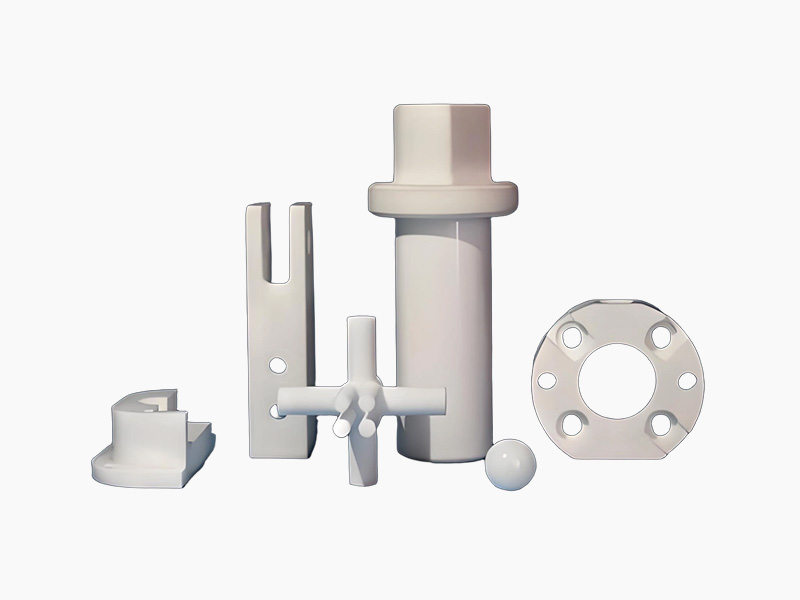
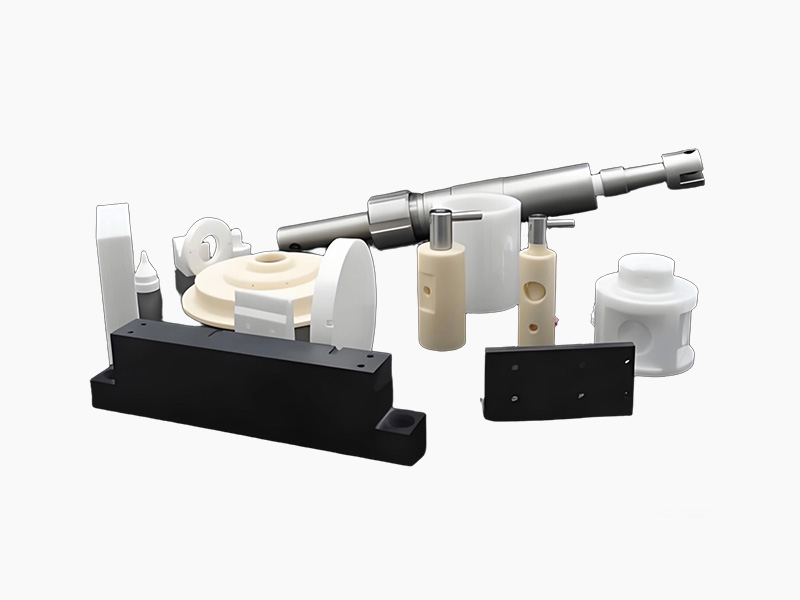
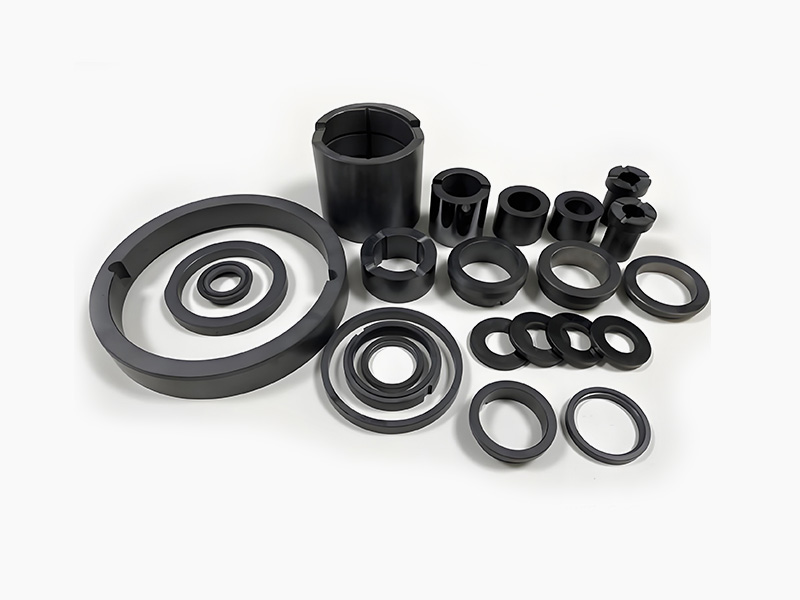
Common parts include mechanical seal faces and rings, bearing balls (G3-G20), pump shaft sleeves, valve balls and seats, spray nozzles, pipeline liners, grinding media, wire drawing dies, cutting tool inserts, and custom-shaped structural components - all engineered for abrasive, erosive, corrosive, and adhesive wear environments.
Q4: Which industries use Si₃N₄ wear-resistant components?
Key industries include mining & mineral processing (slurry pumps, hydrocyclones), chemical processing (seals, valves), automotive & EV (motor bearings), oil & gas (downhole tools), aerospace (turbine bearings), energy (wind turbines), pulp & paper (forming foils), and steel manufacturing (caster bearings).
Q5: How does Si₃N₄ compare to SiC and Al₂O₃ for wear applications?
While SiC has higher hardness, Si₃N₄ offers 2× higher fracture toughness, making it far more resistant to impact and chipping. Si₃N₄ also has 3-5× better thermal shock resistance than Al₂O₃. In combined wear-corrosion environments, Si₃N₄ typically outperforms both SiC and Al₂O₃ due to its superior toughness and corrosion resistance - delivering 3-5× longer service life in real-world conditions.