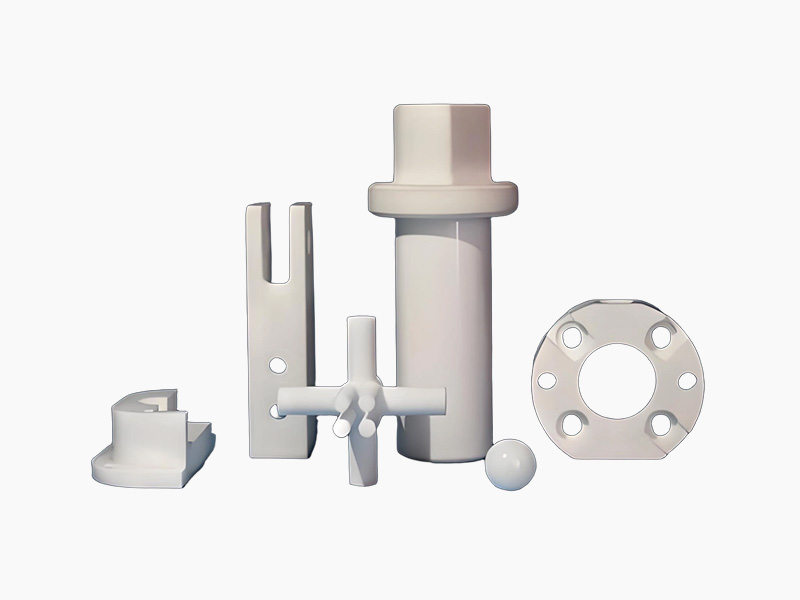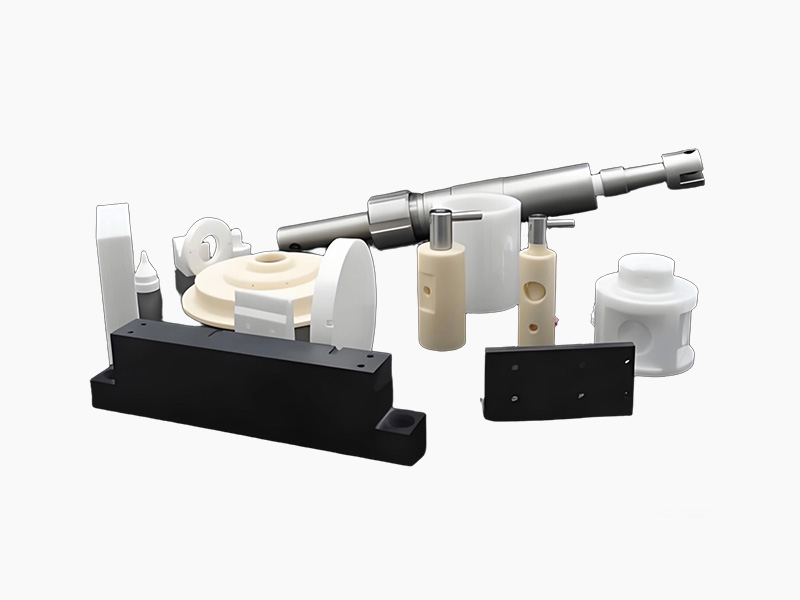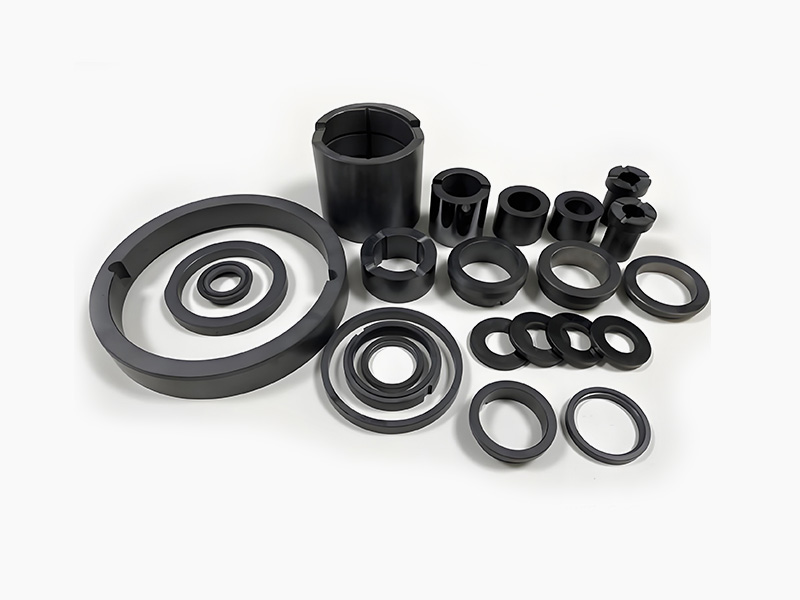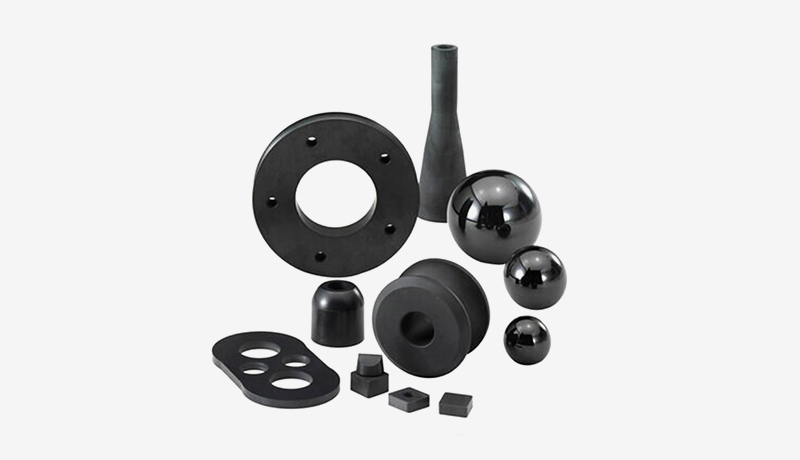
Introduction to Alumina Electronic Ceramics and Insulating Ceramics:
Basic Characteristics of Alumina Electronic Ceramics
Alumina electronic ceramics are an important functional ceramic material with the following core characteristics:
1. Mechanical properties: Bending strength can reach 250-500 MPa (for hot-pressed products), Mohs hardness reaches level 9, and it has excellent wear resistance.
2. Thermal properties: Sintering temperature reaches 1650-1990℃, long-term operating temperature can reach 1600℃, and the thermal expansion coefficient is as low as 7.2 × 10⁻⁶/℃.
3. Electrical properties: Volume resistivity > 10¹² Ω·cm, dielectric strength 15 kV/mm, and stable dielectric loss at high frequencies (tanδ < 0.0004).
4. Chemical stability: Resistant to acid and alkali corrosion, with superior chemical inertness compared to metal materials.
Applications in the Communication Electronics Field
Alumina electronic ceramics play a crucial role in the field of communication electronics:
1. 5G Communication Equipment
• Used in base station power amplifiers (PA) and filters.
• High thermal conductivity (24-28 W/m·K) solves the heat dissipation problem of 5G equipment.
• Low dielectric loss ensures high-frequency signal transmission quality.
2. Radio Frequency/Microwave Systems
• Satellite communication TR modules.
• Radar antenna radomes.
• Double-sided silver plating reduces signal loss.
3. Semiconductor Manufacturing
• Wafer processing trays and diffusion furnace components.
• Integrated circuit substrates and packaging materials.
• Vacuum electron tube envelopes.
Performance Characteristics of Alumina Insulating Ceramics
Core Performance:
• High-temperature insulation: Maintains excellent insulation performance at 1600℃.
• High-frequency stability: Stable dielectric constant, suitable for high-frequency circuits.
• Environmental resistance: Resistant to moisture and chemical corrosion.
Industrial Application Fields
1. Electronics Industry:
• LED packaging substrates (COB technology).
• Insulation and heat dissipation for new energy vehicle electronic control modules.
• Power device packaging for photovoltaic inverters.
2. Mechanical Manufacturing:
• Ceramic cutting tools (Al₂O₃-carbide composite tools).
• Wear-resistant components (bearings, seals, valves).
• Industrial molds (wire drawing dies, pencil lead extrusion dies).
3. High-Temperature Industries:
• Metallurgy: Steel casting sliding nozzles, crucibles for rare metal smelting.
• Chemical Industry: Reactor pipes, pump components.
• Energy: Fuel cell bipolar plates, nuclear reactor insulation components.
4. Other Special Applications:
• Medical: Artificial joints, dental implants.
• Aerospace: High-temperature sensor protective covers.
• Military: Armor protection materials.
Performance Characteristics of Alumina Insulating Ceramics
1. Alumina insulating ceramics can be classified into different grades based on their Al₂O₃ content:
Al2O3 content | type | Main Features | Application Scenarios |
75% | High-alumina porcelain | Basic insulation performance | General industrial insulation components |
96% | Corundum porcelain | High mechanical strength, excellent insulation properties. | Electronic component packaging |
99%+ | Pure corundum porcelain | The performance is close to that of sapphire single crystals. | High-end integrated circuits |
Supports custom specifications.