Vickers Hardness: 1550-1800 HV.
Maximum Operating Temperature: 1500-1800℃.
Bending Strength: ≥395MPa (high-purity type).
Dielectric Breakdown Strength: 18 KV/mm.
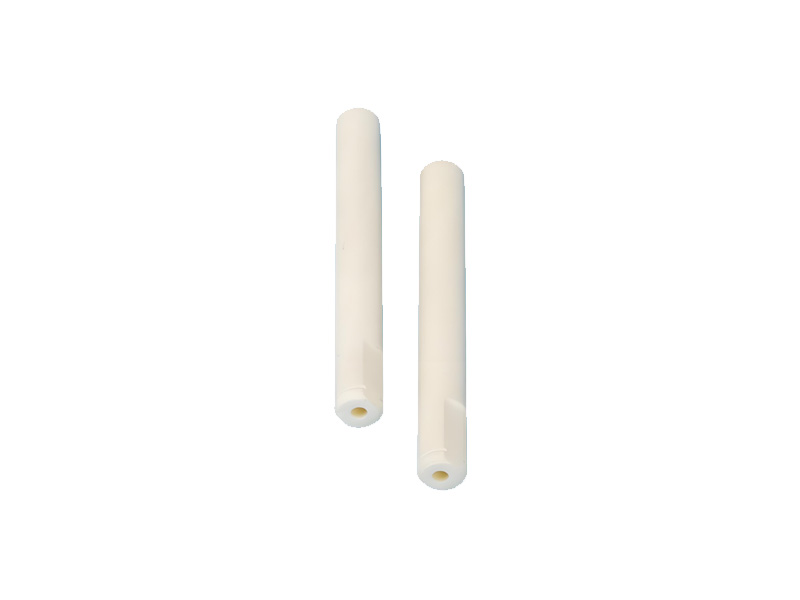
Alumina ceramic rods are a type of high-performance ceramic material primarily composed of aluminum oxide (Al₂O₃), belonging to the category of engineering ceramics. Its main characteristics include:
1. Main component: Aluminum oxide (Al₂O₃), with a purity typically ranging from 75% to 99.9%. Higher purity results in superior performance.
2. Crystal structure: The main crystalline phase is the high-temperature stable α-Al₂O₃ (corundum structure), which gives the material high hardness and corrosion resistance.
3. Preparation process: High-purity alumina raw material is obtained by chemically treating bauxite raw materials to remove oxides such as silicon, iron, and titanium.
Physical and Chemical Properties
1. Physical properties:
Hardness: Mohs hardness 9, second only to diamond.
Melting point: 2054℃.
Density: 3.65-3.95 g/cm³.
Coefficient of thermal expansion: Low, similar to metals.
Insulation performance: Can withstand voltages above 800V per millimeter of thickness.
Thermal conductivity: 15.9-31.4 W/m·K (25-300℃).
2. Chemical Properties:
• Excellent chemical stability and resistance to acid and alkali corrosion.
• Does not readily react with common gases such as oxygen and nitrogen at room temperature.
• Exhibits amphoteric properties, reacting with both strong acids and strong bases.
3. Common specifications for alumina ceramic rods include:
• Diameter range: 3mm to 280mm, common sizes include Φ3.0mm, Φ4mm, etc.
• Length: Customizable, common lengths include 40mm, 80mm, etc.
Main Application Areas
Thanks to their excellent properties, alumina ceramic rods have a wide range of applications in various fields:
• Electronics industry: Integrated circuit substrates, high-frequency insulating materials, and components for semiconductor processing equipment.
• Mechanical industry: Ceramic bearings, seals, wear-resistant components, and robotic arms.
• Chemical and pharmaceutical industries: Corrosion-resistant pipe linings and reaction vessels.
• Aerospace: Vacuum switch tube casings, sealing rings, and other components.
• Medical field: Artificial joints, dental restoration materials, and orthopedic implants.
• High-end curling iron coatings.
• Heating elements in household heating equipment.
Supports custom specifications.