



01
Power Electronics
Used for high-power electronic modules including IGBT and MOSFET modules, where thermal management, electrical insulation and mechanical reliability are important.

Vickers hardness (Hv50):HV0.5>1550
Elastic modulus (20°C):Gpa 290
Bending strength(20°C):Mpa >600
Compressive strength (20°C):Mpa 2500
Fracture toughness (20°C):Mpa·m¹/² >6.0
High-performance silicon nitride ceramic substrates designed for high-power, high-reliability and high-temperature electronic applications where thermal management, mechanical strength, thermal shock resistance and electrical insulation are critical.
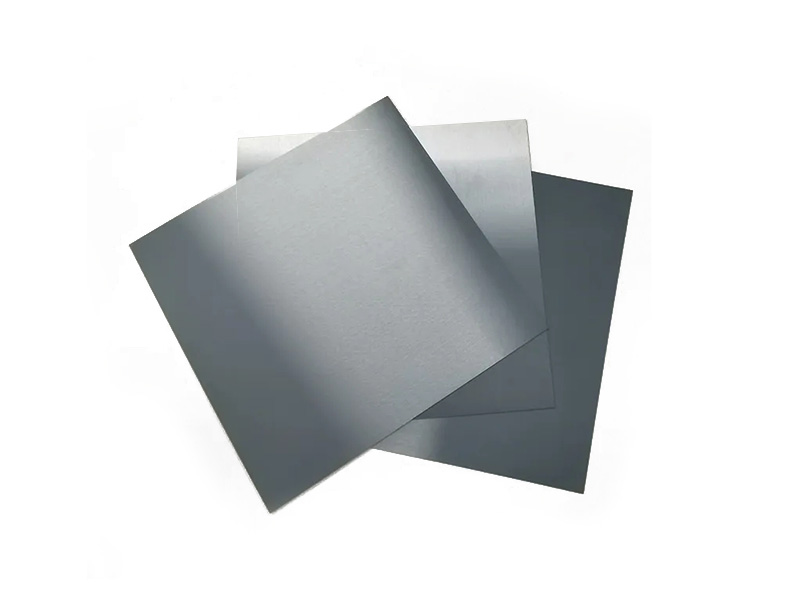
A Silicon Nitride Ceramic Substrate is an engineered electronic ceramic component made from silicon nitride (Si₃N₄). It serves as a structural, insulating and thermal-management platform for high-power electronic devices and modules.
Unlike a conventional structural ceramic component, a silicon nitride substrate must simultaneously satisfy thermal, mechanical and electrical requirements. It is therefore particularly relevant to power semiconductor packaging, high-temperature electronics and applications in which repeated thermal cycling can place significant stress on the substrate.
The supplied source information describes Si₃N₄ substrates as suitable for applications requiring a balance of thermal conductivity, mechanical strength and thermal shock resistance. The material is also described as providing electrical insulation, chemical stability and a thermal expansion behavior compatible with SiC-based power devices.
Depending on the application, the substrate can be supplied with different thicknesses, surface finishes, metallized coatings and complex geometries. This makes silicon nitride ceramic substrates suitable for customized electronic packaging and power-module designs.
Silicon nitride provides the material foundation for the substrate's thermal, mechanical and electrical performance. The values below are taken from the supplied document. Because the source states that characteristics vary with manufacturing method, these values should be treated as reference data rather than universal specifications for every Si₃N₄ substrate.
The document introduction reports thermal conductivity of 80-90 W/(m·K), while its material performance table lists 15-20 W/(m·K). The difference should be evaluated against material grade and manufacturing method.
The document introduction gives a thermal expansion coefficient of approximately 3.2 × 10⁻⁶/°C, while the performance table reports greater than 3.1 × 10⁻⁶ K⁻¹ over 20-1000°C.
Reference data lists bending strength above 600 MPa and compressive strength of approximately 2500 MPa.
The material performance table gives fracture toughness above 6.0 MPa·m1/2, supporting resistance to cracking under mechanical and thermal stresses.
The supplied performance table reports thermal shock stability of approximately 500°C, an important property for electronic substrates subjected to repeated temperature changes.
The reference data reports volume resistance of 1012 Ω·cm at 20°C and dielectric strength of approximately 1 kV/mm.
The following table organizes the material data supplied in the source document into parameters relevant to electronic substrate design.
| Property | Reference Data | Substrate Relevance |
|---|---|---|
| Color | Gray Black | Typical visual identification of the supplied material |
| Density | >3.2 g/cm³ | Relevant to substrate mass and mechanical design |
| Rockwell Hardness | HRA90 | Indicates high surface hardness |
| Vickers Hardness | >1550 HV0.5 | Supports surface durability and mechanical integrity |
| Elastic Modulus | 290 GPa at 20°C | Relevant to structural stiffness and thermal-mechanical design |
| Bending Strength | >600 MPa at 20°C | Supports thin ceramic substrate mechanical strength |
| Compressive Strength | 2500 MPa at 20°C | Useful for mechanically loaded electronic packages |
| Fracture Toughness | >6.0 MPa·m1/2 | Supports resistance to crack propagation |
| Thermal Conductivity | 15-20 W/(m·K) in performance table; 80-90 W/(m·K) in document introduction | Heat dissipation performance should be confirmed for the selected grade and manufacturing route |
| Thermal Expansion | >3.1 × 10⁻⁶ K-1, 20-1000°C | Important for thermal compatibility and cycling |
| Thermal Shock Stability | ΔT 500°C | Supports resistance to rapid temperature changes |
| Maximum Operating Temperature in Air | 1200°C | Reference value for high-temperature environments |
| Dielectric Strength | 1 kV/mm | Electrical insulation parameter |
| Volume Resistance at 20°C | 1012 Ω·cm | Supports electrical isolation in electronic packaging |
Technical note: The supplied document states that the above information is for comparison only and that exact characteristics vary depending on manufacturing method. Final product specifications should therefore be confirmed against the selected manufacturing route and customer requirements.
Si₃N₄ substrates are designed to provide a thermal path for high-power electronic devices, helping transfer heat away from active components.
High bending strength, compressive strength and fracture toughness provide structural support for electronic packaging.
The reported thermal shock stability makes Si₃N₄ suitable for applications exposed to repeated or rapid temperature changes.
High volume resistance and dielectric strength allow the ceramic substrate to act as an electrical insulating platform in power electronic assemblies.
The source describes the thermal expansion behavior of Si₃N₄ as close to SiC, making it relevant to third-generation semiconductor power devices.
Silicon nitride provides chemical stability and corrosion resistance for electronic systems operating in demanding environments.
The supplied document specifically identifies thickness, surface finish, metallized coating and complex geometry as customizable substrate parameters. Final dimensions and electrical or thermal requirements should be determined according to the electronic package design.
Custom thickness can be specified according to mechanical strength, thermal path and electronic packaging requirements.
Surface finish can be selected according to mounting, metallization, bonding and package-interface requirements.
The source identifies Au, Ag, Cu and Al as available metallized coating options.
Complex geometries can be developed for specialized electronic packaging and device integration requirements.
Material characteristics should be matched to the required thermal, mechanical and electrical performance.
Dielectric strength and volume resistance can be considered when defining the substrate specification.
Metallization is an important customization option for silicon nitride ceramic substrates used in electronic packaging. According to the supplied document, substrates can be provided with gold (Au), silver (Ag), copper (Cu) and aluminum (Al) metallized coatings.
Available as a specified metallization option for electronic substrate designs.
Can be specified where silver-based metallization is required by the package design.
Suitable for substrate designs requiring copper metallized structures.
Available as another metal coating option identified in the source document.
Used for high-power electronic modules including IGBT and MOSFET modules, where thermal management, electrical insulation and mechanical reliability are important.
Applicable to vehicle power electronics such as motor drives and inverters, where compact thermal management and resistance to thermal cycling are relevant.
Used in power conversion equipment such as EV charging stations and solar inverters, where electronic components can generate significant heat.
Suitable for selected high-reliability electronic packaging applications where thermal cycling, mechanical integrity and electrical insulation are required.
The source identifies high-temperature sensors and RF components as industrial applications for Si₃N₄ ceramic substrates.
Silicon nitride substrates are relevant to advanced semiconductor packaging and third-generation SiC power-device applications requiring thermal, mechanical and electrical performance.
IGBT and MOSFET power module packaging.
Motor drives and inverter assemblies for electric and hybrid vehicles.
Power conversion equipment used in renewable energy systems.
High-power charging systems requiring thermal and electrical management.
Selected RF and high-frequency electronic components.
Sensor packaging and industrial electronic systems exposed to elevated temperatures.
The supplied document compares Si₃N₄ with aluminum nitride (AlN). According to that source, AlN may provide higher thermal conductivity in some applications, while Si₃N₄ is described as having advantages in mechanical strength, fracture toughness, thermal shock resistance and compatibility with SiC devices.
| Comparison Point | Si₃N₄ According to Source | Application Significance |
|---|---|---|
| Mechanical Strength | High mechanical strength; source states an advantage over AlN | Useful for mechanically demanding electronic packages |
| Fracture Toughness | Source describes higher fracture toughness than AlN | Helps address cracking risks under mechanical or thermal stress |
| Thermal Shock | Excellent thermal shock resistance | Relevant to repeated thermal cycling |
| SiC Compatibility | Source describes closer CTE matching with SiC | Useful for third-generation SiC power-device packaging |
| Thermal Conductivity | Source notes that AlN can have higher thermal conductivity | Material selection should consider the complete thermal-mechanical design |
The supplied document does not provide a step-by-step manufacturing flow. The following section therefore describes a general engineering production sequence for custom Si₃N₄ substrates rather than presenting it as a process copied from the source document.
Select the silicon nitride material system according to thermal, mechanical, electrical and dimensional requirements.
Prepare and condition the ceramic powder to obtain suitable forming and densification characteristics.
Form the ceramic body according to the required substrate dimensions and geometry.
Densify the ceramic body using a controlled sintering route selected for the required material characteristics.
Grind and finish the substrate to achieve the specified dimensions, flatness, surface condition and geometry.
Process the surface according to the requirements of mounting, metallization and electronic packaging.
Apply the specified Au, Ag, Cu or Al metallized coating when required by the electronic package design.
Inspect dimensions, surface condition and application-specific requirements before delivery.
Define the device heat generation, thermal path and required heat dissipation performance.
Consider heating and cooling cycles because repeated thermal expansion and contraction can influence package reliability.
Substrate thickness, geometry, mounting method and package structure should be considered together.
Dielectric strength and volume resistance should be matched to the voltage and insulation requirements of the electronic assembly.
Select Au, Ag, Cu or Al metallization according to the electrical package architecture and bonding requirements.
Surface finish and dimensional accuracy should be specified according to the substrate's mounting and metallization requirements.
XIAMEN HUACIJULI provides engineering-oriented silicon nitride ceramic component solutions for customized applications. For ceramic substrates, the material, geometry, surface condition and metallization requirements can be evaluated according to the customer's application.
Focused material selection for silicon nitride ceramic applications requiring thermal, mechanical and electrical performance.
Substrate dimensions and complex geometries can be developed according to engineering drawings.
Surface finish can be considered as part of the overall substrate design rather than treated as an isolated parameter.
The supplied product information identifies Au, Ag, Cu and Al as metallization options.
Material and substrate configuration can be considered together with thermal, electrical and mechanical requirements.
Custom silicon nitride substrate components can be developed from customer drawings and technical specifications.
For a custom Si₃N₄ substrate quotation, the following information helps define the material and component requirements:
1. Substrate dimensions: length, width, thickness and overall geometry.
2. Thermal requirements: required thermal conductivity, operating temperature and thermal cycling conditions.
3. Electrical requirements: insulation, dielectric strength and volume resistance requirements.
4. Mechanical requirements: bending strength, fracture toughness, mounting stress and structural requirements.
5. Surface finish: required surface condition for bonding, mounting or metallization.
6. Metallization: Au, Ag, Cu or Al coating requirements where applicable.
7. Application: power module, EV inverter, renewable energy, aerospace, RF or industrial electronics.
A Silicon Nitride Ceramic Substrate is a Si₃N₄ ceramic platform used in electronic packaging and high-power electronic applications. It combines thermal management, mechanical support and electrical insulation functions.
Silicon nitride provides a combination of thermal performance, mechanical strength, fracture toughness, thermal shock resistance and electrical insulation. These properties are relevant to high-power and high-reliability electronic packaging.
The supplied document reports two thermal-conductivity references: 80-90 W/(m·K) in its introduction and 15–20 W/(m·K) in its detailed performance table. The document also states that exact characteristics vary with manufacturing method, so the applicable value should be confirmed for the selected material and production route.
The supplied performance table lists bending strength above 600 MPa, compressive strength of 2500 MPa, fracture toughness above 6.0 MPa·m¹/², elastic modulus of 290 GPa, Rockwell hardness HRA90 and Vickers hardness above 1550 HV0.5.
The supplied performance table gives a maximum operating temperature in air of approximately 1200°C. Actual allowable operating temperature depends on the material, geometry, atmosphere, thermal cycling and application conditions.
Yes. The supplied document identifies Au, Ag, Cu and Al as available metallized coating options for customized silicon nitride substrates.
Yes. The supplied document specifically identifies different thicknesses, surface finishes, metallized coatings and complex geometries as customizable substrate parameters.
The supplied document describes the thermal expansion behavior of Si₃N₄ as closely matched to SiC, which can be advantageous for thermal-mechanical compatibility in third-generation semiconductor power-device applications.
A technical drawing is preferred. Important information includes substrate dimensions, thickness, thermal requirements, electrical insulation requirements, surface finish, metallization, operating temperature and application environment.
No. The source document explicitly states that its information is for comparison and that exact characteristics vary depending on manufacturing method. Final values should be confirmed for the selected material, manufacturing process and component specification.
Product: Silicon Nitride Ceramic Substrate
Material: Silicon Nitride (Si₃N₄)
Primary function: Thermal-management, mechanical-support and electrical-insulation platform for electronic devices and power modules.
Key material characteristics: High mechanical strength, fracture toughness, thermal shock resistance, electrical insulation, chemical stability and application-dependent thermal conductivity.
Typical applications: IGBT modules, MOSFET modules, EV motor drives, EV inverters, EV charging stations, solar inverters, aerospace electronics, high-temperature sensors and RF components.
Customization: Thickness, surface finish, metallized coating and complex geometry.
Metallization options identified in the source: Au, Ag, Cu and Al.
Send your substrate drawing, dimensions, thermal requirements, surface requirements or metallization specifications to XIAMEN HUACIJULI for engineering evaluation.
Item | Unit | Si3N4 |
Physical Property | ||
Color | \ | Gray Black |
Density | g/cm³ | >3.2 |
Mechanical properties | ||
Rockwell hardness | HRA90 | |
Vickers hardness (Hv50) | HV0.5 | >1550 |
Elastic modulus (20°C) | Gpa | 290 |
Bending strength(20°C) | Mpa | >600 |
Compressive strength (20°C) | Mpa | 2500 |
Fracture toughness (20°C) | Mpa·m¹/² | >6.0 |
Thermal properties | ||
Thermal conductivity | W/(m·K) | 15-20 |
Coefficient of thermal expansion (20°C-1000°C) | 10⁻⁶K⁻¹ | >3.1 |
Thermal shock stability | △T°C | 500 |
Specific heat capacity | KJ/Kg.K | 700 |
Maximum operating temperature (in air) | °C | 1200 |
Electrical properties | ||
Dielectric strength (insulation strength) | KV/mm | 1 |
Volume resistance (20°C) | Ω.cm | 10^12 |