




When it comes to selecting spherical components for industrial applications, the choice between silicon nitride balls and traditional steel balls is a critical one. Both materials have their strengths, but silicon nitride balls have emerged as a superior option for many demanding applications due to their unique properties. This article provides a comprehensive comparison between silicon nitride balls and steel balls, highlighting the key differences in performance, durability, and suitability for various industries.
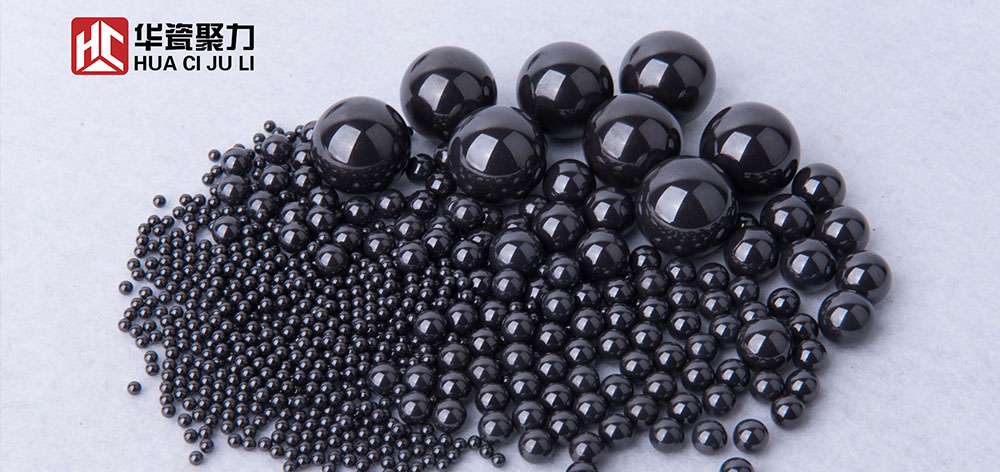
One of the most significant differences between silicon nitride balls and steel balls is their density. Silicon nitride balls have a density of approximately 3.2 g/cm³, which is 58% lighter than steel balls (7.6 g/cm³). This lightweight nature makes silicon nitride balls ideal for high-speed applications, such as machine tool spindles and turbomachinery, as they reduce centrifugal load on the bearing raceway. This not only improves the efficiency of the equipment but also extends the service life of the bearings by reducing wear and tear.
Hardness is another area where silicon nitride balls outperform steel balls. Silicon nitride has a Vickers hardness of around 1600 HV, compared to 700 HV for steel. This higher hardness makes silicon nitride balls much more resistant to wear, scratches, and deformation, even under heavy loads. As a result, silicon nitride balls have a service life that is up to 10 times longer than steel balls in many applications, reducing maintenance costs and downtime.
Thermal performance is a key advantage of silicon nitride balls. They can operate at temperatures up to 1200°C, while steel balls begin to lose their mechanical properties at around 320°C. This makes silicon nitride balls suitable for high-temperature applications, such as gas turbines, exhaust systems, and industrial furnaces, where steel balls would quickly fail. Additionally, silicon nitride has a low coefficient of thermal expansion (3 × 10⁻⁶ /K), which means it expands and contracts less with temperature changes, ensuring dimensional stability in extreme environments.
Corrosion resistance is another critical difference. Steel balls are prone to rust and corrosion when exposed to moisture, acids, or bases, which limits their use in harsh environments. Silicon nitride balls, however, are highly resistant to corrosion and do not rust, making them ideal for chemical processing, marine applications, and medical devices. They are also electrically insulating and non-magnetic, which is a significant advantage in electronic and medical applications where magnetic interference or electrical conductivity could be problematic.
While silicon nitride balls offer numerous advantages over steel balls, they do come with a higher initial cost. However, the longer service life, reduced maintenance, and improved efficiency often offset this cost in the long run. For applications where performance, durability, and reliability are critical, silicon nitride balls are the clear choice.