




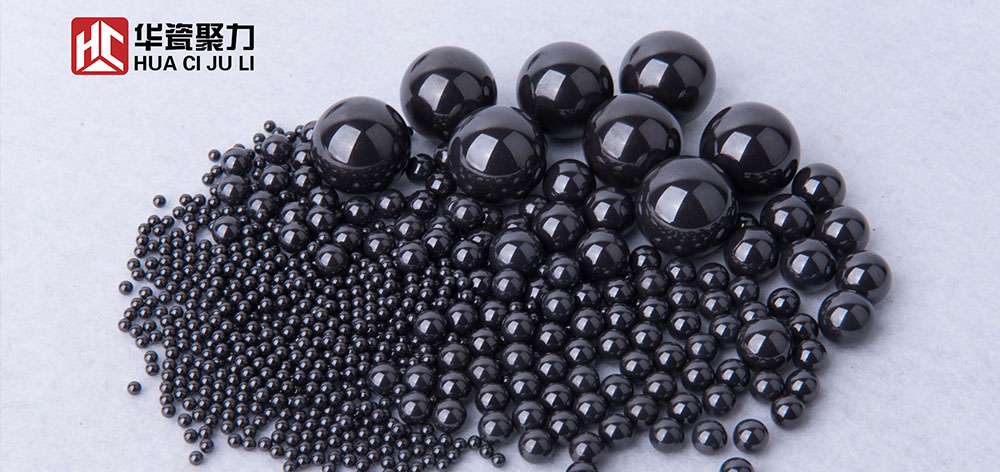
Cryogenic industrial equipment such as liquid nitrogen storage tanks, cold chain compressors and aerospace low-temperature test cabins need components that can resist extreme low temperature. Traditional metal balls are prone to cold brittleness and cracking, while silicon nitride balls have excellent low-temperature toughness and become the preferred low-temperature rolling components.
Cold brittleness is the biggest defect of metal materials. When the temperature drops below minus 40℃, the toughness of steel decreases sharply, and impact load will cause brittle fracture. Silicon nitride ceramic has stable crystal structure, no cold brittleness phenomenon at minus 196℃, and maintains mechanical toughness.
Dimensional stability in low temperature is prominent. Metal materials shrink obviously in low temperature, resulting in bearing gap change and operation jitter. The low thermal expansion coefficient of silicon nitride ensures tiny dimensional change, keeping bearing running precision in ultra-low temperature environment.
Low-temperature corrosion resistance is another advantage. Cryogenic equipment is easy to condense water vapor to form frost and dew. Metal balls rust rapidly in humid low-temperature environment. Silicon nitride balls are inert to water and oxygen, no oxidation and corrosion.
Lubrication adaptability is strong. Low-temperature lubricating oil has high viscosity and poor fluidity. The self-lubricating property of silicon nitride balls reduces dependence on lubricants. It can run stably in low-viscosity low-temperature oil.
With the development of cold chain logistics and cryogenic chemical industry, the demand for low-temperature resistant silicon nitride balls is increasing year by year. It has become an indispensable part of modern low-temperature industrial systems.