




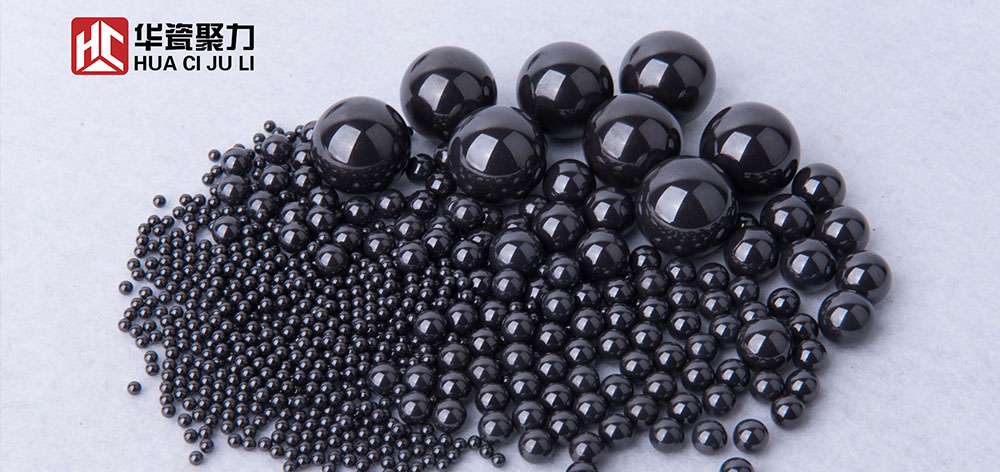
In the mass production process of silicon nitride balls, defects such as surface cracks, internal pores, dimensional deviation and spherical deformation inevitably appear. Professional defect screening methods can effectively eliminate unqualified products and ensure the stability of industrial application.
Surface macroscopic defects include scratches, pits, peeling and black spots. Workers use high-definition magnifying glass and appearance sorting machine for visual inspection. Balls with obvious surface defects are directly eliminated to avoid friction damage during operation.
Internal hidden cracks are the most dangerous defect. Cracks cannot be observed by naked eyes, which will cause sudden ball breakage under load. Ultrasonic flaw detection equipment emits high-frequency sound waves to detect internal crack defects, realizing non-destructive testing.
Internal pore defects are caused by insufficient sintering. Excessive pores will reduce hardness and toughness. Density weighing method is adopted for screening; balls with density lower than the standard value are judged as unqualified products with loose interior.
Dimensional and spherical defects are detected by automatic sorting instrument. High-precision laser measuring instrument records diameter data in real time, eliminating products with excessive tolerance and poor sphericity.
Qualified silicon nitride balls need to pass appearance inspection, ultrasonic flaw detection, density detection and dimensional screening. Strict multi-process screening ensures that each batch of products meets industrial application standards.