High-temperature stability: Performance remains essentially unchanged at 1600℃, superior to reaction-bonded silicon carbide.
Thermal shock resistance: Able to withstand rapid temperature changes and is not easily cracked by thermal shock.
Mechanical properties: Mohs hardness of 9, excellent wear resistance.
Chemical inertness: Inert to most chemical media, suitable for harsh environments.
Cost-effectiveness: Lower equipment investment and operating costs compared to pressure sintering processes.
Ⅰ. Introduction to Silicon Carbide Structural Components:
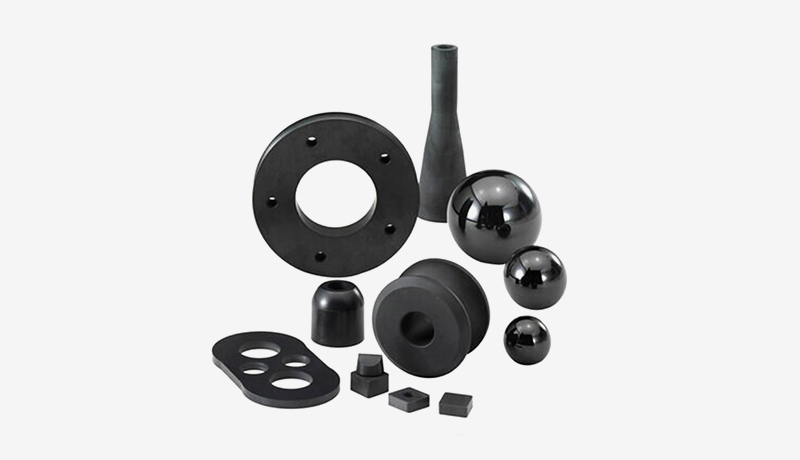
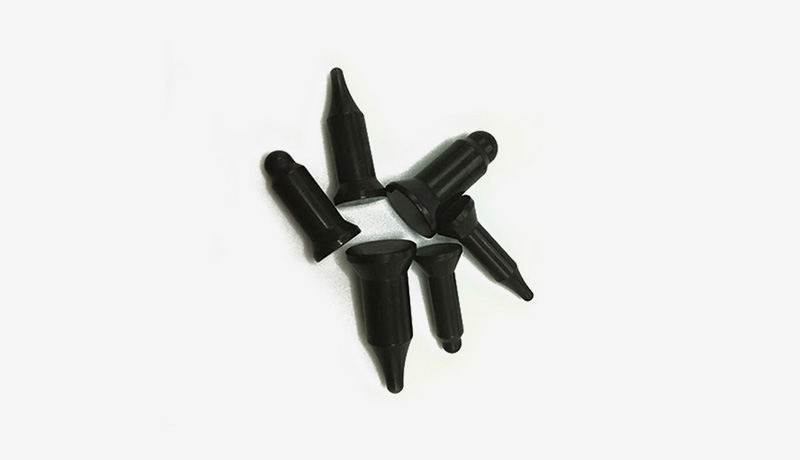
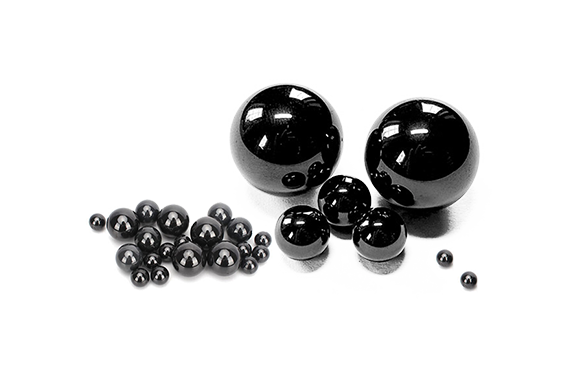
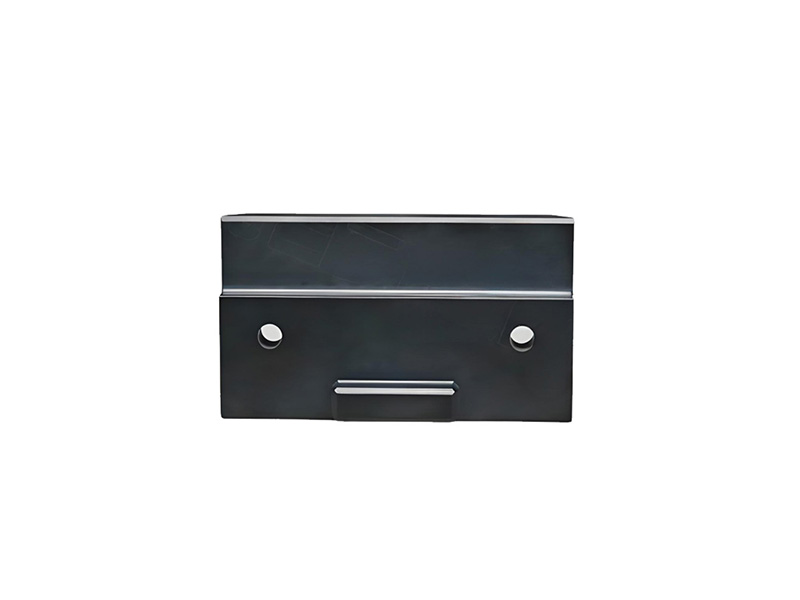
Pressureless sintered silicon carbide structural components are ceramic materials formed by densifying silicon carbide powder through a high-temperature sintering process. Their key feature is the ability to form high-strength, high-thermal-conductivity ceramic structural components without the need for external pressure during sintering. This material possesses the following core characteristics:
1. High Density: Density exceeds 98% of the theoretical value, with a dense crystal structure and smooth surface.
2. High Strength: High bending and compressive strength, capable of withstanding significant mechanical loads.
3. High Temperature Resistance: Can operate stably for extended periods at temperatures up to 1600℃, with short-term temperature resistance up to 2000℃.
4. High Thermal Conductivity: Thermal conductivity reaches 120-200 W/(m·K), 1.5 times that of copper.
5. Corrosion Resistance: Chemically inert to strong acids (such as hydrofluoric acid), strong bases, molten salts, and organic solvents.
6. Low Thermal Expansion Coefficient: Only 1/3 that of metals, capable of withstanding rapid temperature changes of 300℃/min.
Ⅱ. Characteristics of the Production Process
The pressureless sintering process has the following significant characteristics:
1. Simple process: Compared to pressure sintering, the pressureless sintering process uses simpler equipment, is easier to operate, and has lower costs.
2. High purity: Fewer impurities are introduced during the sintering process, resulting in high-purity silicon carbide products.
3. Fine grain size: Grain growth is slower, resulting in smaller grain sizes, which is beneficial for improving mechanical and thermal conductivity properties.
4. Flexible shapes: Complex shapes of silicon carbide products can be manufactured, overcoming limitations in product shape and size.
5. Environmentally friendly and energy-saving: It does not require high-pressure equipment, has lower energy consumption, and the production process is more environmentally friendly.
Ⅰ.Application areas
Silicon carbide sintered structural components are widely used in various industrial fields due to their excellent properties:
Application areas | Specific application scenarios | Advantages reflected |
chemical industry | Heat exchangers, corrosion-resistant components, reactor linings | Resistant to strong corrosion, extending service life by more than 8 years |
Electric power industry | Boiler flue gas waste heat recovery equipment | Thermal efficiency 85%, annual fuel cost savings |
Metallurgical industry | High temperature stoves and heat exchange components | Withstands 30MPa high pressure and reduces energy consumption by 12% |
Environmental engineering | Desulfurization equipment, sewage treatment equipment | Hydrophobic surface reduces scaling and is low maintenance |
semiconductor | Wafer carrier, heat treatment components | High purity, no contamination of products |
Machinery manufacturing | Bearings, seals, wear-resistant parts | Wear resistance is 5 times that of metal |
Ⅱ.Technical Parameters
Performance indicators | Parameter value | Remark |
density | >98% theoretical density | nearly completely dense |
thermal conductivity | 120-200W/(m·K) | 1.5 times that of copper |
Bending strength | high | Specific values vary by product |
Maximum operating temperature | 1600℃ | Up to 2000℃ in short term |
Thermal expansion coefficient | 4.7×10⁻⁶/℃ | Only 1/3 of metal |
Corrosion resistance | annual corrosion rate | -- |
Supports custom specifications.