




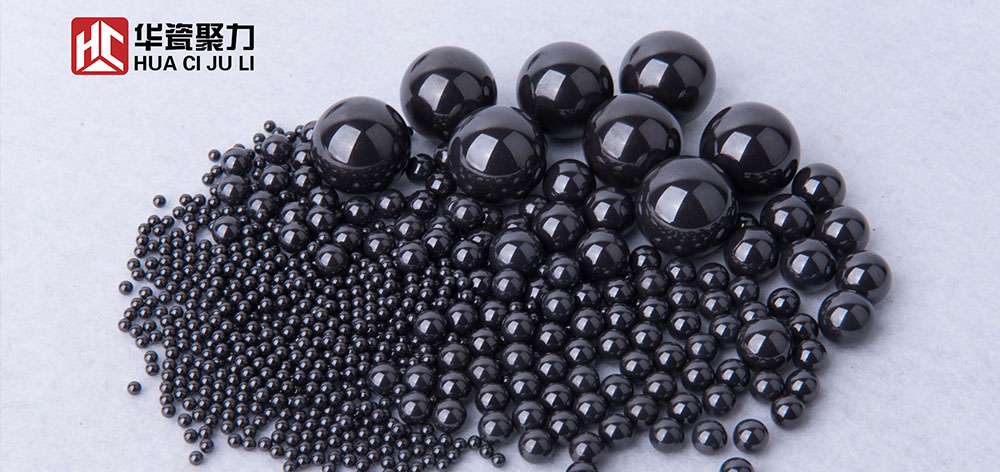
Temperature is one of the key environmental factors affecting the service life of rolling components. Unlike metal balls that fail easily under high temperature, silicon nitride balls have excellent high-temperature stability. Understanding the temperature influence rule can maximize the service life of silicon nitride balls in different thermal environments.
Under normal temperature (minus 20℃ to 80℃), silicon nitride balls maintain stable mechanical properties. The hardness, friction coefficient and dimensional accuracy hardly change. In conventional workshop environment, its wear rate is extremely low, and the service life is far longer than steel balls. It is the best choice for daily industrial transmission equipment.
In medium temperature environment (80℃ to 600℃), metal balls begin to soften and accelerate wear. Stainless steel balls will produce thermal oxidation discoloration and surface peeling. Silicon nitride balls have no oxidation reaction, and the internal crystal structure remains stable. The friction heat generated by high-speed operation will not cause permanent structural damage.
Under ultra-high temperature (600℃ to 1200℃), silicon nitride still keeps high hardness and compression resistance. It can work continuously in high-temperature furnaces, engine exhaust systems and gas turbine bearings. Only when the temperature exceeds 1400℃ will the crystal structure gradually soften, which is far higher than the limit temperature of metal materials.
Low temperature resistance is also prominent. In low-temperature environment below minus 50℃, many brittle materials are prone to cracking. Silicon nitride has good low-temperature toughness, no cold brittleness phenomenon, and stable dimensional accuracy. It is widely used in cryogenic refrigeration equipment and polar exploration mechanical parts.
Although silicon nitride has excellent temperature adaptability, rapid temperature alternation should be avoided. Instant heating and cooling will produce tiny thermal stress inside the ball. Long-term extreme temperature alternation will cause micro-cracks. Reasonable thermal protection can further extend the service life of silicon nitride balls.