Advanced Ceramic Bearing Components
Ceramic Bearings
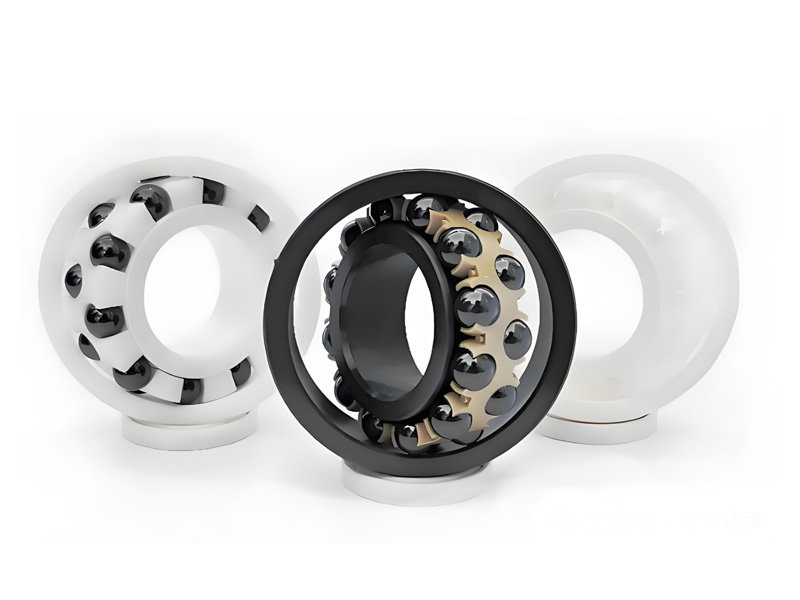
High-performance ceramic bearings manufactured with zirconium oxide (ZrO₂), silicon nitride (Si₃N₄), or silicon carbide (SiC) ceramic rings and rolling elements for demanding temperature, corrosion, electrical, vacuum, magnetic and high-speed applications.
XIAMEN HUACIJULI provides ceramic bearing solutions using different ceramic materials and retainer options according to operating temperature, speed, chemical environment, electrical requirements, vacuum conditions and bearing design.
What Are Ceramic Bearings?
Ceramic bearings are rolling bearings whose rings and rolling elements are manufactured from advanced ceramic materials such as zirconium oxide (ZrO₂), silicon nitride (Si₃N₄), or silicon carbide (SiC). Compared with conventional steel bearings, ceramic bearings can provide a combination of corrosion resistance, high-temperature capability, electrical insulation, non-magnetic behavior, wear resistance, dimensional stability and high-speed performance.
Depending on the bearing design and application, ceramic bearings can be supplied as full-ceramic bearings or with ceramic rolling elements combined with other bearing components. XIAMEN HUACIJULI supports ceramic bearing configurations for high-temperature, corrosion-resistant, anti-magnetic, electrically insulating and vacuum applications.
Ceramic Bearing Materials: ZrO₂, Si₃N₄ and SiC
The ceramic material strongly influences bearing density, hardness, toughness, thermal behavior, electrical characteristics, corrosion resistance and suitable operating conditions. The three principal ceramic systems used by XIAMEN HUACIJULI are zirconia, silicon nitride and silicon carbide.
ZrO₂
Zirconium Oxide Ceramic
Zirconia is valued for its relatively high fracture toughness compared with many conventional technical ceramics, good wear resistance, corrosion resistance and relatively low thermal conductivity.
● Typical density: approximately 5.6-6.1 g/cm³
● High hardness and wear resistance
● Good fracture toughness for a technical ceramic
● Excellent resistance to many corrosive media
● Electrical insulating behavior
● Suitable for selected corrosion-resistant and electrically insulating bearing applications
Typical values are reference ranges for engineering ceramics and vary with zirconia grade, stabilizer system and manufacturing process.
Si₃N₄
Silicon Nitride Ceramic
Silicon nitride combines low density, high hardness, high strength, good fracture toughness, low friction characteristics and strong thermal stability. It is widely used for high-speed ceramic rolling elements and demanding bearing systems.
● Typical density: approximately 3.18-3.40 g/cm³
● Typical hardness: approximately 15 GPa
● Typical flexural strength: approximately 680-970 ● MPa for representative grades
● Typical fracture toughness: approximately 6-8.5 MPa·m1/2
● Low density compared with bearing steel
● Excellent wear, thermal-shock and electrical-insulation characteristics
Reference values depend on material grade, sintering route, specimen geometry and test conditions.
SiC
Silicon Carbide Ceramic
Silicon carbide is an extremely hard technical ceramic with high thermal conductivity, strong chemical resistance and excellent high-temperature stability. It is considered for highly abrasive, corrosive and high-temperature bearing environments.
● Typical density: approximately 3.1-3.2 g/cm³
● Very high hardness and abrasion resistance
● Excellent chemical and corrosion resistance
● High thermal conductivity compared with many ceramics
● Strong high-temperature stability
● Suitable for selected extreme wear and corrosive applications
SiC properties vary according to reaction-bonded, pressureless-sintered, hot-pressed or other material systems.
Ceramic Bearing Material Property Data
| Property | ZrO₂ | Si₃N₄ | SiC |
|---|
| Typical Density | ~5.6-6.1 g/cm³ | ~3.18-3.40 g/cm³ | ~3.1-3.2 g/cm³ |
| Hardness | Typically ~1200-1400 HV | Typically ~1400-1800 HV / ~15 GPa | Typically ~2200-2800 HV |
| Fracture / Toughness Characteristics | Relatively high toughness for technical ceramic | Typically ~6-8.5 MPa·m1/2 for representative grades | High hardness with comparatively lower fracture toughness than many zirconia grades |
| Thermal Behavior | Low thermal conductivity; good thermal stability | Good thermal-shock resistance and high-temperature stability | High thermal conductivity and excellent high-temperature stability |
| Electrical Behavior | Electrical insulating | High electrical resistivity; insulating | Electrical behavior depends on grade and purity |
| Corrosion Resistance | Excellent | Excellent against many chemical media | Excellent against many corrosive and abrasive environments |
| Typical Bearing Role | Corrosion-resistant, electrically insulating and specialized bearing systems | High-speed, high-temperature, electrically insulating and precision bearings | High-wear, corrosive and high-temperature specialized bearings |
Engineering note: Values marked as typical are general engineering reference ranges, not guaranteed product specifications. Actual ceramic bearing properties depend on powder purity, ceramic grade, stabilizer system, forming method, sintering process, geometry, machining and test method. Final values should be confirmed against the selected material grade and drawing.
Ceramic Bearings: Detailed Component Properties
Excellent Corrosion Resistance
Zirconia, silicon nitride and silicon carbide can resist many acids, alkalis, solvents and corrosive process media. This makes ceramic bearings suitable for selected chemical, marine, pump and medical equipment environments.
High Rigidity & Dimensional Stability
Technical ceramics generally have a higher elastic modulus than bearing steel. Their low thermal expansion and high stiffness can help maintain bearing geometry and precision when temperature or load conditions change.
Wear Resistance
High hardness and chemical stability provide strong resistance to abrasive and sliding wear. This can be valuable in applications where conventional bearing materials experience rapid surface degradation.
High-Temperature Capability
Ceramic bearing materials can retain useful mechanical and tribological performance at temperatures where conventional lubrication systems or steel bearing components may become limiting factors. Actual operating temperature is application- and retainer-dependent.
Electrical Insulation
Ceramic rings and rolling elements can provide electrical isolation and help reduce the risk of electrical current passing through the rolling contact. This characteristic is important for motors, generators and electrically sensitive equipment.
Non-Magnetic Performance
Ceramic materials are non-metallic and can be used in selected non-magnetic or magnetically sensitive equipment where conventional steel bearing materials are unsuitable.
Low Friction & Lubrication Flexibility
Ceramic rolling elements can offer favorable friction and wear characteristics. Depending on the bearing configuration and environment, lubrication requirements may be reduced or specialized lubrication systems may be used.
High-Speed Potential
Silicon nitride in particular has low density compared with steel, reducing centrifugal and gyroscopic effects at high rotational speeds. This makes ceramic rolling elements suitable for selected high-speed spindle and precision bearing systems.
Ceramic Bearings Component Data
| Bearing Type | Full ceramic bearing or ceramic rolling-element bearing configuration |
| Ring Material | ZrO₂, Si₃N₄, SiC or application-specific ceramic material |
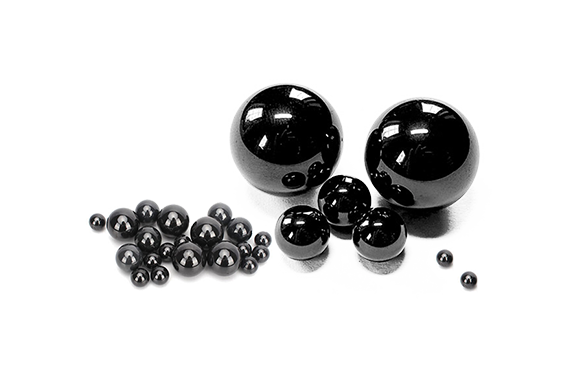
| Rolling Elements | Ceramic balls or ceramic rolling elements according to bearing design |
| Retainer Options | PTFE, PEEK, UPE, PVDF, PA66, SUS304, SUS316 or ceramic retainer materials |
| Temperature Capability | Application-dependent; supplied product information indicates ceramic bearings can operate in environments approaching 1000°C under suitable configurations |
| Corrosion Resistance | High resistance to many acids, alkalis, organic solvents and corrosive process media |
| Electrical Characteristics | Ceramic insulation can be used for electrically isolated bearing applications |
| Magnetic Characteristics | Suitable for selected non-magnetic and magnetically sensitive applications |
| Lubrication | Oil-free or reduced-lubrication designs may be possible depending on load, speed, temperature and bearing configuration |
Ceramic Bearings Specifications
Ceramic bearings can be manufactured according to standard bearing dimensions or application-specific drawings. Because ceramic materials have different thermal, mechanical and machining characteristics from bearing steel, material selection and dimensional requirements should be evaluated together.
1. Bearing Configuration
Full ceramic bearing, hybrid ceramic bearing or customized ceramic rolling-element configuration.
2. Ceramic Material
ZrO₂, Si₃N₄ or SiC selected according to temperature, load, speed, corrosion and electrical requirements.
3. Bearing Size
Bore diameter, outside diameter, bearing width and rolling-element dimensions according to standard or custom design.
4. Retainer
PTFE, PEEK, UPE, PVDF, PA66, SUS304, SUS316 or ceramic retainer depending on operating conditions.
5. Precision Grade
Dimensional tolerance, roundness, waviness, surface finish and running accuracy can be specified according to the application.
6. Operating Conditions
Load, RPM, temperature, atmosphere, lubrication, chemical medium, vacuum level and electrical requirements should be supplied for engineering selection.
Ceramic Bearing Retainer Materials
The retainer is an important part of a ceramic bearing because its temperature and chemical limits may differ from those of the ceramic rings and rolling elements. XIAMEN HUACIJULI can use different retainer materials according to the operating environment.
PTFE PEEK UPE PVDF PA66 SUS304 SUS316 Ceramic
How to Select the Ceramic Bearing Material
| Requirement | Potential Material Direction | Reason to Evaluate |
|---|
| High-speed rotation | Si₃N₄ | Low density, high hardness and favorable high-speed behavior |
| Corrosive chemical environment | ZrO₂ / Si₃N₄ / SiC | Strong chemical resistance; final choice depends on medium and temperature |
| Extreme wear | SiC / Si₃N₄ | Very high hardness and abrasion resistance |
| Electrical insulation | ZrO₂ / Si₃N₄ | Electrical insulating ceramic components |
| High-temperature equipment | Si₃N₄ / SiC | Thermal stability and high-temperature capability |
| Higher toughness requirement | ZrO₂ | Zirconia provides relatively high fracture toughness among advanced ceramics |
Ceramic Bearings Applications: 8 Key Industries
Ceramic bearings are particularly valuable where conventional steel bearings are limited by temperature, corrosion, electrical current, magnetic sensitivity, lubrication or rotational speed.
01
Aerospace
High-speed actuators, precision rotating systems, pumps and specialized aerospace mechanisms where low weight, temperature stability and reliability are important.
02
Semiconductor Manufacturing
Precision equipment, vacuum systems, wafer-processing machinery and other semiconductor manufacturing systems requiring clean, non-magnetic or electrically isolated components.
03
Chemical & Process Equipment
Chemical reactors, pumps, valves and corrosive-fluid transport systems where conventional metallic bearing surfaces may suffer chemical attack.
04
Marine & Offshore
Marine pumps, seawater-related equipment and specialized rotating machinery requiring resistance to moisture, corrosion and harsh environmental conditions.
05
Automotive & Electric Vehicles
Electric vehicle motors, high-speed rotating components and new-energy equipment where electrical insulation, high rotational speed and reduced friction are relevant.
06
High-Speed Spindles & Precision Machinery
Machine-tool spindles, precision rotating equipment and high-speed machinery where low rolling-element mass and dimensional stability are valuable.
07
Medical & Scientific Equipment
Selected medical equipment, laboratory systems, scientific instruments and precision rotating devices requiring corrosion resistance, non-magnetic characteristics or electrical isolation.
08
Energy, Pumps & Metallurgy
Pumps, high-temperature machinery, metallurgical equipment, power systems and specialized rotating assemblies operating under demanding thermal or environmental conditions.
Equipment Using Ceramic Bearings
High-Speed Centrifuges
Vacuum Pumps
Chemical Reactors
Corrosive Fluid Pumps
Semiconductor Equipment
EV Motors
High-Speed Spindles
Precision Rotating Machinery
Ceramic Bearings Manufacturing Process
Manufacturing ceramic bearings requires controlled ceramic powder processing, precision forming, high-temperature densification and diamond-based finishing. Bearing geometry, surface quality and dimensional accuracy must be controlled throughout the production process.
01. Material SelectionSelect ZrO₂, Si₃N₄ or SiC according to load, speed, temperature, corrosion, electrical and magnetic requirements.
02. Powder PreparationPrepare ceramic powders with controlled particle characteristics and appropriate binders or additives for forming.
03. FormingForm bearing rings and rolling elements using suitable ceramic forming processes according to geometry and production requirements.
04. Debinding / Green ProcessingRemove processing additives and perform controlled green machining where required before densification.
05. Sintering & DensificationUse a controlled sintering route appropriate to the selected ceramic material to achieve the required density and mechanical properties.
06. Precision GrindingDiamond grinding and precision machining are used to achieve bearing raceway, bore, outside diameter and rolling-element requirements.
07. Inspection & SortingInspect dimensions, surface condition, geometry and other drawing-defined characteristics before assembly or delivery.
08. Bearing Assembly & PackagingAssemble ceramic components and the selected retainer configuration, then clean, protect and package the finished bearings.
Key Engineering Factors for Ceramic Bearing Design
Load & Contact Stress
Bearing load, contact geometry, preload and impact conditions must be considered because ceramics have different fracture behavior from steel.
Speed & DN Value
Rotational speed, bearing size, lubrication and cage material influence the practical operating limit of a ceramic bearing assembly.
Temperature
The ceramic material may tolerate temperatures beyond the capability of the retainer or lubricant, so the complete bearing system must be evaluated.
Chemical Environment
The actual chemical medium, concentration, temperature and exposure duration should be supplied when selecting the ceramic grade.
Lubrication
Oil-free, dry, grease, oil or specialty lubrication may be considered depending on temperature, speed, load and cleanliness requirements.
Retainer Compatibility
PTFE, PEEK, UPE, PVDF, PA66, stainless steel or ceramic retainers should be selected according to temperature and chemical exposure.
Ceramic Bearing Service Life
The supplied product information states that ceramic bearings may achieve a service life approximately 3-5 times longer than metal bearings under high-temperature and high-speed conditions.
This should be treated as an application-dependent product claim rather than a universal service-life guarantee. Actual bearing life depends on load, speed, temperature, lubrication, contamination, installation, preload, material grade, retainer design and operating environment. Life calculations should be performed for the specific bearing and operating conditions.
Why Choose XIAMEN HUACIJULI for Ceramic Bearings?
Multi-Ceramic Material Capability
Bearing components can be developed using ZrO₂, Si₃N₄ or SiC according to the required operating environment.
Application-Based Material Selection
Material selection considers temperature, speed, load, corrosion, electrical insulation, magnetic sensitivity and lubrication conditions.
Precision Ceramic Processing
Ceramic forming, sintering and precision grinding are coordinated to produce bearing rings and rolling elements.
Customized Bearing Configurations
Bearing geometry, ceramic material, retainer material, precision requirements and operating conditions can be developed according to customer requirements.
Special-Environment Solutions
Solutions can be developed for high-temperature, corrosive, vacuum, electrically insulating, non-magnetic and high-speed environments.
OEM & Custom Development
Customer drawings, samples, bearing dimensions and operating parameters can be used as the basis for customized ceramic bearing development.
Information to Specify Ceramic Bearings
For a ceramic bearing quotation or engineering evaluation, providing the following information helps determine the appropriate ceramic material, bearing structure and retainer:
1. Bearing type and bearing number, if available
2. ore diameter, outside diameter and bearing width
3. Preferred material: ZrO₂, Si₃N₄ or SiC
4. Rotational speed or RPM
5. Radial and axial load
6. Operating temperature and thermal cycling conditions
7. Chemical medium or corrosive environment
8. Vacuum level or atmosphere, if applicable
9. Lubrication method and lubricant type
10. Retainer preference or material requirements
11. Electrical insulation or non-magnetic requirements
12. Drawing, sample, required quantity and dimensional tolerance
Ceramic Bearings FAQ
What are ceramic bearings made of?
Ceramic bearings can use zirconium oxide (ZrO₂), silicon nitride (Si₃N₄) or silicon carbide (SiC) for the rings and rolling elements. Retainers may be made from PTFE, PEEK, UPE, PVDF, PA66, SUS304, SUS316 or ceramic materials.
What is the difference between ZrO₂, Si₃N₄ and SiC ceramic bearings?
ZrO₂ offers relatively high fracture toughness and good corrosion resistance. Si₃N₄ combines low density, high strength, hardness, thermal stability and high-speed suitability. SiC provides extremely high hardness, excellent wear resistance, chemical resistance and high-temperature stability. The best material depends on the specific operating conditions.
Can ceramic bearings operate at high temperatures?
Yes. Ceramic materials have strong high-temperature capabilities. The supplied product information indicates ceramic bearings can operate in environments up to approximately 1000°C under suitable configurations. However, the actual bearing temperature limit is determined by the ceramic material, retainer, lubricant, load, speed, atmosphere and bearing design.
Are ceramic bearings corrosion resistant?
Yes. Zirconia, silicon nitride and silicon carbide generally provide strong resistance to many corrosive media. Chemical compatibility should nevertheless be checked against the actual acid, alkali, solvent, concentration and operating temperature.
Are ceramic bearings electrically insulating?
Ceramic bearing components can provide electrical insulation and are used in applications where electrical isolation is required. The complete bearing design and selected ceramic grade should be evaluated for the required electrical properties.
Are ceramic bearings suitable for high-speed applications?
Yes. Silicon nitride ceramic rolling elements are widely considered for high-speed bearing applications because their density is substantially lower than bearing steel and they provide high hardness and dimensional stability. Actual allowable RPM depends on bearing size, preload, lubrication, retainer, load and system design.
Can ceramic bearings be used in vacuum pumps?
Ceramic bearings can be designed for selected vacuum applications. The retainer, lubrication strategy, outgassing requirements, temperature, speed and vacuum level must be considered together when specifying the bearing.
Can XIAMEN HUACIJULI manufacture customized ceramic bearings?
Yes. Customized ceramic bearing solutions can be developed according to bearing dimensions, ceramic material, retainer material, precision requirements, operating temperature, speed, load, chemical environment and other application conditions.
What information is required for a ceramic bearing quotation?
The most useful information includes bearing dimensions or drawing, material preference, RPM, radial and axial load, temperature, lubrication, chemical environment, vacuum conditions, electrical requirements, retainer preference and required quantity.
Is a ceramic bearing always better than a steel bearing?
Not necessarily. Ceramic bearings are selected when properties such as corrosion resistance, electrical insulation, non-magnetic behavior, high-speed performance, wear resistance or high-temperature capability justify their use. The correct choice depends on the complete bearing application, including load, speed, temperature, lubrication and environment.
Ceramic Bearings: Quick Technical Summary
| Product | Ceramic Bearings |
| Main Ceramic Materials | ZrO₂, Si₃N₄ and SiC |
| Key Characteristics | High temperature resistance, corrosion resistance, wear resistance, electrical insulation, non-magnetic behavior, dimensional stability and high-speed capability |
| Retainer Materials | PTFE, PEEK, UPE, PVDF, PA66, SUS304, SUS316 and ceramic |
| Typical Applications | Aerospace, semiconductor, chemical, marine, automotive, energy, medical, pumps and precision machinery |
| Customization | Material, dimensions, precision, retainer, lubrication and application-specific configuration |
Custom Ceramic Bearing Solutions
Send your ceramic bearing drawing, bearing number, material requirement or operating conditions to XIAMEN HUACIJULI. Our engineering team can evaluate ZrO₂, Si₃N₄ and SiC options for temperature, speed, corrosion, electrical insulation, vacuum and precision requirements.