




Selecting the right silicon nitride balls (Si₃N₄ceramic balls) involves more than choosing the correct diameter. Precision grade is one of the most critical factors affecting bearing performance, rotational accuracy, vibration levels, service life, and overall equipment reliability.
In industries such as aerospace, semiconductor manufacturing, electric vehicles, CNC machining, robotics, and medical devices, even microscopic deviations in ball size or roundness can significantly impact system performance.
Manufacturers classify bearing balls according to internationally recognized precision standards. Lower grade numbers indicate tighter manufacturing tolerances and higher precision. For example, a Grade 3 (G3) silicon nitride ball has much stricter dimensional tolerances than a Grade 100 (G100) ball.
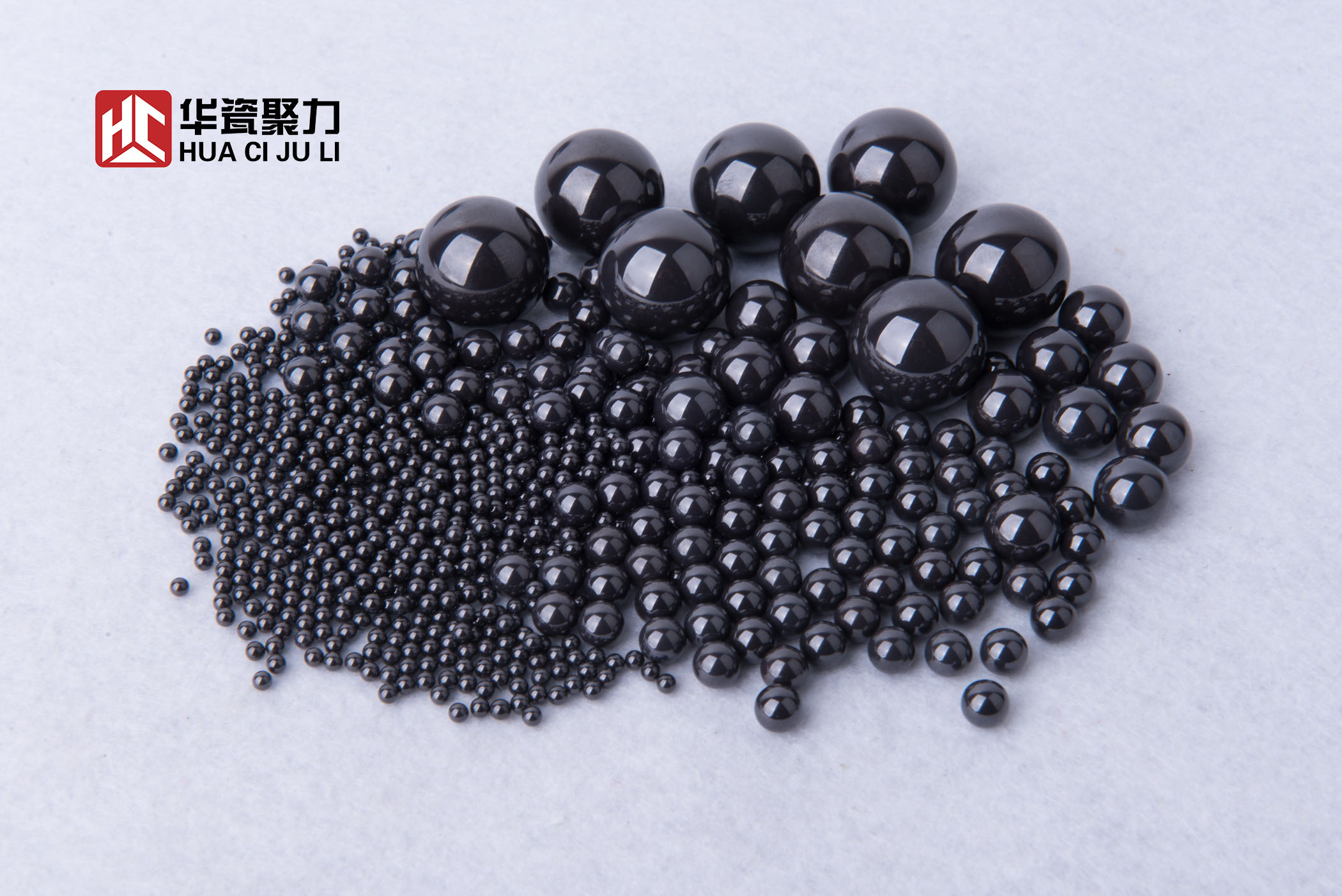
What Does "Ball Grade" Mean?
A ball grade is a numerical classification that defines the manufacturing accuracy of a precision ball.
It specifies allowable limits for several characteristics, including:
·Diameter variation
·Sphericity (roundness)
·Surface roughness
·Lot diameter consistency
·Surface defects
The grade does not describe the material quality. Two balls made from the same high-quality silicon nitride ceramic may have different grades because they were finished to different precision levels.
In general:
·Smaller grade number = Higher precision
·Larger grade number = Lower precision
International Standards for Precision Balls
Most precision bearing balls are manufactured according to international standards such as:
·ISO 3290 – Rolling bearings – Balls
·ANSI/ABMA Standard 10 – Metal and ceramic bearing balls
·DIN and JIS standards for specific regional applications
Although originally developed for steel balls, these standards are also widely applied to ceramic bearing balls, including silicon nitride.
Manufacturers supplying aerospace or semiconductor industries often implement inspection standards even stricter than these minimum requirements.
Common Silicon Nitride Ball Grades
The table below summarizes commonly available precision grades.
Ball Grade | Typical Precision Level | Common Applications |
G3 | Ultra Precision | Aerospace, semiconductor lithography, ultra-high-speed spindles |
G5 | Very High Precision | Precision hybrid bearings, medical equipment |
G10 | High Precision | CNC machine tools, EV motors, robotics |
G16 | Industrial Precision | High-performance machinery |
G25 | Standard Precision | General industrial bearings |
G100 | Commercial Grade | Low-speed industrial applications |
Why Higher Precision Grades Matter
Not every application requires G3 precision.
However, in demanding environments, higher grades offer measurable advantages.
Reduced Vibration
High-precision balls rotate more smoothly, reducing vibration in:
·High-speed spindles
·Precision motors
·Measurement equipment
Improved Rotational Accuracy
For CNC machining centers and semiconductor equipment, rotational accuracy directly affects machining precision and production yield.
A higher-grade silicon nitride ball helps maintain consistent shaft positioning at high speeds.
Longer Bearing Life
Uniform load distribution reduces contact stress between rolling elements and raceways.
Benefits include:
·Lower fatigue
·Reduced wear
·Longer maintenance intervals
Lower Noise
Quiet operation is important for:
·Medical devices
·Laboratory instruments
·High-speed electric motors
·Consumer electronics
Choosing the Right Grade for Different Industries
1、Aerospace
Recommended Grades:G3/G5
2、Semiconductor Equipment
Recommended Grades:G3/G5
3、Electric Vehicle Motors
Recommended Grades:G5/G10
4、CNC Machine Tools
Recommended Grades:G5/G10
5、Industrial Pumps
Recommended Grades:G16/G25
6、Robotics
Recommended Grades:G5/G10
FAQ About Silicon Nitride Balls
What is the best grade for silicon nitride bearing balls?
For high-speed precision bearings, G3 or G5 are typically preferred. General industrial equipment often uses G10 or G25.
Does a lower grade number mean better quality?
Yes. In bearing ball standards, a lower numerical grade represents tighter manufacturing tolerances and higher precision.
Are higher-grade silicon nitride balls always necessary?
No. The optimal grade depends on speed, load, accuracy requirements, and budget. Selecting an unnecessarily high grade can increase costs without improving performance.
Can silicon nitride balls be manufactured to custom precision levels?
Yes. Many manufacturers offer customized tolerances and inspection criteria for specialized aerospace, semiconductor, and medical applications.
How is ball grade verified?
Manufacturers use precision measuring equipment to evaluate diameter, roundness, surface finish, and lot consistency according to international standards.