




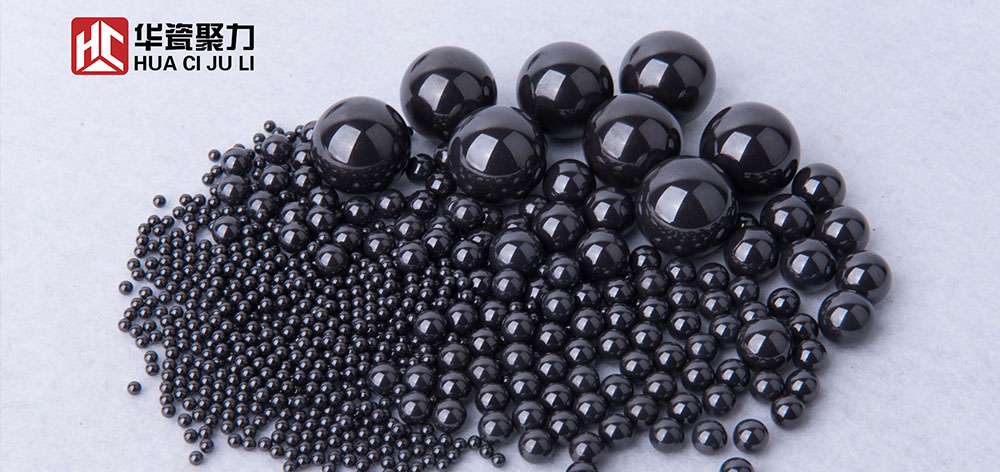
Alumina ceramic balls are low-cost ordinary ceramic rolling elements, widely used in low-end industrial equipment. Compared with alumina balls, silicon nitride balls have comprehensive performance advantages in toughness, temperature resistance and fatigue resistance, becoming the preferred material for high-end industrial equipment.
In terms of toughness difference, alumina ceramic is brittle and easy to crack under impact load. Silicon nitride has excellent fracture toughness, which can withstand instantaneous pressure impact without breaking. In heavy-load bearing scenarios, alumina balls have high failure rate.
High temperature resistance gap is obvious. The maximum working temperature of alumina balls is 800℃. Beyond this temperature, the structural strength decreases rapidly. Silicon nitride balls can work stably at 1200℃, adapting to high-temperature industrial furnaces and engine equipment.
Density and high-speed performance are different. Alumina has a density of 3.6g/cm³, heavier than silicon nitride. Under high-speed rotation, alumina balls produce larger centrifugal force, which is easy to cause bearing heating and wear.
Corrosion resistance of silicon nitride is stronger. Alumina is slightly soluble in strong alkaline liquid, which will be eroded for a long time. Silicon nitride is inert to acid and alkali, suitable for complex chemical corrosion environment.
Alumina balls are suitable for low-speed, low-load and low-cost equipment. Silicon nitride balls are used for high-speed, high-temperature and heavy-load precision equipment. Enterprises can select materials according to actual working conditions.