




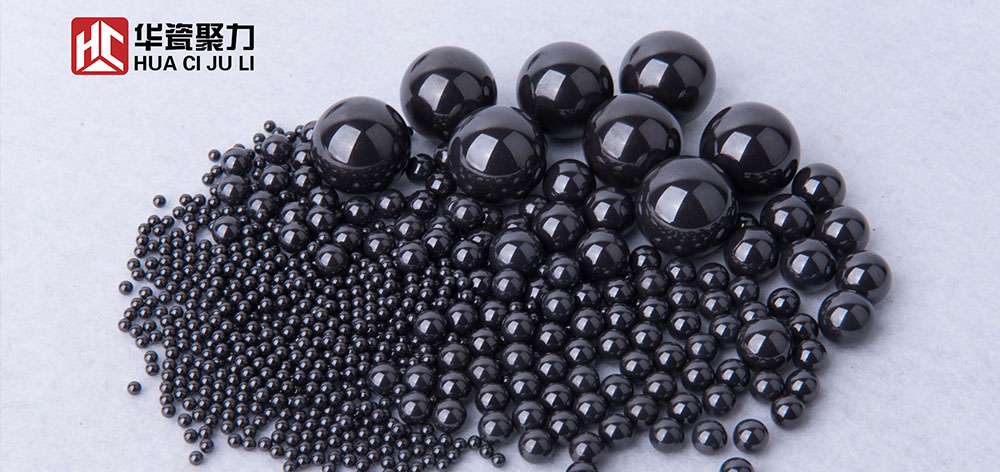
Surface finish processing is the final core working procedure deciding the comprehensive service performance and usable lifespan of finished silicon nitride balls. Different grinding, lapping and fine polishing crafts directly change surface roughness, micro-surface defects and spherical matching performance of silicon nitride balls, making polishing process one of the most critical production links for qualified high-end silicon nitride balls.
Rough grinding serves as the preliminary shaping step after silicon nitride blank sintering, mainly removing sintering skin, surface pits and oversized dimensional surplus of ceramic blanks. Improper rough grinding parameter setting will leave invisible micro-cracks inside ball surface layer, which gradually expand into macroscopic crack damage under later cyclic load and drastically shorten component service life. Formal silicon nitride ball manufacturers adopt segmented progressive grinding method to control cutting depth and avoid excessive surface damage during rough processing.
Precision lapping comes after coarse grinding, adopting fine-grained diamond abrasive powder and specialized lapping equipment to trim sphericity and eliminate grinding tool traces left on silicon nitride ball surface. This working procedure controls basic dimensional tolerance to meet ISO 3290 precision grade standards of G5 to G16; uneven lapping pressure leads to irregular spherical deformation and poor rolling uniformity when assembled into bearings. High-end aerospace and semiconductor-used silicon nitride balls need multiple repeated fine lapping rounds to achieve micron-level sphericity accuracy.
Ultra-fine mirror polishing is exclusive processing technology for top-grade silicon nitride balls used in medical equipment and precision measuring instruments. After mirror polishing treatment, silicon nitride balls achieve ultra-low Ra surface roughness below 0.01μm, no micro scratch or tiny concave defect on spherical surface. Super-smooth surface greatly lowers rolling friction coefficient, reduces heat generation and abrasion loss during equipment operation and maximizes component service cycle.
Post-polishing cleaning and flaw detection cannot be ignored. Residual abrasive particle stuck on silicon nitride surface will scratch bearing raceway during later application, triggering early equipment wear failure. Qualified factories deploy ultrasonic cleaning and automatic optical screening equipment to pick out defective balls with hidden surface flaws.
Polishing technical advancement continuously improves comprehensive performance of silicon nitride balls and expands its high-end industrial application boundaries in global market.