




Producing high-precision silicon nitride (Si₃N₄) balls requires advanced ceramic engineering and strict quality control. Unlike metal balls, ceramic balls must undergo complex processes to achieve the required mechanical properties and dimensional accuracy.
High-Purity Raw Materials
The production process begins with high-purity silicon nitride powder. Controlling powder purity and particle size distribution is essential for achieving uniform microstructure after sintering.Additives such as yttria are often used to improve sintering performance.
Forming the Green Balls
The powder is shaped into spherical blanks known as green balls. Common forming methods include cold isostatic pressing and injection molding.These processes create uniform spheres that will later be densified during sintering.
High-Temperature Sintering
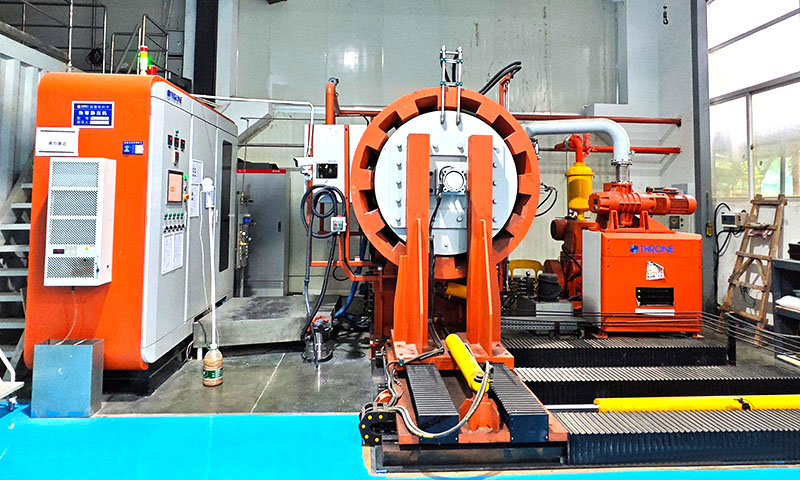
Green balls are sintered at temperatures around 1700–1800°C in controlled atmospheres. During sintering, particles bond together to form a dense ceramic structure.This stage determines the basic strength and hardness of the final ball.
Precision Grinding
After sintering, diamond grinding wheels are used to refine the ball shape and size. Grinding removes excess material and begins to establish spherical geometry.
Ultra-Fine Lapping
Lapping is the final finishing process used to achieve extremely high precision. Using fine abrasives, manufacturers can achieve:
1、micron-level diameter tolerance
2、excellent roundness
3、ultra-smooth surfaces
These finishing operations determine the final precision grade of the ceramic balls.
Inspection and Quality Control
Modern production lines use advanced measurement equipment to verify ball precision.Inspection methods include:
1、laser diameter measurement
2、optical roundness testing
3、surface roughness analysis
Only balls that meet strict specifications are approved for industrial use.
Conclusion
Achieving high silicon nitride ball precision requires a combination of advanced material processing, precision machining, and strict quality control. These technologies ensure that ceramic balls meet the demanding requirements of industries such as aerospace, automotive, and semiconductor manufacturing.