




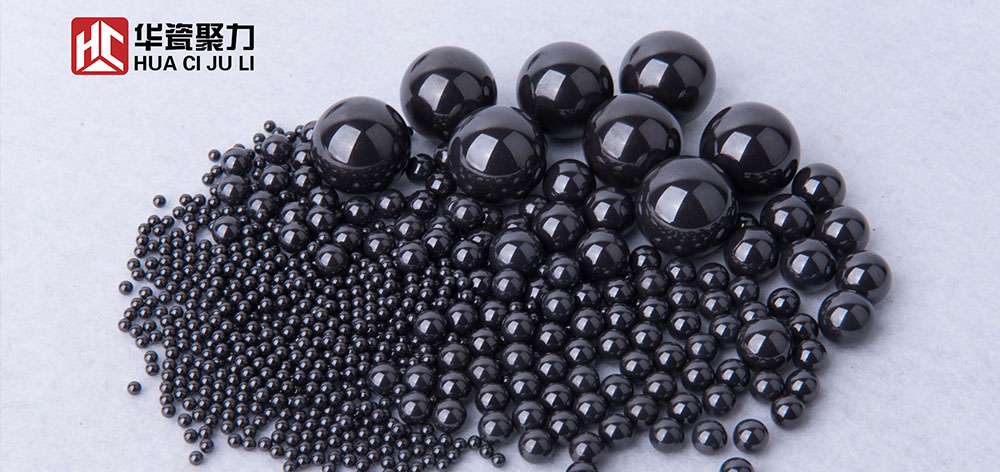
When selecting silicon nitride balls for industrial applications, understanding their technical specifications is critical to ensuring they meet the requirements of your equipment and application. Silicon nitride balls have a range of technical properties that define their performance, from hardness and density to thermal conductivity and dimensional tolerance. This article outlines the key technical specifications of silicon nitride balls, explaining what each specification means and why it matters for different applications.
Density is one of the most important technical specifications of silicon nitride balls. Silicon nitride has a density of approximately 3.2–3.3 g/cm³, which is significantly lower than steel (7.6 g/cm³). This low density makes silicon nitride balls ideal for high-speed applications, as it reduces centrifugal load and energy consumption. The density of silicon nitride balls is also consistent across the entire ball, ensuring uniform performance and balance.
Hardness is another critical specification. Silicon nitride balls have a Vickers hardness of 1500–1600 HV, which is more than twice the hardness of steel (700 HV). This high hardness makes them highly resistant to wear, scratches, and deformation, even under heavy loads. The hardness of silicon nitride balls is measured using a Vickers hardness tester, which applies a small indentation to the surface of the ball and measures the depth of the indentation.
Thermal conductivity is an important specification for applications that involve high temperatures. Silicon nitride has a thermal conductivity of 28–30 W/(m·K), which is lower than steel but higher than many other ceramic materials. This thermal conductivity allows silicon nitride balls to dissipate heat effectively, preventing overheating and maintaining their performance in high-temperature environments. Additionally, silicon nitride has a low coefficient of thermal expansion (3 × 10⁻⁶ /K), which means it expands and contracts less with temperature changes, ensuring dimensional stability.
Dimensional tolerance and roundness are critical for precision applications. Silicon nitride balls are manufactured to strict dimensional tolerances, typically ranging from G5 to G16 according to ISO 3290-2 standards. The tolerance refers to the variation in the diameter of the ball, with G5 being the most precise (±0.001 mm) and G16 being less precise (±0.015 mm). Roundness is another important specification, as it ensures the ball rolls smoothly and evenly. Silicon nitride balls have a roundness of less than 0.1 microns, making them ideal for precision bearings and other high-precision applications.
Surface roughness is also a key specification. Silicon nitride balls have a surface roughness (Ra) of 0.005–0.02 microns, which is much smoother than steel balls. This smooth surface reduces friction and wear, improving the performance and service life of bearings and other components. The surface roughness is measured using a profilometer, which scans the surface of the ball and measures the variation in height.
Other important technical specifications include electrical resistivity (greater than 10¹² Ω·cm, making them electrically insulating), fracture toughness (5–8 MPa·m¹/², ensuring they can withstand impact without breaking), and corrosion resistance (resistant to acids, bases, and corrosive gases). By understanding these key technical specifications, you can select the right silicon nitride balls for your application, ensuring optimal performance and reliability.