




Silicon nitride ceramic balls as a high-performance material, with its excellent mechanical properties, high temperature resistance, corrosion resistance and other characteristics, in many industrial applications, especially in aerospace, precision machinery and chemical processing and other extreme environments, its performance is particularly good. Sintering without pressure is a key step in the preparation of silicon nitride ceramic balls. The optimization of the process and the study of its properties are of great significance for improving the quality and application range of silicon nitride ceramic balls.
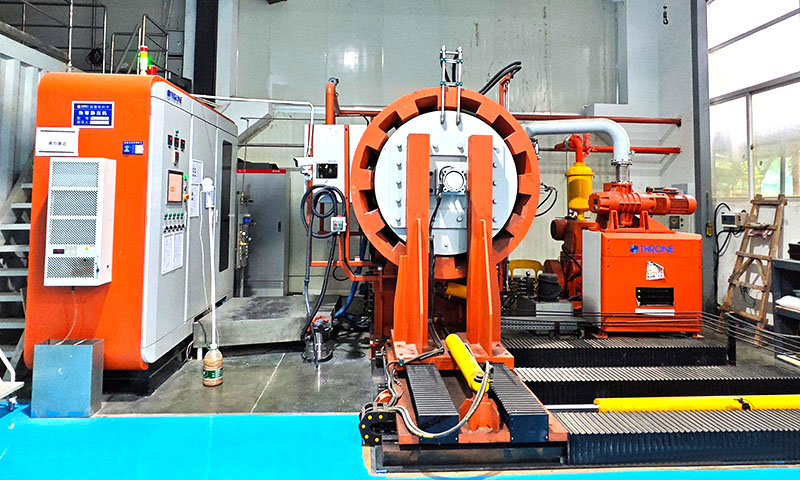
Pressure-free sintering, as a basic sintering method, has the obvious advantages of simple equipment and easy industrial production. Under normal pressure, by heating the product, the bonding between the powder particles gradually completes the densification process. The driving force of this method mainly comes from the reduction of the free energy of the pore surface, which makes the bonding between the ceramic particles closer. For the silicon nitride ceramic ball, the ceramic ball prepared by non-pressure sintering has excellent performance in hardness and wear resistance.
In the process of sintering without pressure, the selection and pretreatment of raw materials are very important. High quality silicon powder and silicon nitride powder are the cornerstone of precision silicon nitride ceramic ball life. These raw materials need to be strictly screened to ensure no impurities and uniform particle size to meet the high standards of subsequent processing. In addition, according to needs, an appropriate amount of chemical additives will be added, such as MgO, Al₂O₃, etc., to improve the sintering properties and mechanical properties of ceramic balls. In the powder processing stage, silicon powder and silicon nitride powder are mixed proportioned and ultrafine grinding is carried out in a ball mill. By precisely controlling the grinding time and speed, it ensures the uniformity and good dispersion of the powder, laying a solid foundation for the subsequent molding process.
Molding is an important step in the production of precision silicon nitride ceramic balls. The ground mixture is filled into the mold and the desired ceramic ball shape is made using press forming technology with precise control of pressure, temperature and time. The choice and design of the mold is crucial, which directly affects the size and surface quality of the ceramic ball.
In the process of non-pressure sintering, the internal structure of the ceramic ring is more uniform because there is no external pressure, which helps to improve the service life of the ceramic ball. Under normal pressure, by heating the product, the bonding between the powder particles gradually completes the densification process. The driving force of this method mainly comes from the reduction of the free energy of the pore surface, which makes the bonding between the ceramic particles closer. Due to the tight bonding between the particles during sintering, the hardness of the ceramic ball is significantly improved, and it can maintain stable performance under high wear environment. In addition, non-pressure sintering technology reduces the production cost, making silicon nitride ceramic balls in a wider range of applications.
However, non-pressure sintering also has some challenges, such as long sintering time, high energy consumption, and may lead to uneven microstructure of ceramics, thus affecting its mechanical properties. Therefore, the optimization of non-pressure sintering process is particularly important. The optimization direction can include improving the heating method and improving the heating efficiency; Optimize the ratio of raw materials to improve the sintering effect; The dimensional accuracy and surface quality of ceramic ball can be improved by improving the molding process.
In terms of performance, sintered silicon nitride ceramic balls without pressure show excellent hardness and wear resistance. Hardness is one of the important indexes to evaluate the performance of silicon nitride ceramic balls, which determines the deformation resistance of ceramic balls under pressure. Wear resistance is a key index to measure the service life of ceramic balls in the friction and wear environment. Silicon nitride ceramic balls prepared by the non-pressure sintering process perform well in terms of hardness and wear resistance, and can meet the needs of use in a variety of extreme environments.
In addition, sintered silicon nitride ceramic balls without pressure also have good thermal and chemical stability. Thermal stability refers to the performance of ceramic balls in high temperature environment, including thermal shock resistance, thermal creep resistance and so on. Chemical stability refers to the performance of ceramic balls in chemical corrosion environments, including acid and alkali corrosion resistance, oxidation corrosion resistance and so on. These excellent properties make the non-pressure sintered silicon nitride ceramic ball have a wide application prospect in aerospace, precision machinery and chemical processing.
In summary, non-pressure sintering process plays an important role in the preparation of silicon nitride ceramic balls. By optimizing the non-pressure sintering process, the performance of silicon nitride ceramic ball can be improved significantly and its application range can be expanded. In the future, with the continuous development of science and technology, the non-pressure sintering process will be further improved and innovative, providing more possibilities for the preparation of silicon nitride ceramic balls, promoting its wide application in more fields, and contributing more to the development of modern industry.