




The global transition toward electric mobility is changing the design requirements of automotive powertrains. Electric vehicle (EV) motors are becoming smaller, lighter, faster, and more efficient, creating new challenges for bearing manufacturers and automotive engineers.
Unlike conventional internal combustion engines, electric motors can operate continuously at very high rotational speeds. Depending on the motor architecture, operating conditions, and vehicle design, some modern traction motors can reach rotational speeds well above 10,000 RPM, with certain high-performance systems operating at significantly higher speeds.
At the same time, electric motors introduce another challenge that is less common in traditional drivetrains: electrical current passing through bearings.
These conditions have increased interest in silicon nitride balls, particularly for hybrid ceramic bearings used in electric vehicle motors and e-axle systems.
Why EV Motors Create New Bearing Challenges
Electric vehicle motors operate differently from traditional internal combustion engines.
An EV traction motor typically requires:
·High rotational speed
·High power density
·Compact dimensions
·Low friction
·High energy efficiency
·Long service life
·Low maintenance
These requirements place significant demands on motor bearings.
What Are Silicon Nitride Balls?
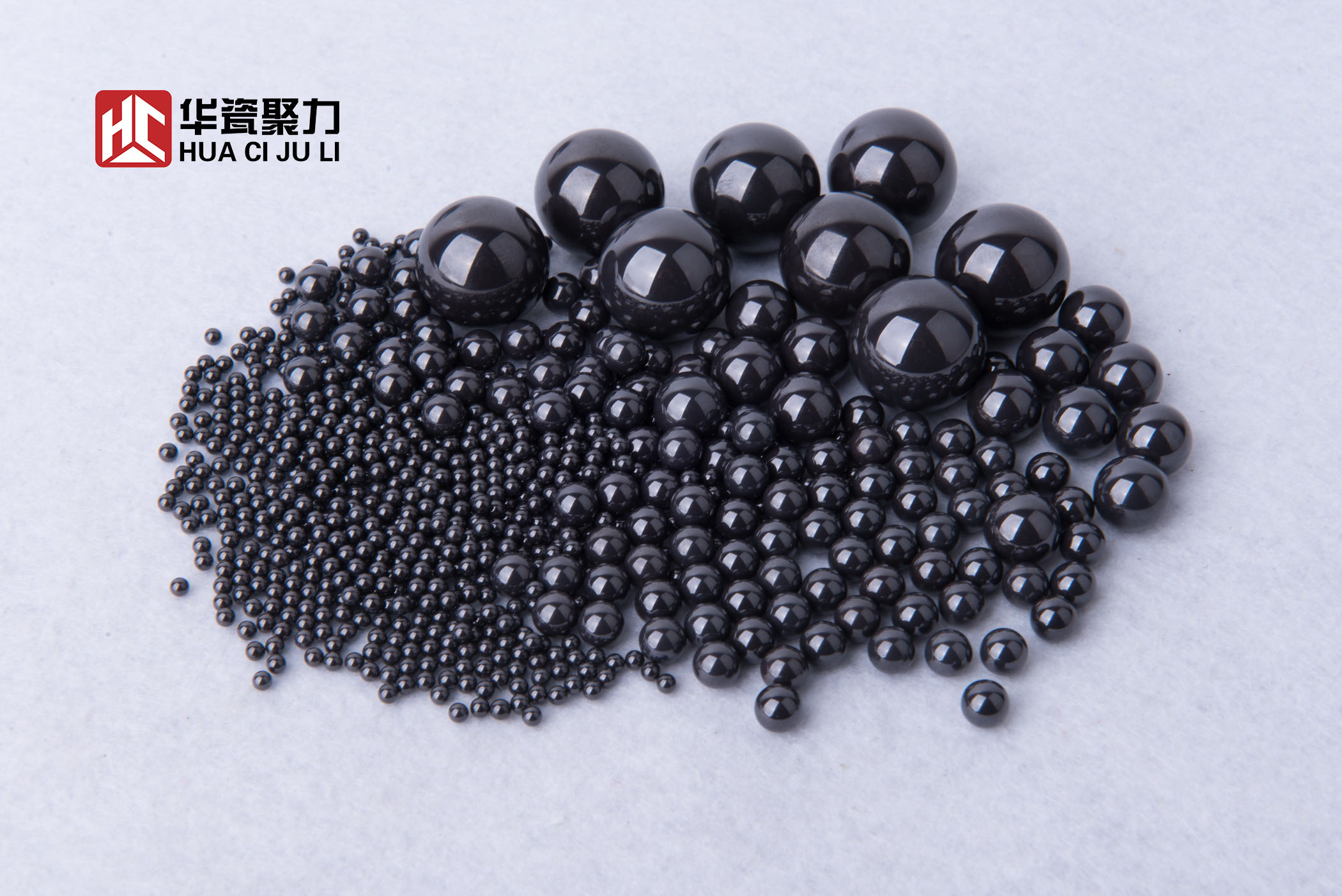
Silicon nitride balls are precision ceramic spheres manufactured from high-performance silicon nitride (Si₃N₄).
They are commonly used in hybrid ceramic bearings, which combine:
·Silicon nitride ceramic balls
·Steel inner and outer rings
·Suitable bearing cage
·Appropriate lubrication system
This configuration is particularly attractive for EV motors because it combines the excellent rolling properties of ceramic balls with the toughness and load capacity of steel raceways.
1. Lower Weight for High-Speed EV Motors
One of the most important properties of silicon nitride is its low density.
Silicon nitride has a density of approximately:3.2 g/cm³
Compared with bearing steel at approximately:7.8 g/cm³
silicon nitride balls are roughly 60% lighter.
This significant reduction in mass affects bearing behavior at high rotational speeds.
2. Higher-Speed Capability
High rotational speed is becoming increasingly important in EV motor design.
Higher motor speed allows manufacturers to achieve:
·Greater power density
·Smaller motor dimensions
·Lower system weight
·Potentially lower material costs
However, higher speed places greater demands on bearings.
Steel balls can generate significant centrifugal forces at high RPM.
Silicon nitride balls, being substantially lighter, reduce these effects.
As a result, hybrid ceramic bearings may support higher speed operation while maintaining stable performance.
3. Electrical Insulation Prevents Bearing Damage
One of the most important reasons silicon nitride balls are used in EV motors is their electrical insulating properties.
Traditional steel balls are electrically conductive.
In electric motors, high-frequency electrical currents can sometimes pass through bearings.
This can result in:
·Electrical discharge
·Surface pitting
·Fluting
·Raceway damage
·Lubricant degradation
·Premature bearing failure
Silicon nitride is electrically insulating.
When used as the rolling elements in a hybrid bearing, ceramic balls can interrupt the electrical path through the bearing.
This helps reduce the risk of electrical erosion.
4. Reduced Friction and Energy Loss
EV manufacturers continuously seek ways to improve drivetrain efficiency.
Even small reductions in mechanical losses can contribute to improved energy efficiency.
Silicon nitride balls can help reduce friction because of their:
·Low density
·High hardness
·Smooth surface
·Excellent rolling behavior
Lower friction can result in:
·Reduced heat generation
·Lower power losses
·Improved bearing efficiency
In an EV, these improvements can potentially contribute to greater overall drivetrain efficiency.
Silicon Nitride Balls vs. Steel Balls in EV Motors
Performance Factor | Silicon Nitride Balls | Steel Balls |
Density | Low | High |
High-Speed Performance | Excellent | Good |
Electrical Insulation | Excellent | None |
Corrosion Resistance | Excellent | Moderate |
Wear Resistance | Excellent | Good |
Friction | Low | Higher |
High-Speed Heat Generation | Lower | Higher |
Applications in Electric Vehicle Powertrains
Silicon nitride balls may be used in several EV drivetrain systems.
Traction Motors
The main electric motor requires high-speed, efficient bearings.
E-Axles
An e-axle integrates multiple drivetrain components into a compact unit.
Silicon nitride balls can contribute to:
·High-speed operation
·Reduced friction
·Electrical insulation
High-Speed Electric Motors
Some advanced EV platforms are moving toward increasingly high motor speeds.
As rotational speed increases, reducing rolling element mass becomes more important.
Silicon nitride balls offer a significant advantage because of their low density.
How to Select Silicon Nitride Balls for EV Bearings
When selecting ceramic balls for EV applications, engineers should evaluate:
Ball Material Quality
High-density, low-defect silicon nitride provides better reliability.
Precision Grade
Typical precision requirements may range from:
·G5
·G10
·G16
depending on motor speed and bearing design.
Surface Roughness
A high-quality surface finish improves rolling performance and reduces friction.
Diameter Consistency
Uniform ball diameter ensures better load distribution.
Manufacturer Quality Control
Important quality parameters include:
·Density
·Hardness
·Roundness
·Diameter variation
·Surface roughness
·Internal defects
FAQ About Silicon Nitride Balls
Why are silicon nitride balls used in EV motors?
They are used because they are lightweight, electrically insulating, wear resistant, and suitable for high-speed operation.
Do silicon nitride balls improve EV efficiency?
They can reduce bearing friction and mechanical losses, potentially improving drivetrain efficiency, although the overall impact depends on the complete motor and bearing system.
Can silicon nitride balls prevent electrical bearing damage?
They can help reduce electrical current passage through the rolling elements because silicon nitride is electrically insulating. However, bearing protection should be addressed as part of the complete motor electrical design.
Are silicon nitride balls better than steel balls for EV motors?
For high-speed EV motors with electrical current concerns, silicon nitride balls often offer significant performance advantages. Steel balls may remain suitable for lower-speed or cost-sensitive applications.
Are ceramic bearings more expensive?
Yes. Silicon nitride balls have a higher initial cost than steel balls. However, potential benefits in efficiency, durability, and reduced electrical damage can justify the investment in demanding applications.